- Animals
- ›Molluscs
- ›Bivalves
- ›Autobranchia
- ›Heteroconchia
- ›Euheterodonta
- ›Imparidentia
- ›True Cockles, Tellins, and Allies
- ›Cardioidea
- ›true cockles
- ›Egg Cockles and Giant Heart Cockles
- ›Dinocardium
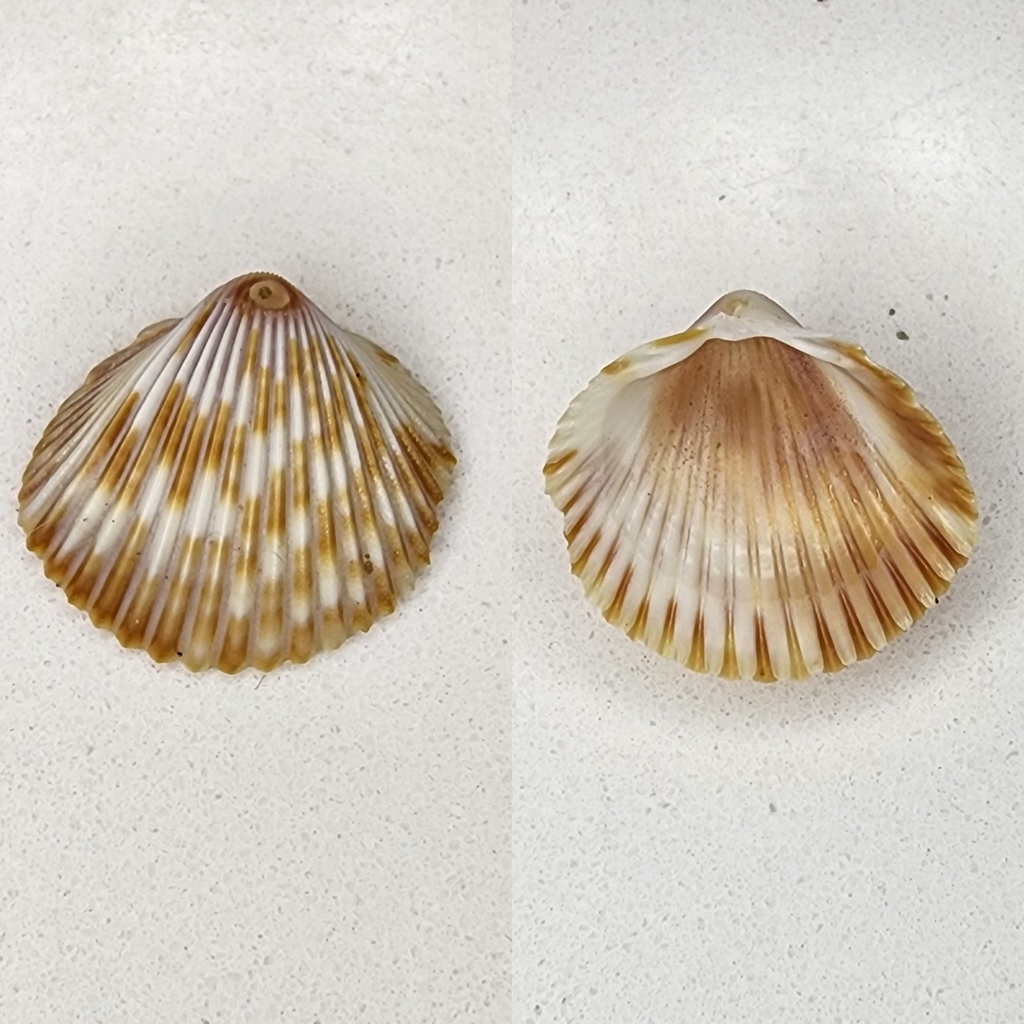
Giant Atlantic Cockle
Dinocardium robustum
Dinocardium is a genus of large saltwater clams or cockles, marine bivalve molluscs in the family Cardiidae, the cockles. There is only one species in the genus, Dinocardium robustum, or the Atlantic giant cockle.
From the article Dinocardium on Wikipedia (CC BY-SA), quoted section by section
Description
Dinocardium robustum has a shell that reaches a length of 100–125 mm. This large and sturdy shell is obliquely ovate, with crenulate margins and about 32–36 rounded radial ribs present on both the inside and the outside. The valves are symmetrical with one another (equivalve). The basic color of the surface usually is creamy white, mottled with reddish-brown markings, while the interior is pinkish. This cockle burrows into the substrate by means of its strong foot, and like most bivalves feeds by filtering the water for plankton.
Range & habitat
This species can be found along the western Atlantic coast of North America, in the Gulf of Mexico and in the Caribbean Sea.
Wikipedia: “Distribution”
Where it lives
Recorded sightings
—
geo-referenced records in GBIF, from museums, herbaria and field observers.
Drag the globe to turn it. Dots are where records exist, not a range map; darker means more records.
In the stacks
Searching the stacks…
Every page naming Dinocardium robustum in the Biodiversity Heritage Library →
This page is assembled live from iNaturalist, GBIF, Wikipedia, the Source Library and the Internet Archive. It is not yet part of the hand-edited codex. iNaturalist taxon 83354.