- Plants
- ›Vascular Plants
- ›flowering plants
- ›Dicots
- ›Roses, Elms, Figs, and Allies
- ›buckthorn family
- ›Rhamneae
- ›Rhamnus
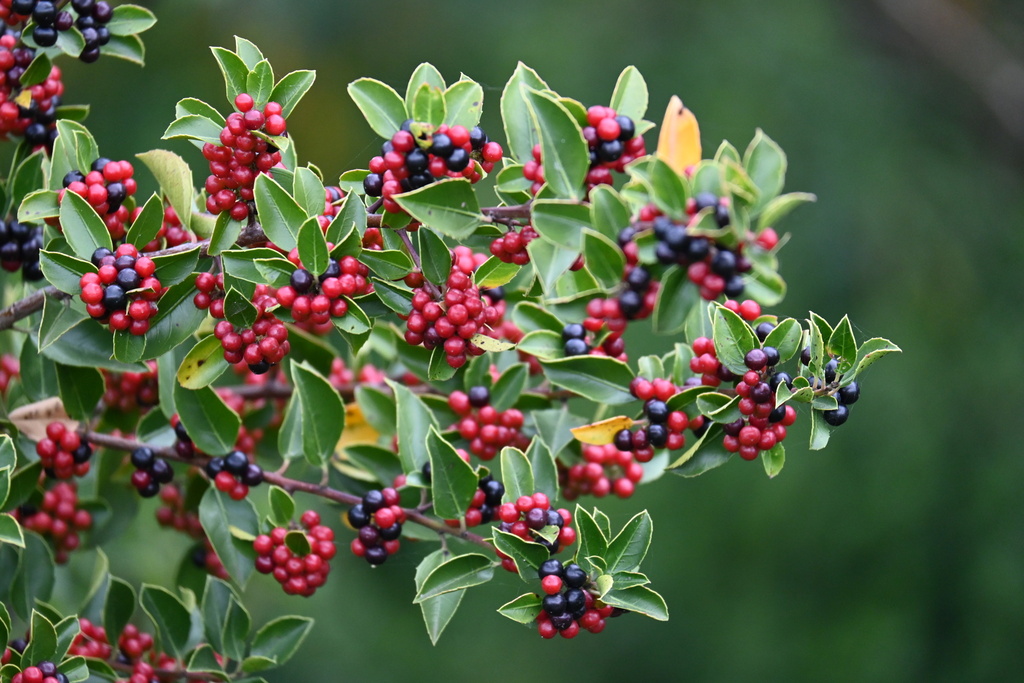
Mediterranean buckthorn
Rhamnus alaternus
Rhamnus alaternus is a species of flowering plant in the buckthorn family Rhamnaceae, known by the common names Italian buckthorn or Mediterranean buckthorn. It is a hardy medium-sized evergreen shrub with fragrant flowers.
From the article Rhamnus alaternus on Wikipedia (CC BY-SA), quoted section by section
Description
Rhamnus alaternus is an evergreen shrub 1–5 metres (3 ft 3 in – 16 ft 5 in) high. The stems have reddish bark and pubescent young branches, rounded and compact foliage with alternating leaves, 2–6 centimetres (0.79–2.36 in) long, sometimes nearly opposite, oval or lanceolate, leathery, shiny green, yellowish-green underneath. The small fragrant flowers are gathered in a short axillary yellow-green raceme. The flowering period extends from February to April. Fruits are obovoidal red-brownish drupes of about 3–4 millimetres (0.12–0.16 in), containing from 2 to 4 seeds. The drupes darken to black when ripe.
Range & habitat
This species is widespread in thermophilic evergreen bush and scrubland of the Mediterranean climate regions, from Gran Canaria, Morocco and Portugal in the west, to the Levant in the east, from sea level up to 1,300 m (4,300 ft) elevation.
Wikipedia: “Distribution and habitat”
How it is grown
This species is cultivated as an ornamental garden shrub, valued for its glossy evergreen leaves and red berries. The variegated cultivar 'Argenteovariegata' has gained the Royal Horticultural Society's Award of Garden Merit.
Wikipedia: “Cultivation”
In human culture
The specific Latin name alaternus, is from the Latin word for the plant. Its origin is obscure but is often suggested to be of Etruscan or pre-Indo-European Mediterranean origin.
Wikipedia: “Etymology”
Where it lives
Recorded sightings
—
geo-referenced records in GBIF, from museums, herbaria and field observers.
Drag the globe to turn it. Dots are where records exist, not a range map; darker means more records.
In the stacks
Searching the stacks…
Every page naming Rhamnus alaternus in the Biodiversity Heritage Library →
This page is assembled live from iNaturalist, GBIF, Wikipedia, the Source Library and the Internet Archive. It is not yet part of the hand-edited codex. iNaturalist taxon 82856.