
Ground cedars
Diphasiastrum
Diphasiastrum is a genus of clubmosses in the plant family Lycopodiaceae. In the Pteridophyte Phylogeny Group classification of 2016 (PPG I), it is placed in the subfamily Lycopodioideae. It is closely related to the genus Lycopodium, and some botanists treat it within a broad view of that genus as a section, Lycopodium sect. Complanata. Plants of the World Online (POWO), for example, considers Diphasiastrum to be a synonym of the genus Lycopodium. The genus was first proposed by Josef Holub in 1975, who characterized the species by their dorsiventral structure of branchlets, their chromosome number, and their special type of prothallium. Some species superficially resemble diminutive gymnosperms and have been given common names such as ground-pine or ground-cedar.
Features which Holub found to be distinct in most Diphasiastrum species inclulde distinct differences between dorsal and ventral surfaces of leaves, leaves arranged in 3 parallel planes (dorsal, lateral and ventral), leaves coming in 2 or 3 distinct forms, leaves arranged opposite and decussate on the stem, pairs of lateral leaves alternating with pairs consisting of one dorsal and one ventral leaf, complex prothallia, and typically 23 basal chromosomes.
24 branches of this genus, most-observed first
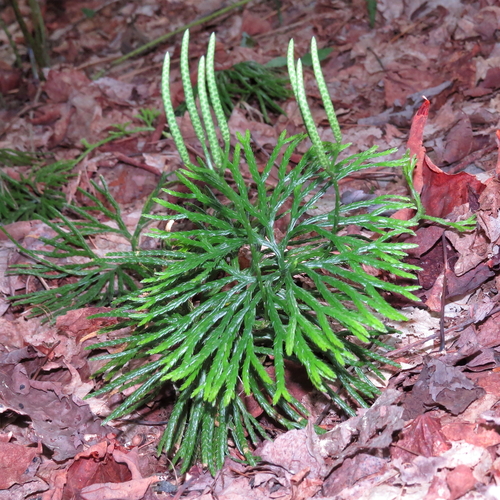
fan clubmoss
speciesDiphasiastrum digitatum
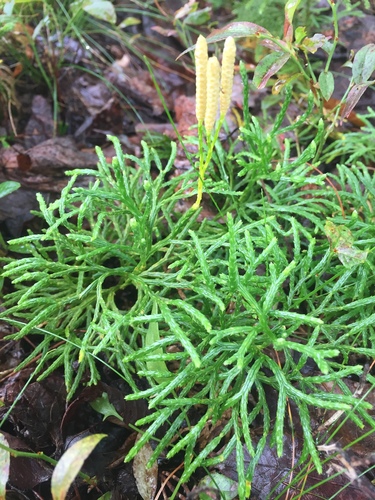
northern ground-cedar
speciesDiphasiastrum complanatum
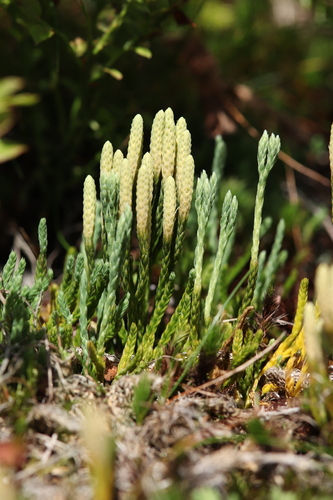
alpine clubmoss
speciesDiphasiastrum alpinum
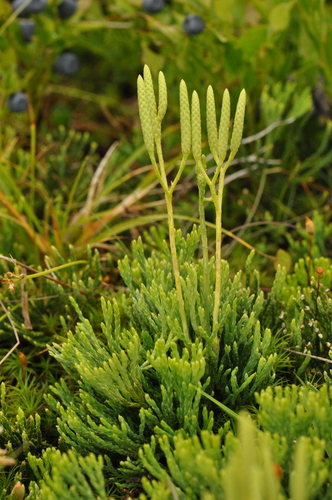
blue clubmoss
speciesDiphasiastrum tristachyum
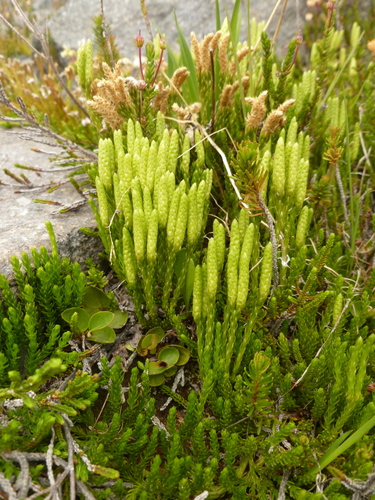
Sitka clubmoss
speciesDiphasiastrum sitchense

Diphasiastrum thyoides
speciesDiphasiastrum thyoides
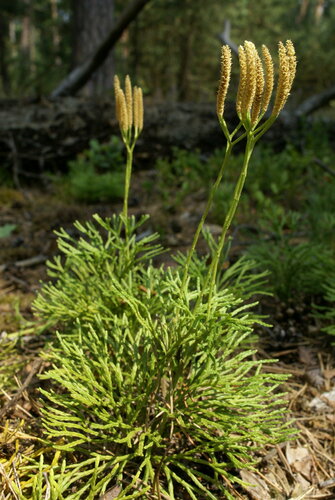
Zeiller's clubmoss
hybridDiphasiastrum × zeilleri
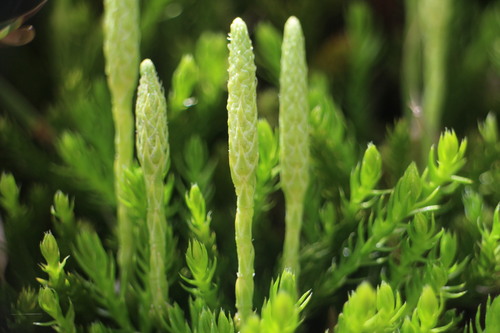
Diphasiastrum veitchii
speciesDiphasiastrum veitchii
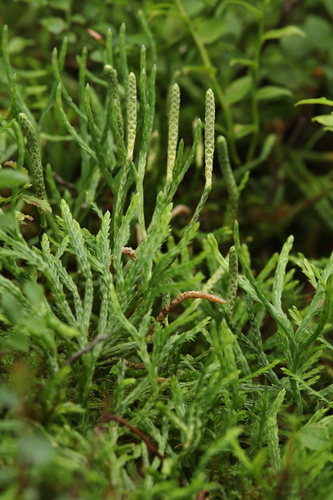
Issler's clubmoss
hybridDiphasiastrum × issleri

savin-leaved clubmoss
hybridDiphasiastrum × sabinifolium
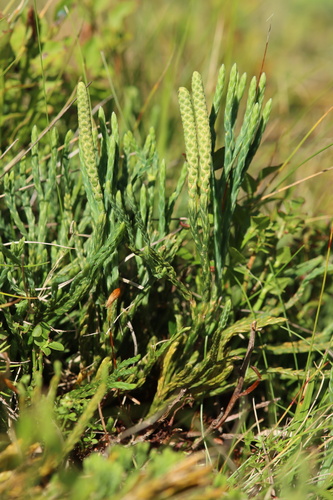
Øllgaard's Clubmoss
hybridDiphasiastrum × oellgaardii
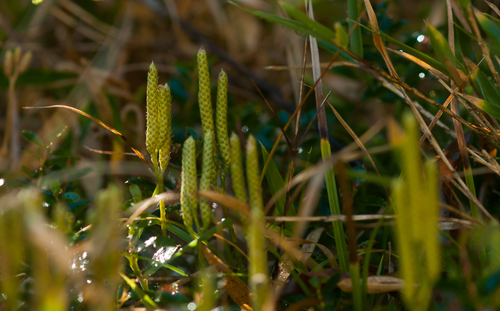
Diphasiastrum multispicatum
speciesDiphasiastrum multispicatum
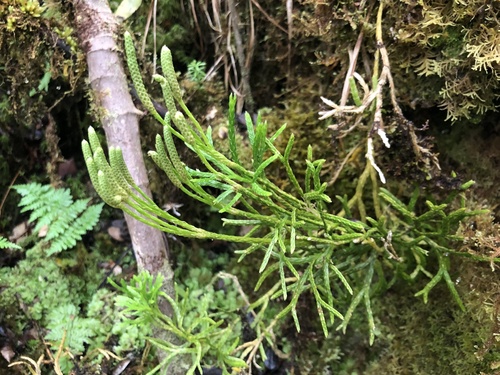
Madeira Clubmoss
speciesDiphasiastrum madeirense

Alpine × Sitka Clubmoss
hybridDiphasiastrum alpinum × sitchense
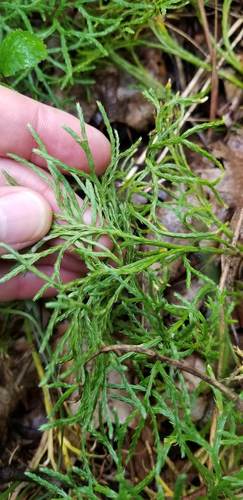
Haberer's clubmoss
hybridDiphasiastrum × habereri
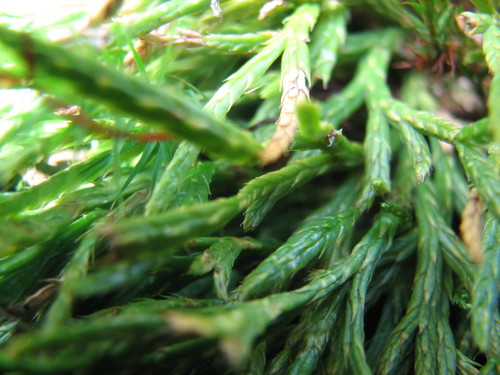
Diphasiastrum × verecundum
hybridDiphasiastrum × verecundum
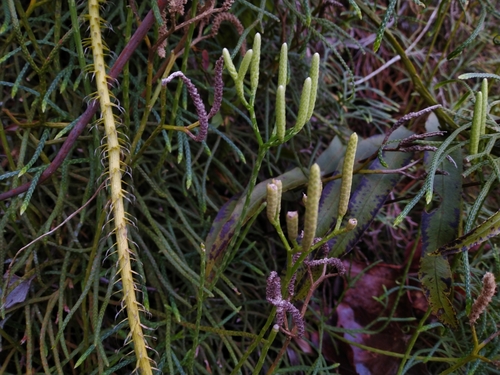
Diphasiastrum platyrhizoma
speciesDiphasiastrum platyrhizoma
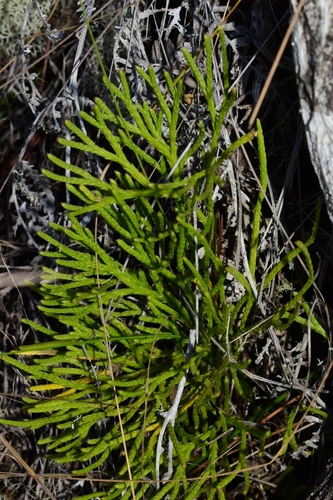
Diphasiastrum fawcettii
speciesDiphasiastrum fawcettii
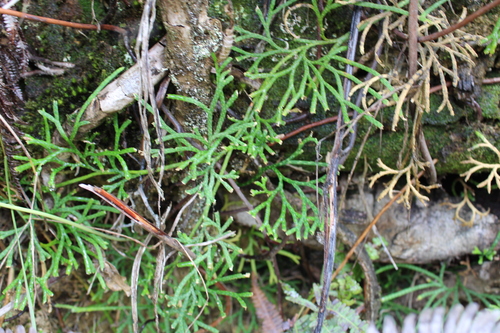
Diphasiastrum wightianum
speciesDiphasiastrum wightianum
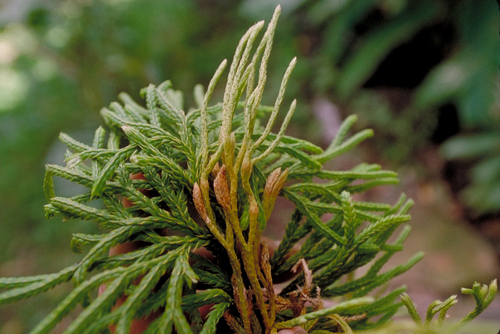
Diphasiastrum henryanum
speciesDiphasiastrum henryanum
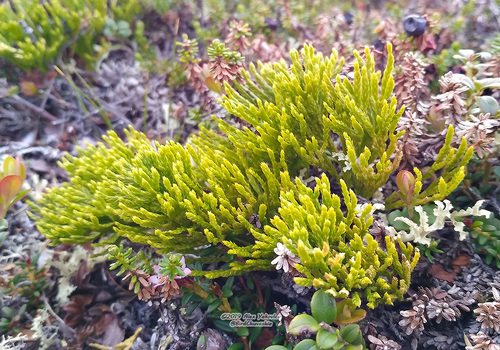
Montell's Clubmoss
speciesDiphasiastrum montellii
Diphasiastrum carolinum
speciesDiphasiastrum carolinum
Diphasiastrum angustiramosum
speciesDiphasiastrum angustiramosum
Diphasiastrum novoguineense
speciesDiphasiastrum novoguineense
Where it lives
Recorded sightings
—
geo-referenced records in GBIF, from museums, herbaria and field observers.
Drag the globe to turn it. Dots are where records exist, not a range map; darker means more records.
In the stacks
Searching the stacks…
Every page naming Diphasiastrum in the Biodiversity Heritage Library →
This page is assembled live from iNaturalist, GBIF, Wikipedia, the Source Library and the Internet Archive. It is not yet part of the hand-edited codex. iNaturalist taxon 82392.