- Plants
- ›Vascular Plants
- ›flowering plants
- ›monocots
- ›grasses, sedges, cattails, and allies
- ›grasses
- ›rices, veldtgrasses, and allies
- ›rices and allies
- ›Zizaniinae
- ›Zizania
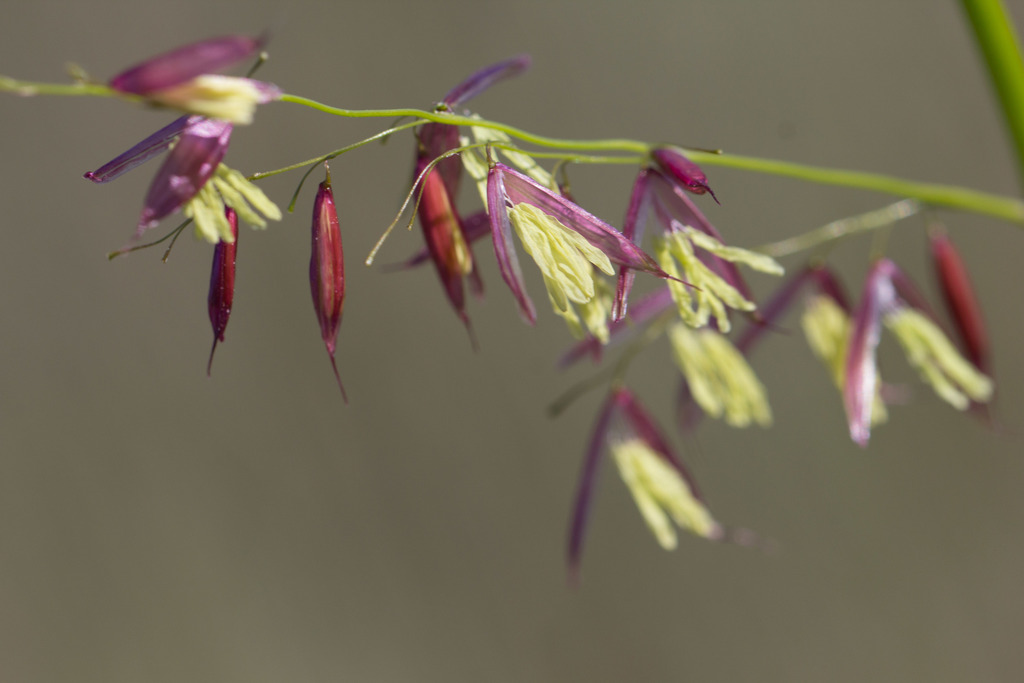
northern wild rice
Zizania palustris
Wild rice, also called manoomin, mnomen, psíŋ, Canada rice, Indian rice, or water oats, is any of four species of grasses that form the genus Zizania, and the grain that can be harvested from them. The grain was historically and is still gathered and eaten in North America and, to a lesser extent, China, where the plant's stem is used as a vegetable.
Wild rice and domesticated rice (Oryza sativa and Oryza glaberrima) are in the same botanical tribe Oryzeae. Wild-rice grains have a chewy outer sheath with a tender inner grain that has a slightly vegetal taste.
From the article Wild rice on Wikipedia (CC BY-SA), quoted section by section
At the table
The species most commonly harvested as grain are the annual species: Zizania palustris and Zizania aquatica. The former, though now domesticated and grown commercially, is still often gathered from lakes in the traditional manner, especially by indigenous peoples in North America; the latter was also used extensively in the past. The stems and root shoots also contain an edible portion on the interior.
Use by Native Americans. Native Americans and others harvest wild rice by canoeing into a stand of plants, and bending the ripe grain heads with two small wooden poles/sticks called "knockers" or "flails", so as to thresh the seeds into the canoe. One person canoes (or "knocks") rice into the canoe while the other paddles slowly or uses a push pole. The plants are not beaten with the knockers, but require only a gentle brushing to dislodge the mature grain. Some seeds fall to the muddy bottom and germinate later in the year. The size of the knockers, as well as other details, are prescribed in state and tribal law. …
Wikipedia: “Culinary use”
In human culture
The name manoomin comes from the Ojibwe term ᒪᓅᒥᓐ manoomin meaning 'harvesting grain' (commonly translated 'good grain').
Wikipedia: “Etymology”
Where it lives
Recorded sightings
—
geo-referenced records in GBIF, from museums, herbaria and field observers.
Drag the globe to turn it. Dots are where records exist, not a range map; darker means more records.
In the stacks
Searching the stacks…
Every page naming Zizania palustris in the Biodiversity Heritage Library →
This page is assembled live from iNaturalist, GBIF, Wikipedia, the Source Library and the Internet Archive. It is not yet part of the hand-edited codex. iNaturalist taxon 79554.