- Plants
- ›Vascular Plants
- ›flowering plants
- ›Dicots
- ›Buttercups, Poppies, and Allies
- ›moonseed family
- ›Jateorhiza
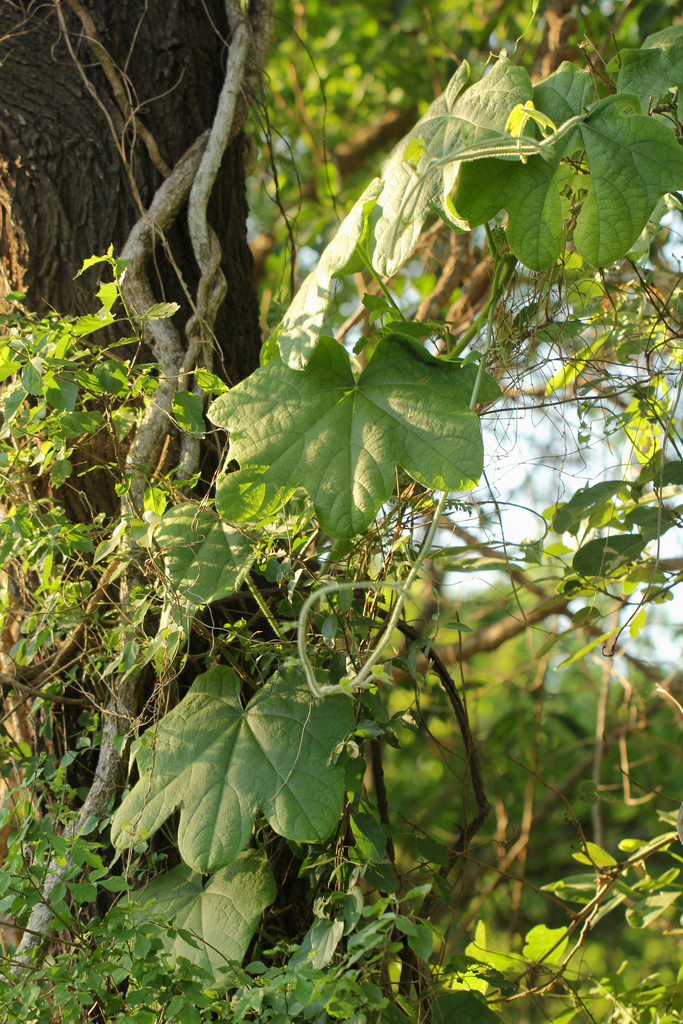
Jateorhiza palmata
Jateorhiza palmata (calumba) is a perennial climbing plant from East Africa. It contains isoquinoline alkaloids, including columbamine and is used mainly as a bitter tonic especially in cases of anorexia nervosa. It contains no tannins, hence it can be safely used in iron preparations for the treatment of anaemia without the fear of precipitation resulted from in vitro interaction.
From the article Jateorhiza palmata on Wikipedia (CC BY-SA), quoted section by section
Description
Tall, dioecious twining perennial vine; often reaching the tops of trees. The annual stems, one or two from each root, have hairs with glandular tips and have large bright green membranous leaves which are palmate, alternate and long petioled. The flowers are insignificant and greenish white. The female flower is followed by moon-shaped stone in a drupe. Male flowers are in 30 centimetres (12 in) long panicles. The tuberous root is large and fleshy, about 3–8 centimetres (1.2–3.1 in) in diameter with a thick bark. Transverse section is yellowish, outside greyish brown. Taste is muscilagenous and very bitter.
Where it lives
Recorded sightings
—
geo-referenced records in GBIF, from museums, herbaria and field observers.
Drag the globe to turn it. Dots are where records exist, not a range map; darker means more records.
In the stacks
Searching the stacks…
Every page naming Jateorhiza palmata in the Biodiversity Heritage Library →
This page is assembled live from iNaturalist, GBIF, Wikipedia, the Source Library and the Internet Archive. It is not yet part of the hand-edited codex. iNaturalist taxon 790296.