- Plants
- ›Vascular Plants
- ›flowering plants
- ›Dicots
- ›Soapberries, Cashews, Mahoganies, and Allies
- ›Cashew Family
- ›cashews, sumacs, and allies
- ›Searsia
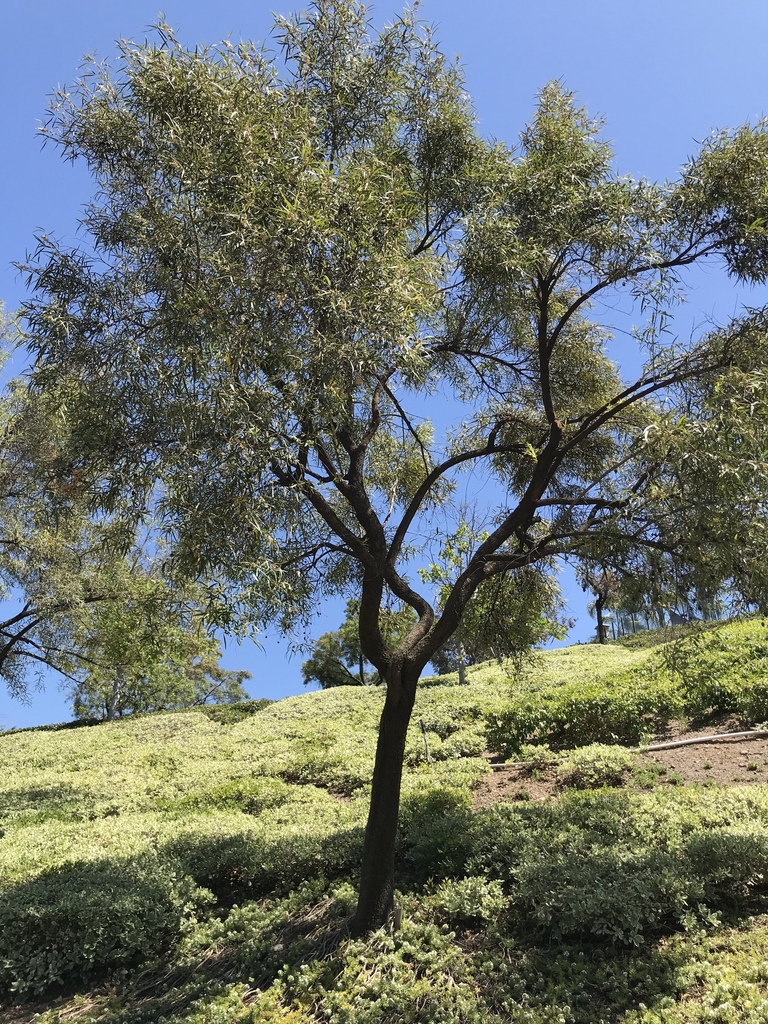
african sumac
Searsia lancea
Searsia lancea commonly known as karee, "karree" (Afrikaans), "hlokoshiyne" (isiZulu), "umhlakotshane" (amaXhosa), or "mokalaabata" (Northern Sotho), is an evergreen, frost hardy, drought resistant tree, which can reach up to 8 metres in height with a 5 metre spread. In North America, where it is naturalized, it is known as African sumac and willow rhus. It is one of the most common trees on the Highveld and in the Bushveld in South Africa, but not found in...
From the article Searsia lancea on Wikipedia (CC BY-SA), quoted section by section
Description
The tree is dioecious. It has a graceful, weeping form and dark, fissured bark that contrasts well with its long, thinnish, hairless, dark-green, trifoliate leaves with smooth margins. It bears small yellow flowers followed on female trees by bunches of small yellow-green flattish fruits, which are relished by birds. In earlier times the fruits were pounded, water added and left to ferment, producing an evidently refreshing beer. The tree is a good shade tree for gardens, parks and pavements. It favours areas rich in lime in the Karoo and Namibia.
Wikipedia: “Description and uses”
Where it lives
Recorded sightings
—
geo-referenced records in GBIF, from museums, herbaria and field observers.
Drag the globe to turn it. Dots are where records exist, not a range map; darker means more records.
In the stacks
Searching the stacks…
Every page naming Searsia lancea in the Biodiversity Heritage Library →
This page is assembled live from iNaturalist, GBIF, Wikipedia, the Source Library and the Internet Archive. It is not yet part of the hand-edited codex. iNaturalist taxon 79020.