- Plants
- ›Vascular Plants
- ›flowering plants
- ›Dicots
- ›Buttercups, Poppies, and Allies
- ›zabala family
- ›Boquila
pilpil
Boquila trifoliolata
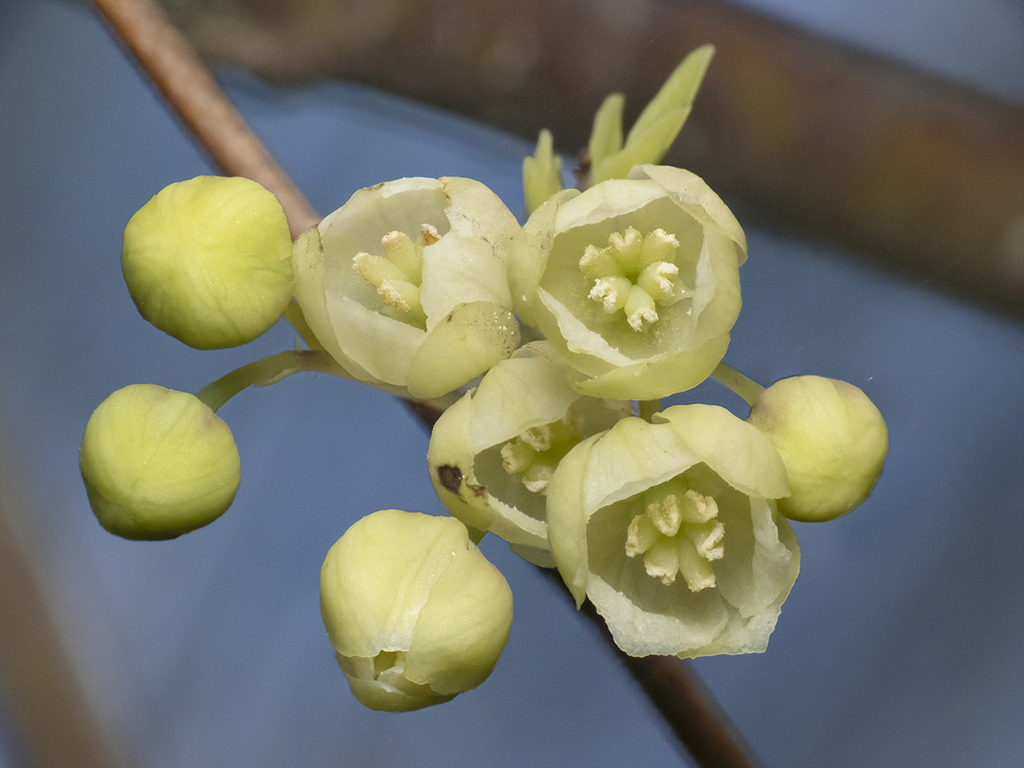
Boquila is a genus of flowering plants in the family Lardizabalaceae, endemic to temperate forests of central and southern Chile and Argentina. It is monotypic, being represented by the single species Boquila trifoliolata, locally known as voqui blanco or pilpil in its native range, or the chameleon vine since a 2014 report on leaf mimicry. The species was first described in 1782 by Juan Ignacio Molina, and the genus was established in 1839 by Joseph Decaisne. B. trifoliolata forms non-parasitic vines that wind around host plants, using them for structure and protection. B. trifoliolata is monoecious, a sexual system in seed plants where separate male and female cones or flowers are present on the same plant. Its flowers are off-white and it bears an edible fruit. The vine has been historically used in rope and basket making.
Boquila trifoliolata is the only known plant species that engages in mimetic polymorphism, or the ability to mimic multiple host species, often simultaneously. This is a form of Batesian mimicry, when a harmless species mimics a harmful one to ward off predators. Contact between the vines and host trees was reported not to be necessary for mimicking to commence. However, in the decade following the original study describing the species mimicry capabilities in 2014, no independent research groups have verified the field observations. The mechanism by which this mimicry occurs is still unknown.
From the article Boquila on Wikipedia (CC BY-SA), quoted section by section
Description
Boquila trifoliolata is a woody vine with a highly variable appearance due to its crypsis abilities. The vines are evergreen or partly deciduous, meaning they largely retain their leaves over winter. The vines follow a twining pattern when climbing host plants, meaning the stems bend around host plants during their ascent. The branches are thin, less than 1 cm (0.39 in) in diameter, and are covered in red-brown bark. The lenticels are elliptical in shape, and the wider branches are a speckled grey color. When not mimicking a host plant, B. trifoliolata employs smaller 'charlatan leaves' that are short, stubby, and have three lobes (trifoliate). The petioles range from 2 cm (0.79 in) to 6 cm (2.4 in) in length and the petiolules range from 0.5 cm (0.20 in) to 1.5 cm (0.59 in) in length. Leaflets are oval or elliptical and range from 2 cm (0.79 in) to 6 cm (2.4 in) in height and 1 cm (0.39 in) to 3 cm (1.2 in) in width. The base of the leaves is rounded, the margins are irregular (most often trilobate), the tips are rounded and wide-angled, the top of the leaves are dark green and hairless, the undersides are glaucous (pale-grey to blue-green), and the veins have a pinnate pattern.
Reproduction. In its natural habitat, flowering occurs between September and December, while fruiting occurs between January and March. …
Range & habitat
The Boquila genus is endemic to the temperate rainforests, Nothofagus forests, and evergreen forests of southern Argentina and Chile, ranging from Cauquenes to Chiloe. B. trifoliolata is most commonly found between 100 metres (330 ft) to 600 metres (2,000 ft) in elevation. Unlike many other species of vines, B. trifoliolata is not parasitic. Instead, it only attaches to trees for protection and structure, sometimes forming thickets over 6 metres (20 ft) in height. B. trifoliolata can survive temperatures as low as −8 °C (18 °F) and prefers soil rich in humus. The species is resistant to wilting, but generally prefers to grow in shaded environments.
Wikipedia: “Distribution and habitat”
At the table
The stems are used locally in basketry and in rope making. The leaf juice was historically employed by local tribes to treat sore eyes, and was once believed to be an aphrodisiac. The plant is used ornamentally, and the berries are edible. Stems are often cut in the summer and rooted in cold frames as a means of propagation.
Wikipedia: “Human uses”
In human culture
Boquila is a monotypic genus of flowering plants (angiosperms) in the family Lardizabalaceae with one known species, Boquila trifoliolata. The species was first described as Dolichos funarius in 1782 by Juan Ignacio Molina, and in 1817, the holotype Lardizabala trifoliolata was named by Augustin Pyramus de Candolle. In 1838, Stephan Endlicher, Eduard Friedrich Poeppig, and Gustav Kunze proposed the name Lardizabala discolor. In between 1837 and 1839, Joseph Decaisne identified Boquila trifoliolata and Boquila discolor, and established the Boquila genus in 1837. The name Boquila discolor was later declared a orthographic variant. In 1936, Gualterio Looser attempted to reclassify the species to Lardizabala funaria based upon the observations of Carlo Giuseppe Bertero, but this classification is not considered valid. Because of its capability for mimicry, the species is sometimes called the chameleon vine.
Wikipedia: “Taxonomy and etymology”
Where it lives
Recorded sightings
—
geo-referenced records in GBIF, from museums, herbaria and field observers.
Drag the globe to turn it. Dots are where records exist, not a range map; darker means more records.
In the stacks
Searching the stacks…
Every page naming Boquila trifoliolata in the Biodiversity Heritage Library →
This page is assembled live from iNaturalist, GBIF, Wikipedia, the Source Library and the Internet Archive. It is not yet part of the hand-edited codex. iNaturalist taxon 787205.