- Plants
- ›Vascular Plants
- ›flowering plants
- ›Dicots
- ›carrots, ivies, and allies
- ›carrot family
- ›Apioideae
- ›Selineae
- ›Angelica
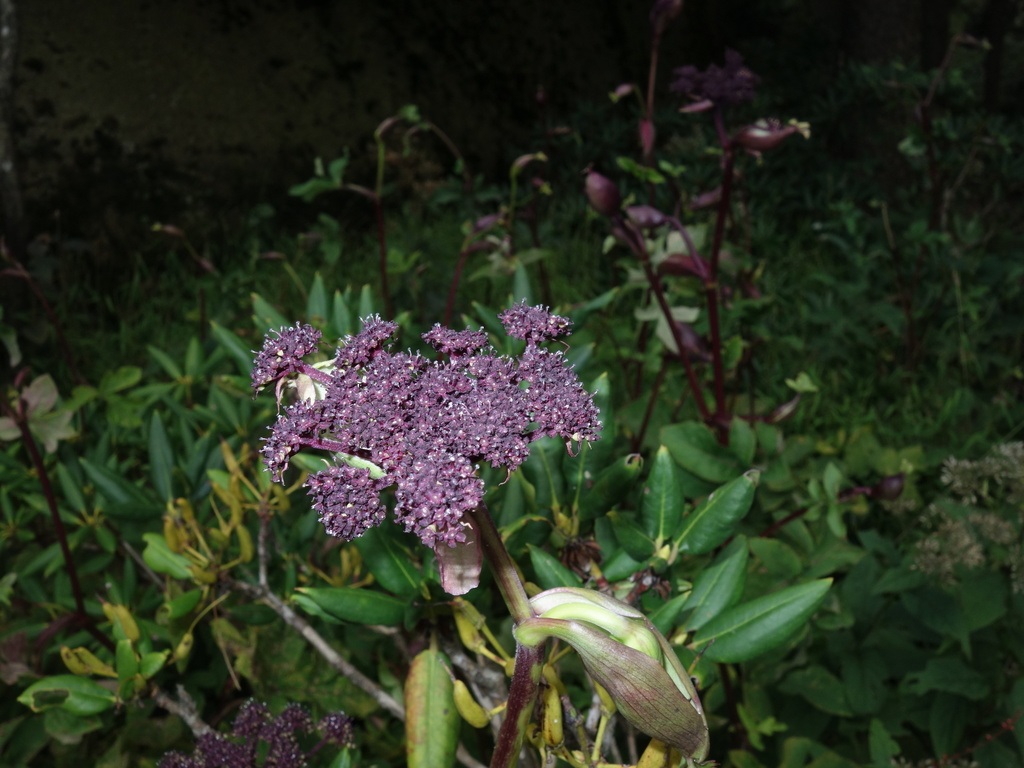
Chinese Angelica
Angelica sinensis
Angelica sinensis, commonly known as dong quai (simplified Chinese: 当归; traditional Chinese: 當歸; pinyin: dāngguī; Jyutping: dong1 gwai1; Pe̍h-ōe-jī: tong-kui) or female ginseng, is a herb belonging to the family Apiaceae, indigenous to China. A. sinensis grows in cool high altitude mountains in East Asia. There is no scientific evidence that A. sinensis is effective for any medicinal purpose.
From the article Angelica sinensis on Wikipedia (CC BY-SA), quoted section by section
In medicine
Phytochemicals include phytosterols, polysaccharides, ligustilide, butylphthalide, cnidilide, isocnidilide, p-cymene, ferulate, and flavonoids.
Wikipedia: “Phytochemicals”
How it is grown
Angelica is hardy to 5 °C (41 °F) and can be cultivated at elevations of 1,500 to 3,000 metres (5,000–10,000 ft). Seedlings need to be kept out of direct sunlight, but the mature plant can withstand it. Angelica requires deep moist fertile soil and is perennial if prevented from going to seed.
Wikipedia: “Cultivation”
Where it lives
Recorded sightings
—
geo-referenced records in GBIF, from museums, herbaria and field observers.
Drag the globe to turn it. Dots are where records exist, not a range map; darker means more records.
In the old herbals & bestiaries


In the stacks
Searching the stacks…
Every page naming Angelica sinensis in the Biodiversity Heritage Library →
This page is assembled live from iNaturalist, GBIF, Wikipedia, the Source Library and the Internet Archive. It is not yet part of the hand-edited codex. iNaturalist taxon 785992.