- Plants
- ›Vascular Plants
- ›flowering plants
- ›Dicots
- ›sandalwoods, mistletoes, and allies
- ›sandalwood family
- ›viscaceous mistletoes
- ›Phoradendron
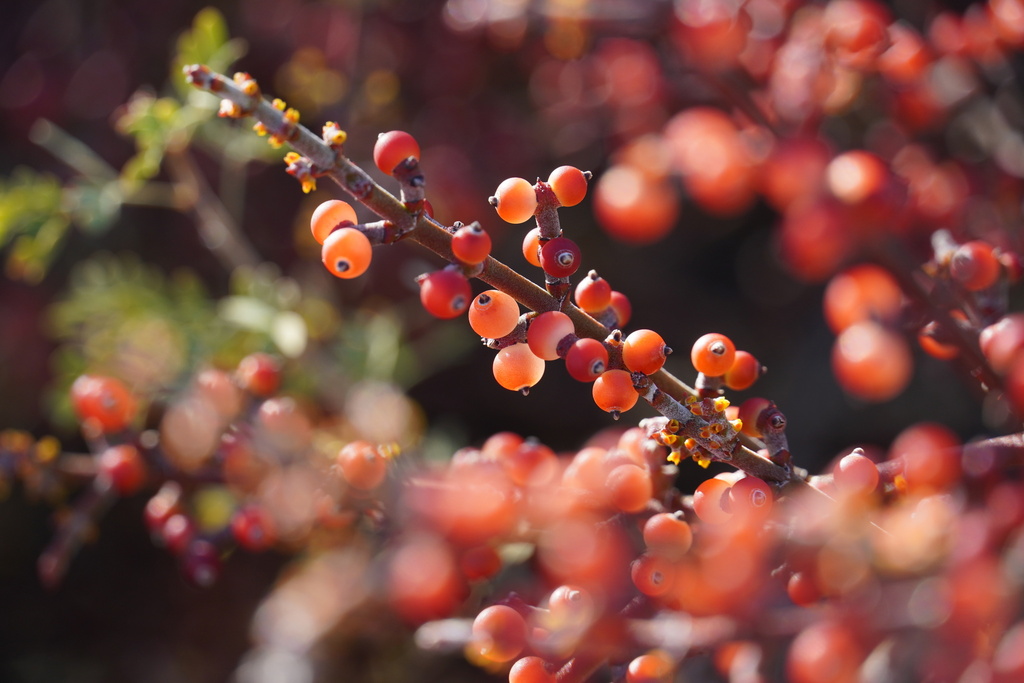
Mesquite Mistletoe
Phoradendron californicum
Phoradendron californicum, the desert mistletoe or mesquite mistletoe, is a hemiparasitic plant native to southern California, Nevada, Arizona, Sonora, Sinaloa and Baja California. It can be found in the Mojave and Sonoran Deserts at altitudes of up to 1,400 m (4,593 ft).
The mistletoe is a leafless plant that attaches to host plants, often leguminous woody desert trees such as Cercidium and Prosopis. Desert mistletoe takes water and minerals from its host plants but it does its own photosynthesis, making it a hemiparasite. Desert mistletoes, like mistletoes in general, weave nutrient cycles together through their unique life history.
From the article Phoradendron californicum on Wikipedia (CC BY-SA), quoted section by section
What it does
Desert mistletoes are dioecious and rely on insects for pollination. They produce inconspicuous, fragrant flowers during the winter. A February 2015 inventory observed 13 species of Diptera and 3 species of Hymenoptera observed on the female flowers of P. californicum in the catclaw acacias (Acacia greggii) of the Eldorado Mountains in the southern Mojave desert. The most abundant pollinator was the fruit fly Euarestoides acutangulus, followed by the blowfly Phormia regina then the hover fly Eupeodes volucris.
Wikipedia: “Pollination”
Where it lives
Recorded sightings
—
geo-referenced records in GBIF, from museums, herbaria and field observers.
Drag the globe to turn it. Dots are where records exist, not a range map; darker means more records.
In the stacks
Searching the stacks…
Every page naming Phoradendron californicum in the Biodiversity Heritage Library →
This page is assembled live from iNaturalist, GBIF, Wikipedia, the Source Library and the Internet Archive. It is not yet part of the hand-edited codex. iNaturalist taxon 78559.