- Plants
- ›Vascular Plants
- ›flowering plants
- ›Dicots
- ›Heathers, Balsams, Primroses, and Allies
- ›phlox family
- ›Linanthus
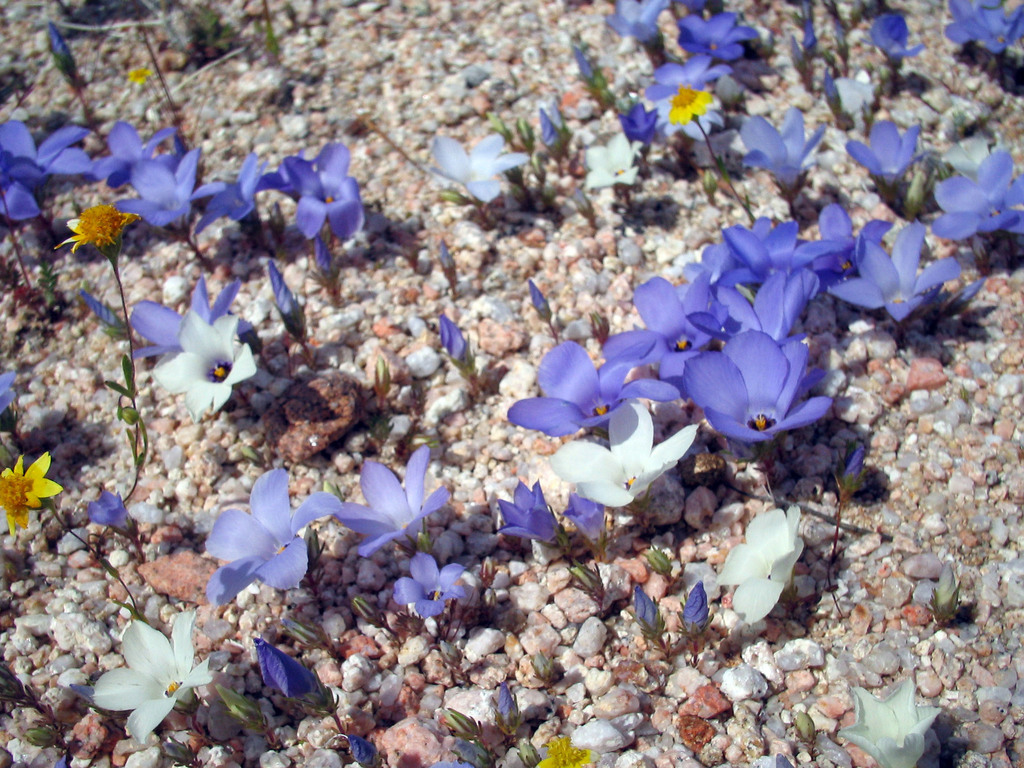
sandblossom
Linanthus parryae
Linanthus parryae is a species of flowering plant in the phlox family known by the common name sandblossoms. It is native to the western United States. In California, it grows in several regions from the Central Valley to the Sierra Nevada foothills and the Mojave Desert. It occurs in sandy, open, flat areas.
It is a petite annual herb producing short stems just a few centimeters tall, surrounded by hairy, needle-lobed leaves. The inflorescence, which often appears to sit directly on the ground tucked amidst the leaves, is a cluster of funnel-shaped flowers about a centimeter wide. The flowers are self-incompatible and are cross-pollinated exclusively by a Melyrid beetle, Trichochorous sp. Seeds germinate after winter rains in January to February, producing flowering plants in April and shedding seeds in May to June. Seeds are passively dispersed and remain viable for at least seven years, with little or no germination in dry years.
Where it lives
Recorded sightings
—
geo-referenced records in GBIF, from museums, herbaria and field observers.
Drag the globe to turn it. Dots are where records exist, not a range map; darker means more records.
In the stacks
Searching the stacks…
Every page naming Linanthus parryae in the Biodiversity Heritage Library →
This page is assembled live from iNaturalist, GBIF, Wikipedia, the Source Library and the Internet Archive. It is not yet part of the hand-edited codex. iNaturalist taxon 77774.