- Plants
- ›Vascular Plants
- ›flowering plants
- ›Dicots
- ›Heathers, Balsams, Primroses, and Allies
- ›phlox family
- ›Leptosiphon
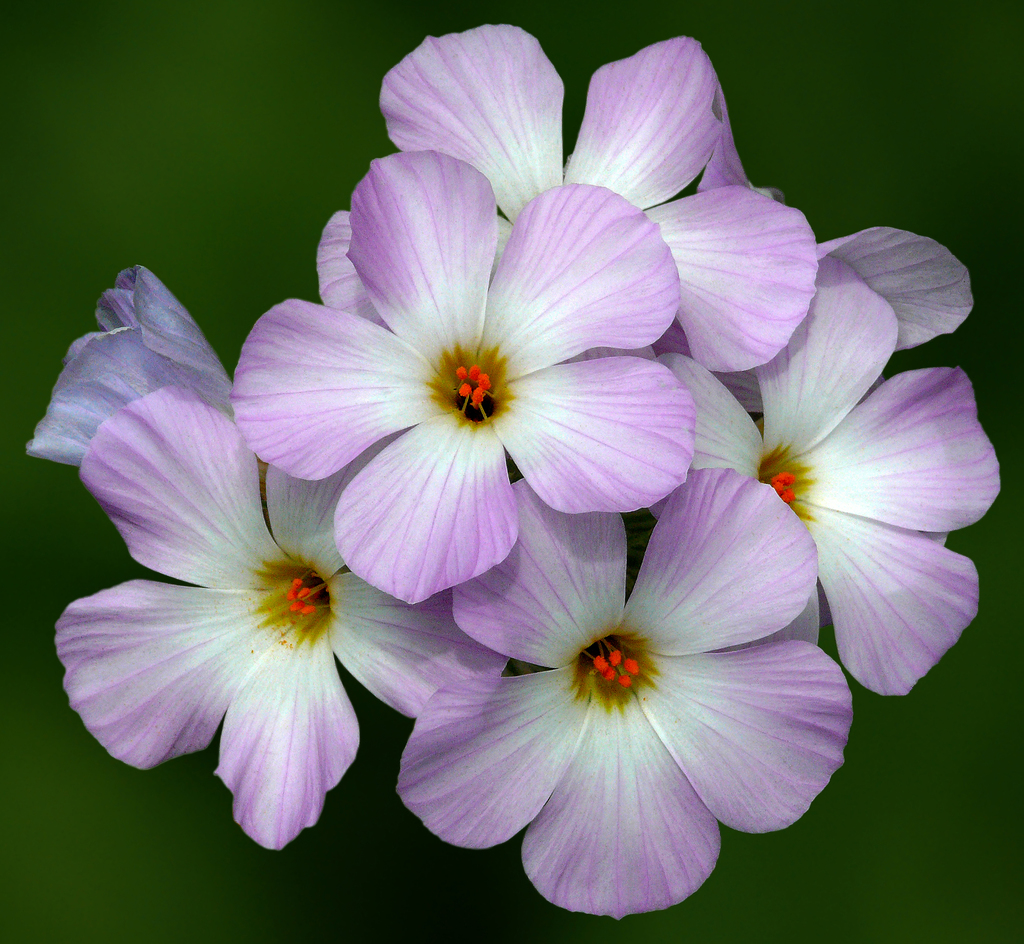
large-flowered leptosiphon
Leptosiphon grandiflorus
Leptosiphon grandiflorus (syn. Linanthus grandiflorus) is a species of flowering plant in the phlox family known by the common names large-flower linanthus and large flowered leptosiphon.
From the article Leptosiphon grandiflorus on Wikipedia (CC BY-SA), quoted section by section
Description
Leptosiphon grandiflorus is an annual herb producing a hairy stem with occasional leaves which are each divided into linear lobes up to 3 centimeters (1.2 in) long. The inflorescence at the tip of the stem is a loose cluster of a few white or pinkish funnel-shaped flowers with lobes up to 1.5 centimeters (0.59 in) long. The bloom period is April to July.
Range & habitat
It is endemic to California, where it is known from the California Coast Ranges of the Central Coast and the San Francisco Bay Area. It grows below 1,200 metres (3,900 ft) in chaparral, coastal prairie, coastal sage scrub, closed-cone pine forest, grassland, and oak woodland habitats. It is California Department of Fish and Wildlife and IUCN listed Vulnerable species, and is on the California Native Plant Society Inventory of Rare and Endangered Plants. Its current range is uncertain because many known occurrences of the plant have been extirpated.
Wikipedia: “Distribution”
Where it lives
Recorded sightings
—
geo-referenced records in GBIF, from museums, herbaria and field observers.
Drag the globe to turn it. Dots are where records exist, not a range map; darker means more records.
In the stacks
Searching the stacks…
Every page naming Leptosiphon grandiflorus in the Biodiversity Heritage Library →
This page is assembled live from iNaturalist, GBIF, Wikipedia, the Source Library and the Internet Archive. It is not yet part of the hand-edited codex. iNaturalist taxon 77688.