- Plants
- ›Vascular Plants
- ›flowering plants
- ›Dicots
- ›Mallows, Rock Roses, and Allies
- ›Mallow and Hibiscus Family
- ›Malvoideae
- ›Hibisceae
- ›Hibiscus
- ›Hibiscus trionum
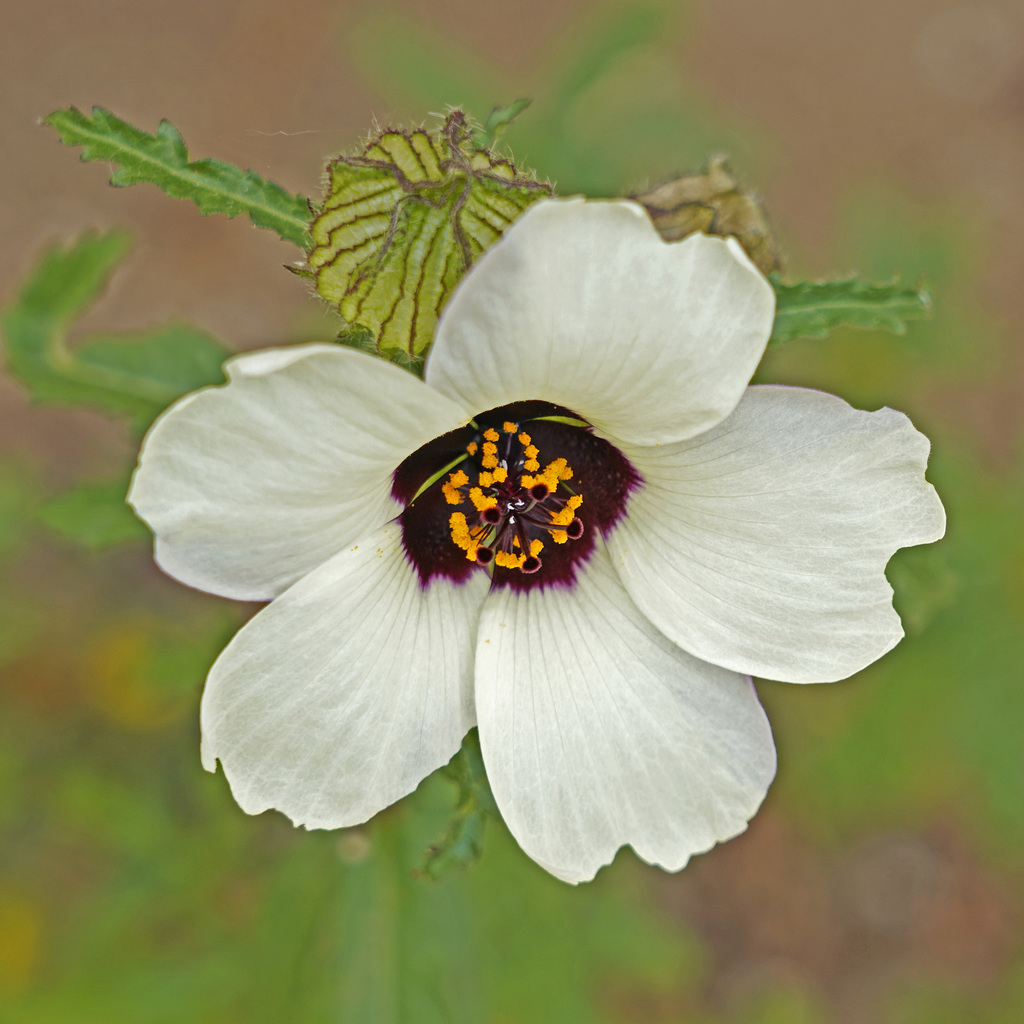
flower-of-an-hour
Hibiscus trionum
Hibiscus trionum, commonly called flower-of-an-hour, bladder hibiscus, bladder ketmia, bladder weed, flower-of-the-hour, modesty, puarangi, shoofly, and venice mallow, is an annual plant native to the Old World tropics and subtropics. It has spread throughout southern Europe both as a weed and cultivated as a garden plant. It has been introduced to the United States as an ornamental where it has become naturalized as a weed of cropland and vacant land, particularly on disturbed ground.
From the article Hibiscus trionum on Wikipedia (CC BY-SA), quoted section by section
Description
The plant grows to a height of 20–50 centimetres (8–20 in), sometimes exceeding 80 cm (30 in), and has white or yellow flowers with a purple centre. In the deeply pigmented centre of the flower, the surface features striations, which have been the subject of controversy about whether they act as a diffraction grating, creating iridescence. The pollinated but unripe seedpods look like oriental paper lanterns, less than 25 mm (1 in) across, pale green with purple highlights. The flowers of Hibiscus trionum can set seed via both outcrossing and self-pollination. During the first few hours after anthesis, the style and stigma are erect and receptive to receive pollen from other plants. In the absence of pollen donation, the style bends and makes contact with the anthers of the same flower, inducing self-pollination. Although outcrossing plants seem to perform better than self-pollinating plants, this form of reproductive assurance might have contributed to the success of H. trionum plants in several environments.
Photonic properties. Initial studies showed that artificial replicas of the flower surface produced iridescence that bees could recognise. …
Where it lives
Recorded sightings
—
geo-referenced records in GBIF, from museums, herbaria and field observers.
Drag the globe to turn it. Dots are where records exist, not a range map; darker means more records.
In the old herbals & bestiaries

In the stacks
Searching the stacks…
Every page naming Hibiscus trionum in the Biodiversity Heritage Library →
This page is assembled live from iNaturalist, GBIF, Wikipedia, the Source Library and the Internet Archive. It is not yet part of the hand-edited codex. iNaturalist taxon 77411.