- Plants
- ›Vascular Plants
- ›flowering plants
- ›Dicots
- ›begonias, gourds, and allies
- ›gourd family
- ›Benincaseae
- ›Cucumis
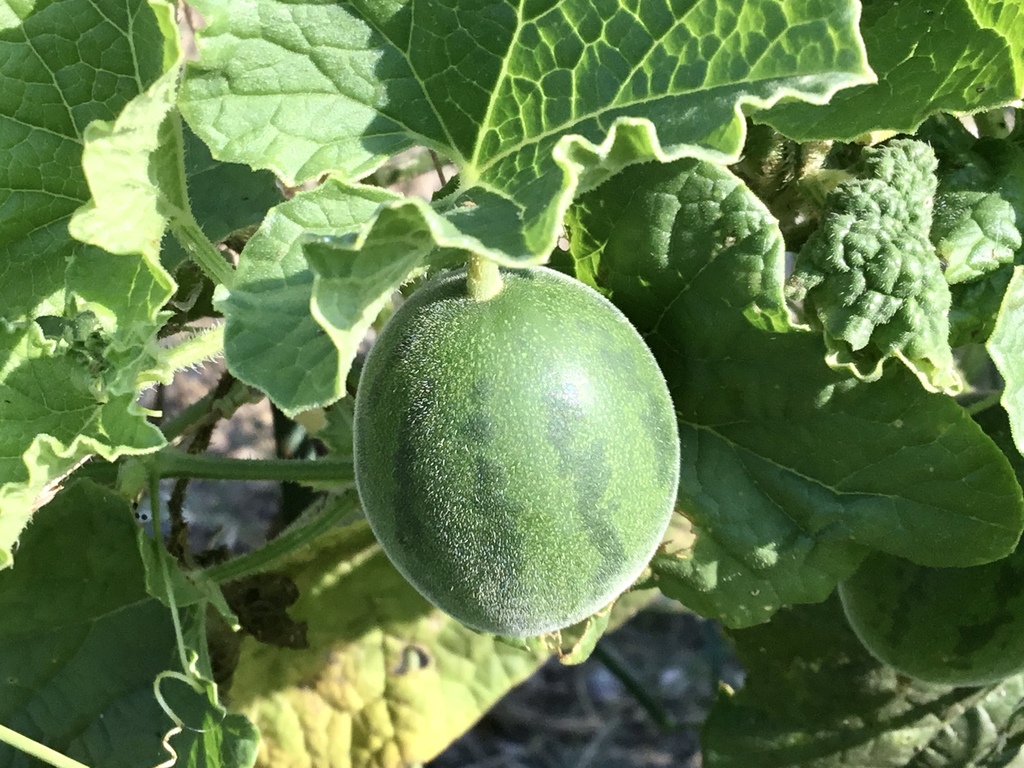
Muskmelon
Cucumis melo
Cucumis melo, also known as melon or true melon, is a species of Cucumis that has been developed into many cultivated varieties. The fruit is a pepo. The flesh is either sweet or bland, with or without an aroma, and the rind can be smooth (such as honeydew), ribbed (such as European cantaloupe), wrinkled (such as Casaba melon) or netted (such as American cantaloupe). The species is sometimes referred to as muskmelon. However, there is no consensus about the usage of this term, as it can also be used as a specific name for the musky netted-rind American cantaloupe, or as a generic name for any sweet-flesh variety such the inodorous smooth-rind honeydew melon.
Melon were domesticated four times independently. Research has revealed that seeds and rootstocks were among the goods traded along the caravan routes of the Ancient World. Some botanists consider melons native to the Levant and Egypt, while others place their origin in Iran, India or Central Asia. Still others support an African origin; in modern times, wild melons can still be found in some African countries.
From the article Cucumis melo on Wikipedia (CC BY-SA), quoted section by section
At the table
For a reference amount of 100 g (3.5 oz), a raw cantaloupe melon provides 34 calories and is a rich source (defined as at least 20% of Daily Value, DV) of both vitamin A and vitamin C; other micronutrients are at a negligible level. A raw melon is 90% water and 9% carbohydrates, with less than 1% each of protein and fat.
Wikipedia: “Nutrition”
How it is grown
The melon is an annual, trailing herb. It grows well in subtropical or warm, temperate climates. It can be found as a weed around sites of recently built airports in American Samoa. Melons prefer warm, well-fertilized soil with good drainage that is rich in nutrients, but are vulnerable to downy mildew and anthracnose. Disease risk is reduced by crop rotation with non-cucurbit crops, avoiding crops susceptible to similar diseases as melons. Cross pollination has resulted in some varieties developing resistance to powdery mildew. Arthropod pest species attracted to melons include the cucumber beetle, Aphis gossypii, melonworm moth and the pickleworm.
Wikipedia: “Cultivation”
In human culture
Melon were domesticated independently in Northeast Africa, twice in India and in China. Over time many cultivars developed with variety in shape and sweetness. Iran, India, Uzbekistan, Afghanistan and China became centers for melon production. Melons were consumed in Ancient Greece and Rome. Debate exists among scholars whether the abattiach in The Book of Numbers 11:5 refers to a melon or a watermelon. Both types of melon were known in Ancient Egypt and other settled areas. Some botanists consider melons native to the Levant and Egypt, while others place the origin in Persia, India or Central Asia, thus the origin is uncertain. Researchers have shown that seeds and rootstocks were among the goods traded along the caravan routes of the Ancient World. Several scientists support an African origin, and in modern times wild melons can still be found in several African countries in East Africa such as Ethiopia, Somalia and Tanzania.
Wikipedia: “History”
Where it lives
Recorded sightings
—
geo-referenced records in GBIF, from museums, herbaria and field observers.
Drag the globe to turn it. Dots are where records exist, not a range map; darker means more records.
In the old herbals & bestiaries


In the stacks
Searching the stacks…
Every page naming Cucumis melo in the Biodiversity Heritage Library →
This page is assembled live from iNaturalist, GBIF, Wikipedia, the Source Library and the Internet Archive. It is not yet part of the hand-edited codex. iNaturalist taxon 76538.