- Plants
- ›Vascular Plants
- ›flowering plants
- ›Dicots
- ›rockflowers, bladdernuts, and allies
- ›Crossosomataceae
- ›Crossosoma
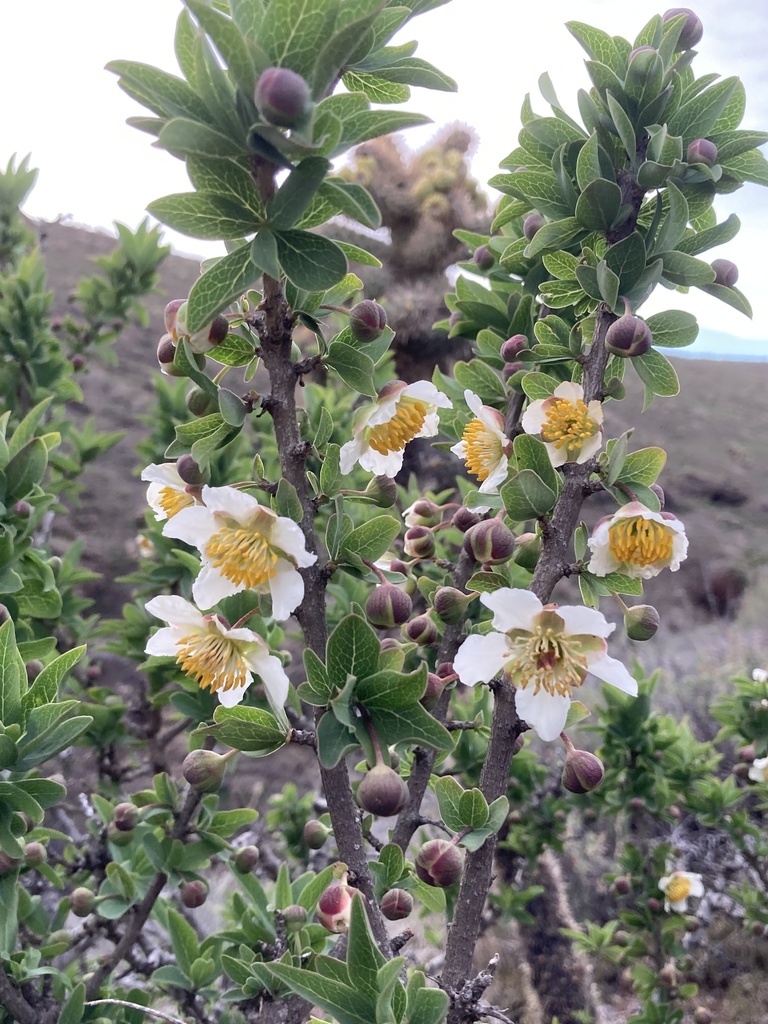
catalina crossosoma
Crossosoma californicum
Crossosoma californicum, known by the common name California rockflower, is one of only a few species in the flowering plant family Crossosomataceae.
From the article Crossosoma californicum on Wikipedia (CC BY-SA), quoted section by section
Description
Crossosoma californicum is a shrub or small tree sprawling to a maximum height of 5 metres (16 ft). The stem is intricately divided into many thorn-tipped branches lined with veiny, pale green, oval-shaped to rounded leaves up to 9 centimeters long. The species produces solitary flowers with round white petals, each one to 1.5 centimeters long. At the center are numerous of stamens and 1-5 free carpels
Range & habitat
Crossosoma californicum is native to San Clemente and Santa Catalina Islands, two of the Channel Islands of California, as well as Guadalupe Island off the coast of Baja California. It is also known from one location on the mainland California coast at the Portuguese Bend Nature Preserve, on the Palos Verdes Peninsula of Los Angeles County.
Wikipedia: “Distribution”
Where it lives
Recorded sightings
—
geo-referenced records in GBIF, from museums, herbaria and field observers.
Drag the globe to turn it. Dots are where records exist, not a range map; darker means more records.
In the stacks
Searching the stacks…
Every page naming Crossosoma californicum in the Biodiversity Heritage Library →
This page is assembled live from iNaturalist, GBIF, Wikipedia, the Source Library and the Internet Archive. It is not yet part of the hand-edited codex. iNaturalist taxon 76483.