- Plants
- ›Vascular Plants
- ›flowering plants
- ›Dicots
- ›pinks, cactuses, and allies
- ›Pussypaw Family
- ›Claytonia
- ›Rhizomatosae
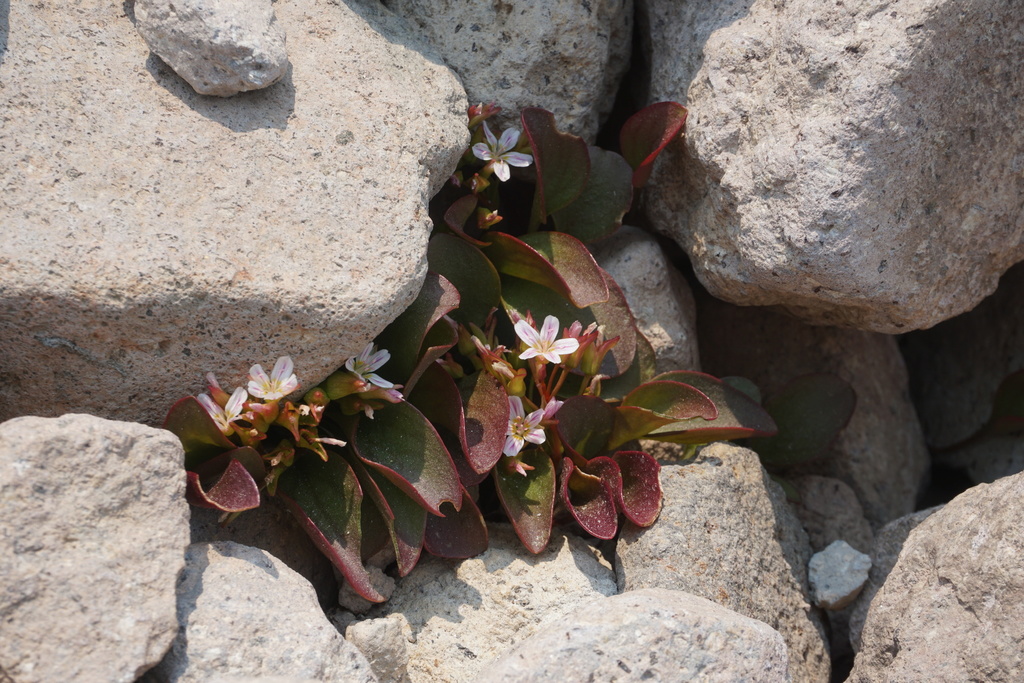
Sierra Springbeauty
Claytonia nevadensis
Claytonia nevadensis, known by the common names Sierra springbeauty and Sierra Nevada claytonia, is a species of wildflower in the family Montiaceae. The evolutionary relationship of Claytonia nevadensis to other claytonias is a subject of debate and ongoing genetic studies. Sierra springbeauties are diploid with a chromosome base number of x = 7
From the article Claytonia nevadensis on Wikipedia (CC BY-SA), quoted section by section
Description
Claytonia nevadensis is a perennial herb growing from a network of fleshy rhizomes with a small horizontal caudex at ground level. It takes the form of a leafy clump with a stem no longer than about 10 centimeters (4 inches). The thick red-green leaves are oval to spade-shaped and a few centimeters long, not counting the longer petiole of the most basal leaves. The inflorescence is a dense cluster of 2 to 8 flowers which nests in the clump of leaves or arises on a very short stalk. Each flower has five magenta to pink-tinted white petals up to a centimeter long. The bloom period is July to September.
Range & habitat
The wildflower is endemic to northern California and south-central Oregon. It is native to the Sierra Nevada as far south as Farewell Gap; and is indigenous to the Sweetwater Range, Trinity Mountains, Inner Klamath Range, southern Cascade Range, and northeast to the Warner Mountains and Steens Mountain of the Harney Basin Region of Oregon. It grows in subalpine habitats such as scree and gravelly snowmelt stream banks.
Wikipedia: “Distribution”
Where it lives
Recorded sightings
—
geo-referenced records in GBIF, from museums, herbaria and field observers.
Drag the globe to turn it. Dots are where records exist, not a range map; darker means more records.
In the stacks
Searching the stacks…
Every page naming Claytonia nevadensis in the Biodiversity Heritage Library →
This page is assembled live from iNaturalist, GBIF, Wikipedia, the Source Library and the Internet Archive. It is not yet part of the hand-edited codex. iNaturalist taxon 76388.