- Plants
- ›Vascular Plants
- ›flowering plants
- ›monocots
- ›grasses, sedges, cattails, and allies
- ›Sedges
- ›Cyperoideae
- ›Abildgaardieae
- ›Bulbostylis
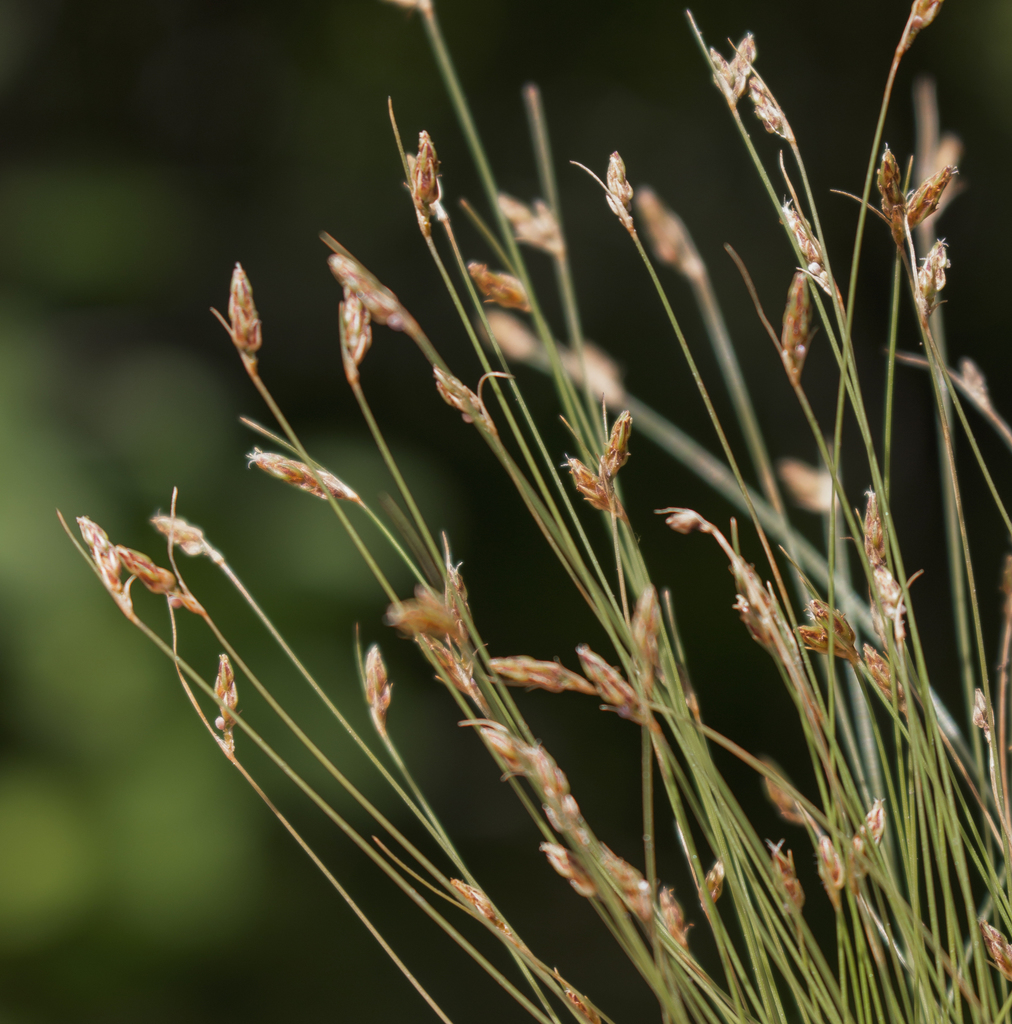
Densetuft Hairsedge
Bulbostylis capillaris
Bulbostylis capillaris is a species of sedge known by the common names densetuft hairsedge and threadleaf beakseed. It is native to much of North America, South America and the West Indies from Canada to Bolivia.
Bulbostylis capillaris grows in many types of habitat, generally in moist areas such as streamside meadows. It is an annual herb which is somewhat variable in appearance but generally takes the form of a small, upright tuft of green herbage growing close to the ground, between 10 and 24 centimeters tall. There are several stems surrounded by thready, thin leaves. The inflorescence occurs at the tip of the stem and is composed of tiny spikelets which are green washed with rusty red. The fruit is about a millimeter long.
From the article Bulbostylis capillaris on Wikipedia (CC BY-SA), quoted section by section
At the table
Along with Piptochaetium montevidense and Juncus capillacaeus, Bulbostylis capillaris is used in Rio Grande do Sul as a medicinal plant in the form of a tisane to treat urinary tract infections (UTIs). This claim of antimicrobial activity against two common causes of UTIs, E. coli and Klebsiella pneumoniae, was investigated by Vogel et al. (2011) but found no evidence of effectiveness in treating bacterial infections.
Wikipedia: “Uses”
Where it lives
Recorded sightings
—
geo-referenced records in GBIF, from museums, herbaria and field observers.
Drag the globe to turn it. Dots are where records exist, not a range map; darker means more records.
In the stacks
Searching the stacks…
Every page naming Bulbostylis capillaris in the Biodiversity Heritage Library →
This page is assembled live from iNaturalist, GBIF, Wikipedia, the Source Library and the Internet Archive. It is not yet part of the hand-edited codex. iNaturalist taxon 75920.