- Plants
- ›Vascular Plants
- ›flowering plants
- ›Dicots
- ›Roses, Elms, Figs, and Allies
- ›rose family
- ›brambles, roses, strawberries, and allies
- ›agrimonies and burnets
- ›agrimony subtribe
- ›Agrimonia
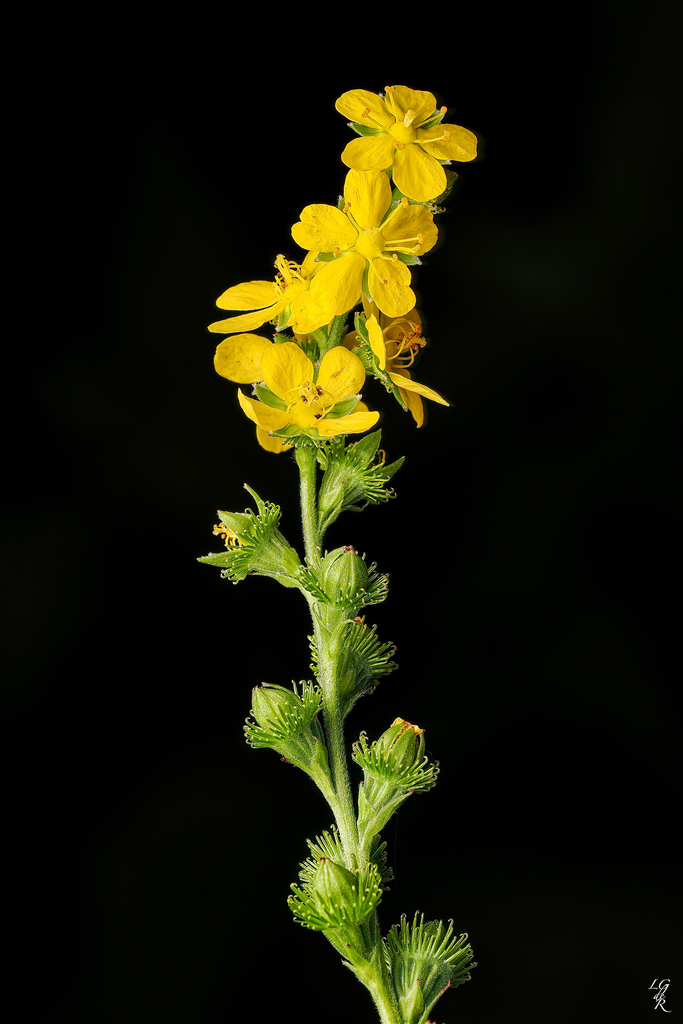
roadside agrimony
Agrimonia striata
Agrimonia striata (roadside agrimony, grooved agrimony, agrimony, cocklebur, woodland agrimony, woodland grooveburr) is a species of perennial forb belonging to the rose family (Rosaceae). It grows to about 40 inches or 120-180 centimeters, producing a dense cluster (raceme) of 5-parted yellow flowers on a hairy stalk above pinnately-divided leaves. It is native to the United States, Canada, and Saint Pierre and Miquelon. It is susceptible to downy mildew caused by the oomycete species Peronospora agrimoniae.
The species name striata means "striped".
Where it lives
Recorded sightings
—
geo-referenced records in GBIF, from museums, herbaria and field observers.
Drag the globe to turn it. Dots are where records exist, not a range map; darker means more records.
In the stacks
Searching the stacks…
Every page naming Agrimonia striata in the Biodiversity Heritage Library →
This page is assembled live from iNaturalist, GBIF, Wikipedia, the Source Library and the Internet Archive. It is not yet part of the hand-edited codex. iNaturalist taxon 75308.