- Animals
- ›Chordates
- ›Vertebrates
- ›Mammals
- ›Therians
- ›Placental Mammals
- ›Primates, Rodents, and Allies
- ›Rodents
- ›Mice, Rats, and Hamsters
- ›Muroids
- ›Hamsters, Voles, Lemmings, and Allies
- ›South American Mice and Rats
- ›Akodonts
- ›Scapteromys
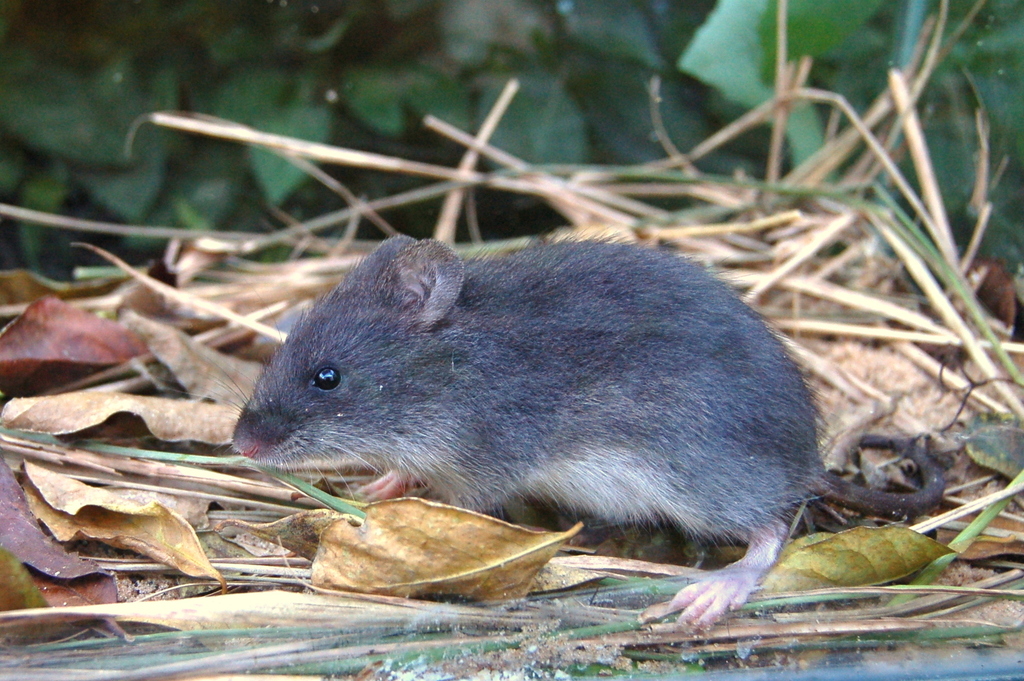
Argentine swamp rat
Scapteromys aquaticus
The Argentine swamp rat (Scapteromys aquaticus) is a semiaquatic rodent species from South America. It is found in northeastern Argentina and Paraguay, where it lives in freshwater marshes and along the southern coast of the Río de la Plata estuary, as well as in woodland.
It is characterized by having stiff hairs on its otherwise naked tail, which are believed to help the animal swim. S. aquaticus is similar in build to members of the genus Rattus. "[It] has a relatively larger head, a stouter body, larger feet, and a relatively longer tail." The pelage along its back is "long and glossy" varying from brown to dark brown. It can have a grayish wash in some individuals. "The sides have a yellowish cast." The pelage in the abdominal region is typically an off white color. The forefeet are large for use in swimming and digging. All digits, including the pollex are equipped with a claw. Its karyotype has 2n = 32.
From the article Argentine swamp rat on Wikipedia (CC BY-SA), quoted section by section
Range & habitat
These rodents are found in low, flooded grasslands, salt marshes and any area with standing water. They are good swimmers and employ the aid of their "swimming fringe" and have also been observed diving.
Wikipedia: “Habitat”
What it does
Argentine swamp rats eat mostly beetles and earthworms. They are active during both day and night. Females were found, on average, with between three and five young and breeding males were found year-round. There is no evidence that they dig burrows. Researchers have discovered young in shallow depressions in the ground covered by matted grass.
== References ==
Wikipedia: “Biology and behavior”
Listen
Looking for field recordings…
Where it lives
Recorded sightings
—
geo-referenced records in GBIF, from museums, herbaria and field observers.
Drag the globe to turn it. Dots are where records exist, not a range map; darker means more records.
In the stacks
Searching the stacks…
Every page naming Scapteromys aquaticus in the Biodiversity Heritage Library →
This page is assembled live from iNaturalist, GBIF, Wikipedia, the Source Library and the Internet Archive. It is not yet part of the hand-edited codex. iNaturalist taxon 75064.