- Plants
- ›Vascular Plants
- ›flowering plants
- ›Dicots
- ›Soapberries, Cashews, Mahoganies, and Allies
- ›Cashew Family
- ›cashews, sumacs, and allies
- ›Schinopsis
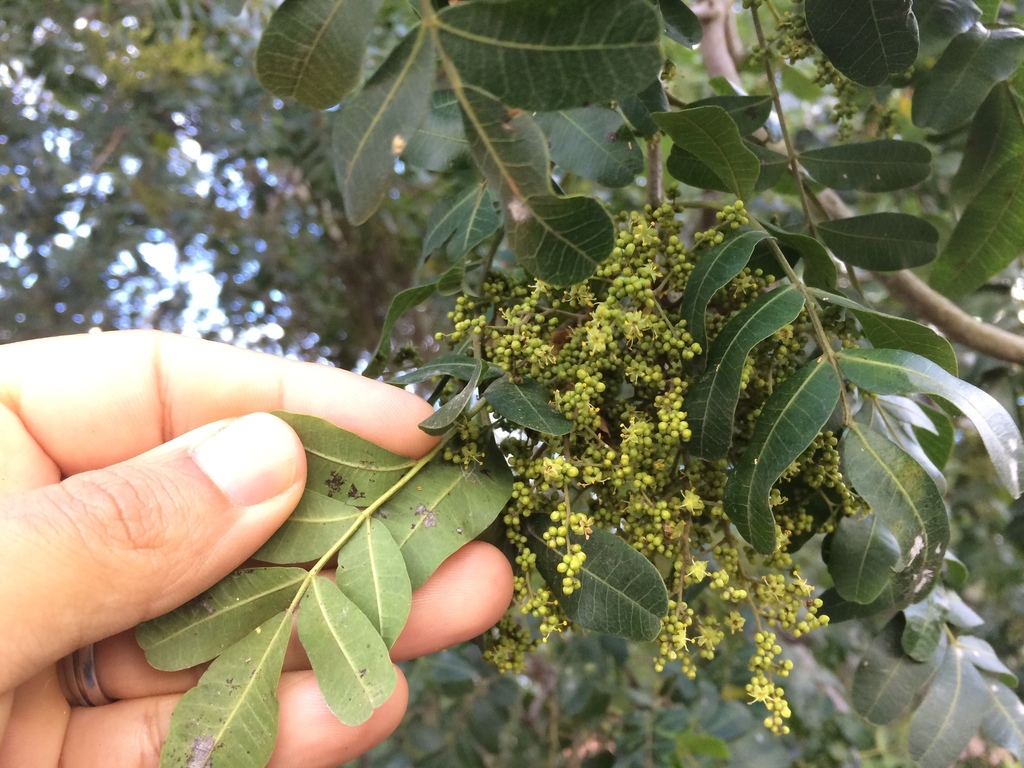
Schinopsis brasiliensis
Schinopsis brasiliensis is a species of flowering plant in the cashew family known by the common names baraúna or braúna.
This species is native to Brazil, Bolivia, and Paraguay. It is a component of the Caatinga ecoregion in northwestern Brazil and the Chiquitano dry forests ecoregion of eastern Bolivia and adjacent portions of Brazil.
From the article Schinopsis brasiliensis on Wikipedia (CC BY-SA), quoted section by section
Description
Schinopsis brasiliensis can grow up to 12 metres (39 ft) tall with a trunk diameter of 60 centimeters.
At the table
This tree has a hard, sturdy wood which is used in construction. Because of its harvesting for this purpose, the tree is considered an endangered species. Two species of mite have been noted to live on this tree, Calacarus torulus and Shevtchenkella schinopsidis.
Wikipedia: “Uses”
Where it lives
Recorded sightings
—
geo-referenced records in GBIF, from museums, herbaria and field observers.
Drag the globe to turn it. Dots are where records exist, not a range map; darker means more records.
In the stacks
Searching the stacks…
Every page naming Schinopsis brasiliensis in the Biodiversity Heritage Library →
This page is assembled live from iNaturalist, GBIF, Wikipedia, the Source Library and the Internet Archive. It is not yet part of the hand-edited codex. iNaturalist taxon 745716.