- Plants
- ›Vascular Plants
- ›flowering plants
- ›monocots
- ›lilies, supplejacks, and allies
- ›Herb-Paris, False Hellebores, Trilliums and allies
- ›Heloniadeae
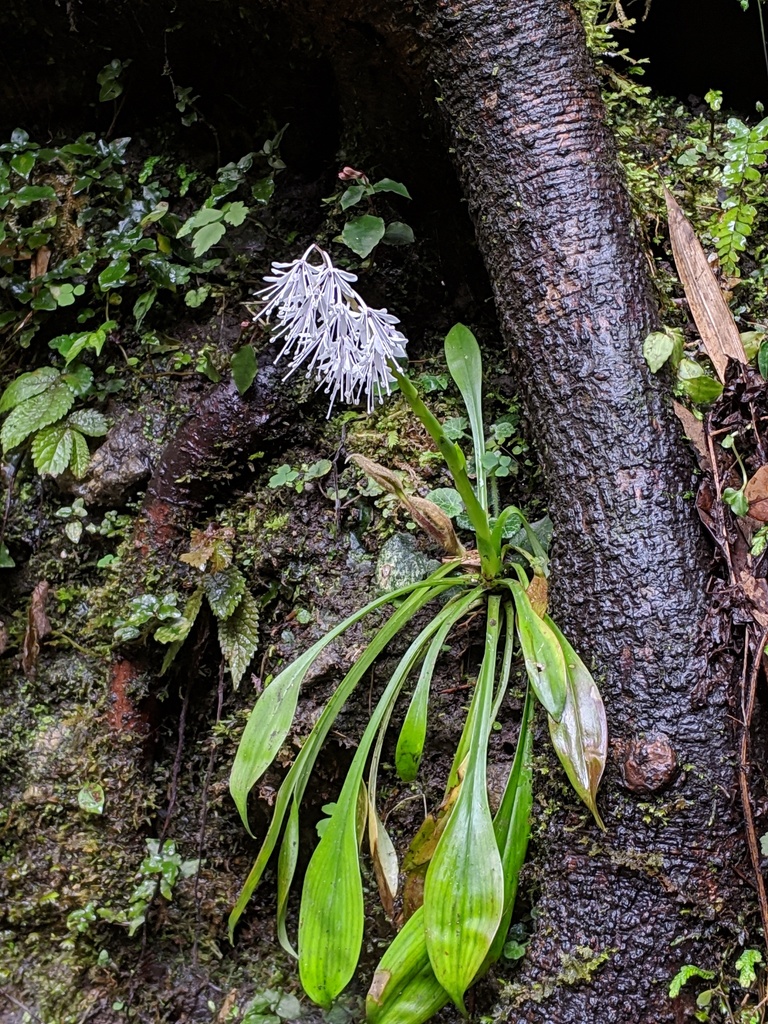
Ypsilandra
Ypsilandra is a genus of at least six herbaceous plant species, first described as a genus in 1888. This genus is a member of the Melanthiaceae and is native to East Asia (China, the Himalayas, Myanmar, Thailand).
Ypsilandra species are perennial plants that grow from thick rhizomes. They are associated with sloping, forested habitats. They are very infrequently cultivated in the West. Their leaves are generally long and thin, growing in a rosette from the base of the plant. Ypsilandra species produce flowers on a long scape arising from the intersection of the leaves and the stem. The inflorescences consist of a cluster of nodding, radially-symmetrical tube-shaped flowers with six tepals. The stamens protrude beyond the tepals. Depending on the species, the tepals may be white, pink, purple, or yellow.
6 branches of this genus, most-observed first
Ypsilandra thibetica
speciesYpsilandra thibetica
Ypsilandra cavaleriei
speciesYpsilandra cavaleriei
Ypsilandra jinpingensis
speciesYpsilandra jinpingensis
Ypsilandra yunnanensis
speciesYpsilandra yunnanensis
Ypsilandra kansuensis
speciesYpsilandra kansuensis
Ypsilandra alpina
speciesYpsilandra alpina
Where it lives
Recorded sightings
—
geo-referenced records in GBIF, from museums, herbaria and field observers.
Drag the globe to turn it. Dots are where records exist, not a range map; darker means more records.
In the stacks
Searching the stacks…
Every page naming Ypsilandra in the Biodiversity Heritage Library →
This page is assembled live from iNaturalist, GBIF, Wikipedia, the Source Library and the Internet Archive. It is not yet part of the hand-edited codex. iNaturalist taxon 737196.