- Animals
- ›Chordates
- ›Vertebrates
- ›Mammals
- ›Therians
- ›Placental Mammals
- ›Primates, Rodents, and Allies
- ›Rodents
- ›Mice, Rats, and Hamsters
- ›Muroids
- ›Hamsters, Voles, Lemmings, and Allies
- ›South American Mice and Rats
Oldfield and Climbing Mice
Thomasomyini
Sigmodontinae is a subfamily of rodents that includes New World rats and mice, with at least 376 species. Their distribution includes much of the New World, but the genera are predominantly South American, such as brucies. They invaded South America from Central America as part of the Great American Interchange near the end of the Miocene, about 5 million years ago. Sigmodontines proceeded to diversify explosively in the formerly isolated continent. They inhabit many of the same ecological niches that the Murinae occupy in the Old World.
The "Thomasomyini" from the Atlantic Forest of Brazil are generally thought to be not especially related to the "real" Thomasomyini from the northern Andes and the Amazon rainforest. The genera Wiedomys and Sigmodon are generally placed in their own tribe, and the "phyllotines" Irenomys, Punomys, Euneomys, and Reithrodon are considered incertae sedis.
4 branches of this tribe, most-observed first · about 85 known species

South American Climbing Mice
genusRhipidomys

Oldfield Mice
genusThomasomys
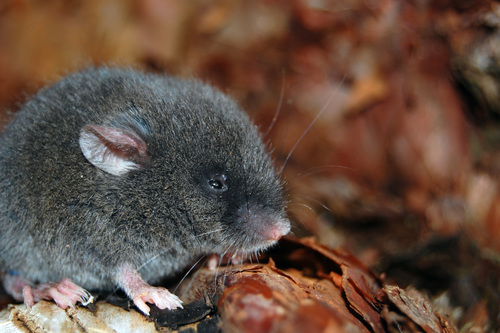
Chilomys
genusChilomys
Montane Mice
genusAepeomys
Where it lives
Recorded sightings
—
geo-referenced records in GBIF, from museums, herbaria and field observers.
Drag the globe to turn it. Dots are where records exist, not a range map; darker means more records.
In the stacks
Searching the stacks…
Every page naming Thomasomyini in the Biodiversity Heritage Library →
This page is assembled live from iNaturalist, GBIF, Wikipedia, the Source Library and the Internet Archive. It is not yet part of the hand-edited codex. iNaturalist taxon 735076.