- Plants
- ›Vascular Plants
- ›flowering plants
- ›Dicots
- ›Soapberries, Cashews, Mahoganies, and Allies
- ›citrus family
- ›Amyridoideae
Cneoridium
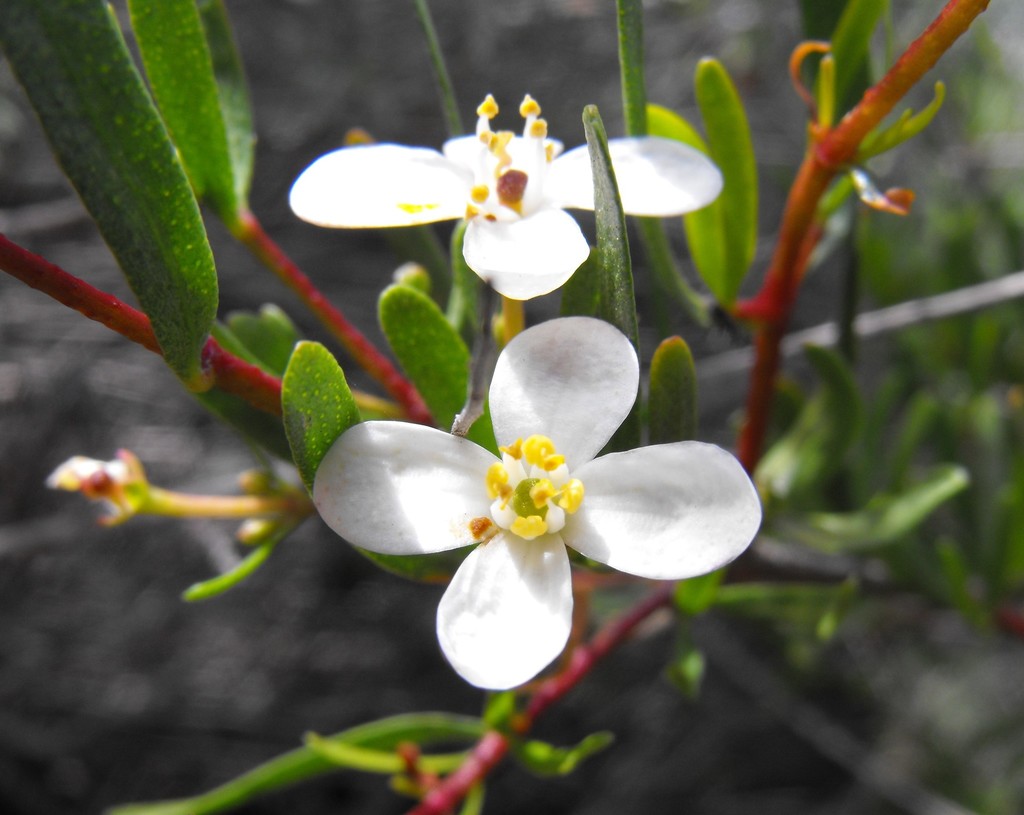
Cneoridium is a monotypic genus in the citrus family which contains the single species Cneoridium dumosum, commonly known as bushrue or coast spice bush. As a perennial, evergreen shrub, Cneoridium is native to the coast of southern California and Baja California, thriving in hot, dry conditions. This plant is characterized by a distinctive citrusy aroma and small, white flowers that appear from winter to spring. The flowers eventually become round berries that resemble a miniature version of the common citrus.
Widely known and utilized by the indigenous peoples of the Americas for centuries, this species was first discovered and introduced to Western science by Thomas Nuttall, on his trip to San Diego. Today, this species is listed as imperiled, as some of its habitats are threatened by coastal development, urbanization, military operations and fire suppression. It has also found its way into horticultural circles in its native regions, providing gardeners with a low-maintenance shrub that gives off rewarding flowers. Despite attractive qualities like its distinctive fragrance and flowers, this species may cause blistering and burning rashes to people after contact with its foliage, a phenomenon common with members of the citrus family, known as phytophotodermatitis.
1 branches of this genus, most-observed first
See this branch on the Wheel of Life →
Where it lives
Recorded sightings
—
geo-referenced records in GBIF, from museums, herbaria and field observers.
Drag the globe to turn it. Dots are where records exist, not a range map; darker means more records.
In the stacks
Searching the stacks…
Every page naming Cneoridium in the Biodiversity Heritage Library →
This page is assembled live from iNaturalist, GBIF, Wikipedia, the Source Library and the Internet Archive. It is not yet part of the hand-edited codex. iNaturalist taxon 72059.