- Plants
- ›Vascular Plants
- ›flowering plants
- ›Dicots
- ›borages
- ›borage family
- ›Boraginoideae
- ›Lithospermeae
- ›Lithospermum
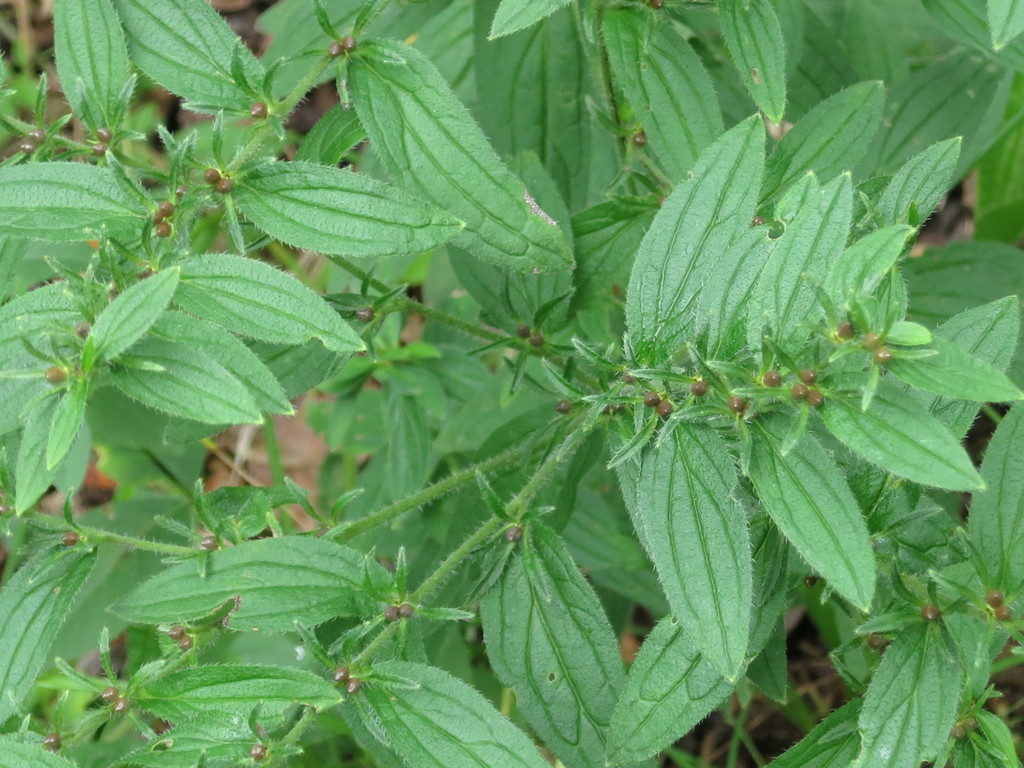
Lithospermum erythrorhizon
Lithospermum erythrorhizon, commonly called purple gromwell, red stoneroot, red gromwell, red-root gromwell and redroot lithospermum, is a plant species in the family Boraginaceae. It is called zǐcǎo (紫草) in Chinese, jichi (지치) in Korean, and murasaki (ムラサキ; 茈, 紫) in Japanese.
The dried root of Lithospermum erythrorhizon (lithospermum root or Lithospermi Radix) is a Chinese herbal medicine with various antiviral and biological activities, including inhibition of human immunodeficiency virus type 1 (HIV-1).
From the article Lithospermum erythrorhizon on Wikipedia (CC BY-SA), quoted section by section
At the table
It has been cultivated in Japan since the Nara period for its root, which can be used for herbal medicine and to make dyes. Before the introduction of synthetic dyes to Meiji period Japan, the roots were commonly used as a dyestuff for luxury textiles, typically high-end kimono and obi. The process of extracting purple dyestuff from the roots was an exceedingly long, complex and time-consuming process, necessitating its relatively high expense:
The roots [of the plant] are collected and dried for two to three months to mature the color. While this occurs, the silk is pre-mordanted [...] the mordanting process involves repeated immersion of the cloth or yarn in the alum bath and drying over a two- or three-month period. To prepare the dyestuff, the gromwell roots are softened overnight in 60° [Celsius] water and then pounded to release the dye. The silk is then repeatedly immersed in the bath, aired to allow more oxygen to penetrate the cloth and then steeped in the dye until the desired color is achieved. When the dyeing is completed the cloth is placed in dark storage for as long as a year while the color continues to mature. For a deep purple, up to 50 dips could be needed. …
Wikipedia: “Uses”
Where it lives
Recorded sightings
—
geo-referenced records in GBIF, from museums, herbaria and field observers.
Drag the globe to turn it. Dots are where records exist, not a range map; darker means more records.
In the old herbals & bestiaries


In the stacks
Searching the stacks…
Every page naming Lithospermum erythrorhizon in the Biodiversity Heritage Library →
This page is assembled live from iNaturalist, GBIF, Wikipedia, the Source Library and the Internet Archive. It is not yet part of the hand-edited codex. iNaturalist taxon 715299.