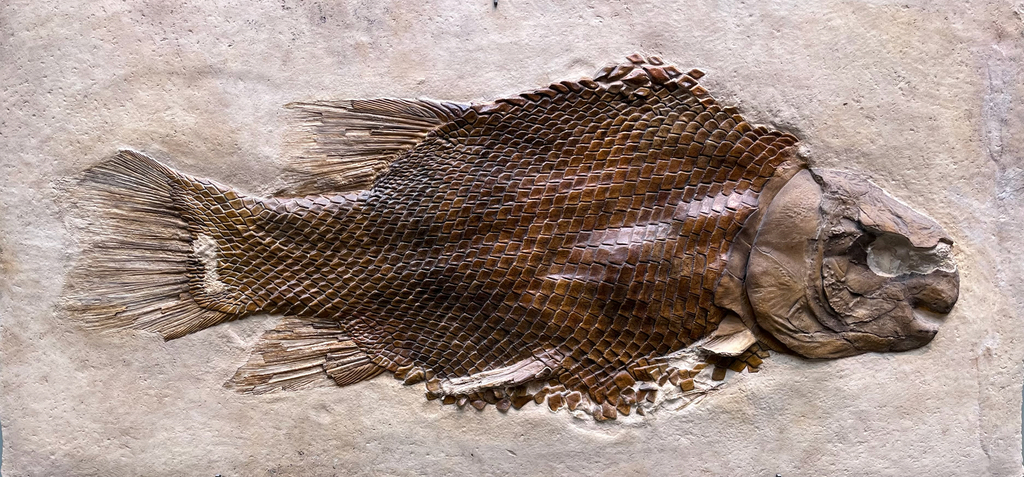
Placoderms
Placodermi
Placoderms (from Ancient Greek πλάξ [plax, plakos] 'plate' and δέρμα [derma] 'skin') are vertebrate animals of the class Placodermi, an extinct group of prehistoric fish known from Paleozoic fossils during the Silurian and the Devonian periods. While their endoskeletons are mainly cartilaginous, their head and thorax were covered by articulated armoured plates (hence the name), and the rest of the body was scaled or naked depending on the species.
Placoderms were among the first jawed fish (their jaws likely evolved from the first pair of gill arches), as well as the first vertebrates to have true teeth. They were also the first fish clade to develop pelvic fins, the second set of paired fins and the homologous precursor to hindlimbs in tetrapods. 380-million-year-old fossils of three other genera, Incisoscutum, Materpiscis and Austroptyctodus, represent the oldest known examples of live birth.
1 branches of this class, most-observed first
See this branch on the Wheel of Life →
Where it lives
Recorded sightings
—
geo-referenced records in GBIF, from museums, herbaria and field observers.
Drag the globe to turn it. Dots are where records exist, not a range map; darker means more records.
In the stacks
Searching the stacks…
Every page naming Placodermi in the Biodiversity Heritage Library →
This page is assembled live from iNaturalist, GBIF, Wikipedia, the Source Library and the Internet Archive. It is not yet part of the hand-edited codex. iNaturalist taxon 714997.