- Plants
- ›Vascular Plants
- ›flowering plants
- ›Dicots
- ›saxifrages, stonecrops, and allies
- ›saxifrage family
- ›golden saxifrage tribe
- ›Chrysosplenium
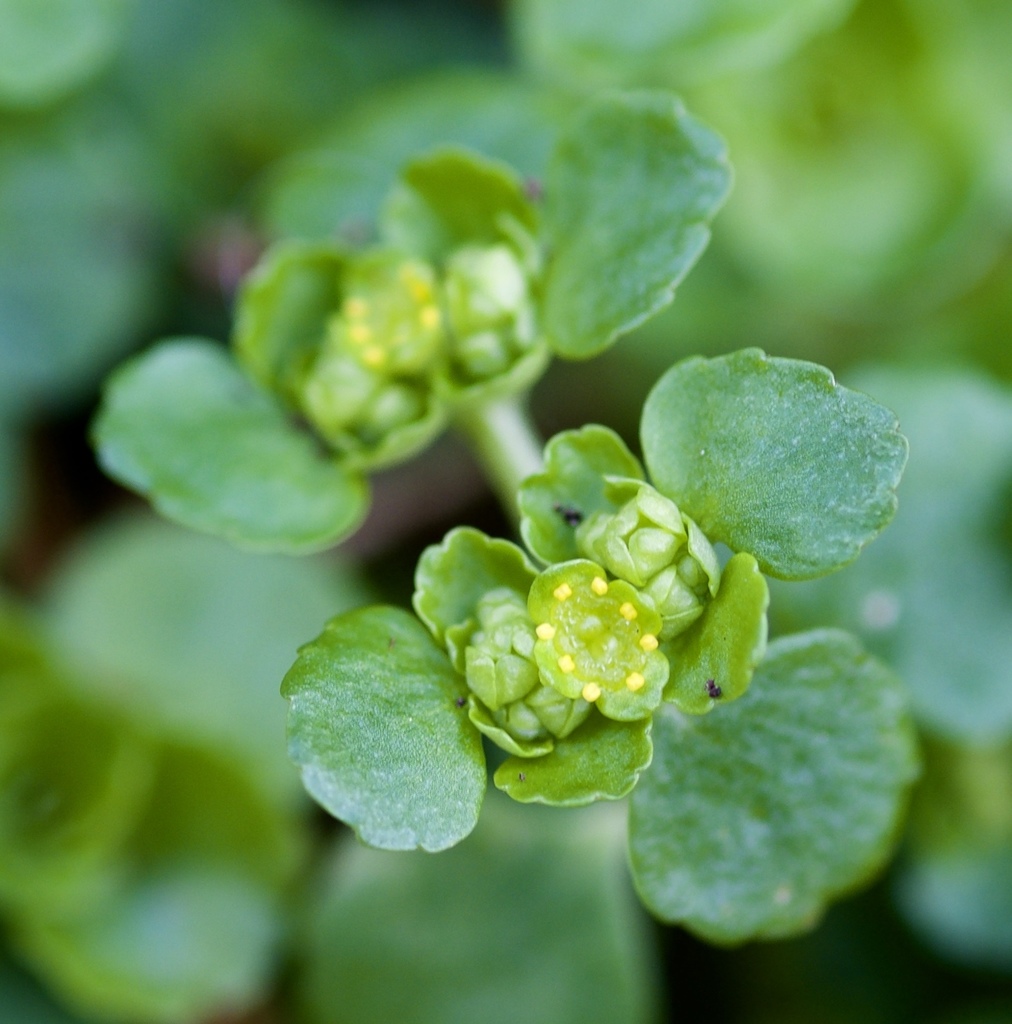
Opposite-leaved Golden-saxifrage
Chrysosplenium oppositifolium
Chrysosplenium oppositifolium, the opposite-leaved golden-saxifrage, is a species of flowering plant in the family Saxifragaceae.
From the article Chrysosplenium oppositifolium on Wikipedia (CC BY-SA), quoted section by section
Description
Chrysosplenium oppositifolium is a small, slightly hairy, creeping plant, with square stems. The leaves grow in opposite pairs, are rounded or oblong in shape and have blunt teeth. The tiny flowers grow between 3 and 4 mm, and are surrounded by bright yellow-green leafy bracts. It flowers from March to July.
Range & habitat
This plant is native to Europe (Belgium, Czechoslovakia, Denmark, France, Germany, Great Britain, Ireland, Italy, Netherlands, Norway, Poland, Portugal, Spain, Sweden, Switzerland and former Yugoslavia). It was first described by Carl Linnaeus in 1753. The plant can tolerate low light levels down to 24 lux. The plant prefers to grow in damp, shady places, often by streamsides or in damp woodland.
== References ==
Wikipedia: “Distribution and habitat”
Where it lives
Recorded sightings
—
geo-referenced records in GBIF, from museums, herbaria and field observers.
Drag the globe to turn it. Dots are where records exist, not a range map; darker means more records.
In the stacks
This page is assembled live from iNaturalist, GBIF, Wikipedia, the Source Library and the Internet Archive. It is not yet part of the hand-edited codex. iNaturalist taxon 69626.