- Animals
- ›Chordates
- ›Vertebrates
- ›Mammals
- ›Therians
- ›Placental Mammals
- ›Ungulates, Carnivorans, and Allies
- ›Odd-toed Ungulates
- ›Rhinoceroses
- ›Elasmotherium
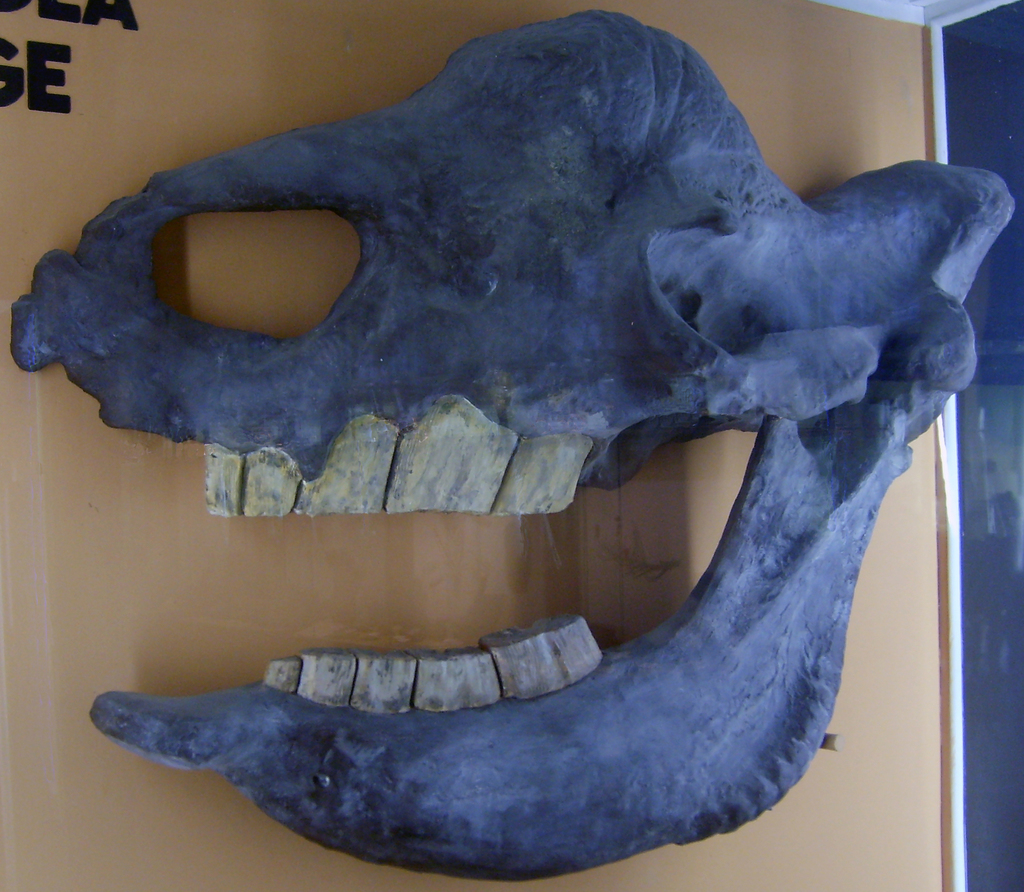
Giant Siberian Rhinoceros
Elasmotherium sibiricum
Elasmotherium (from Ancient Greek ἔλασμα (élasma), meaning "metal plate" with the intended meaning "lamina" in reference to the tooth enamel, and θηρίον (theríon), meaning "beast") is an extinct genus of very large rhinoceros that lived in Eastern Europe, Central Asia and East Asia from the late Miocene through to the Late Pleistocene, until at least 39,000 years ago. It was the last surviving member of the subfamily Elasmotheriinae, a formerly diverse group of rhinoceroses separate from the subfamily Rhinocerotinae, that contains all living rhinoceroses.
Five species are recognised. The genus first appeared in the Late Miocene in present-day China, likely having evolved from Sinotherium, before spreading to the Pontic–Caspian steppe, the Caucasus and Central Asia. Species of Elasmotherium are the largest known true rhinoceroses, reaching body lengths of at least 4.5 metres (15 ft), shoulder heights of over 2 metres (6 ft 7 in), and estimated body masses of 3.5–5 tonnes (7,700–11,000 lb), comparable to an elephant.
From the article Elasmotherium on Wikipedia (CC BY-SA), quoted section by section
Description
Elasmotherium is the largest known rhinocerotid, and one of the largest members of Rhinocerotoidea, excluding the largest paraceratheres like Paraceratherium.supplementary material The largest known specimens of E. sibiricum reach up to 4.5 m (15 ft) in length, with shoulder heights of over 2 m (6 ft 7 in), with a 2018 study estimating a body mass of around 3.5 tonnes (7,700 lb), while extrapolations based on isolated teeth of E. caucasicum, which are larger than those of E. sibiricum, suggest the largest E. caucasicum individuals may have reached 5–5.2 m (16–17 ft) in body length and a body mass of 4–5 tonnes (8,800–11,000 lb). These make Elasmotherium comparable in size to the woolly mammoth (Mammuthus primigenius) and larger than the contemporary woolly rhinoceros (Coelodonta antiquitatis).
The cervical vertebrae of the neck were very robust, with the atlas (the first neck vertebra that articulates with the skull) in particular having broad wings up to 70 centimetres (28 in) across, exceeding the width of the skull. The posterior neck vertebrae, as well as the thoracic vertebrae of the back have elongate neural spines, reaching up to 50 centimetres (20 in) in length. The neck of Elasmotherium is thought to have been heavily muscled. …
Listen
Looking for field recordings…
Where it lives
Recorded sightings
—
geo-referenced records in GBIF, from museums, herbaria and field observers.
Drag the globe to turn it. Dots are where records exist, not a range map; darker means more records.
In the stacks
Searching the stacks…
Every page naming Elasmotherium sibiricum in the Biodiversity Heritage Library →
This page is assembled live from iNaturalist, GBIF, Wikipedia, the Source Library and the Internet Archive. It is not yet part of the hand-edited codex. iNaturalist taxon 627094.