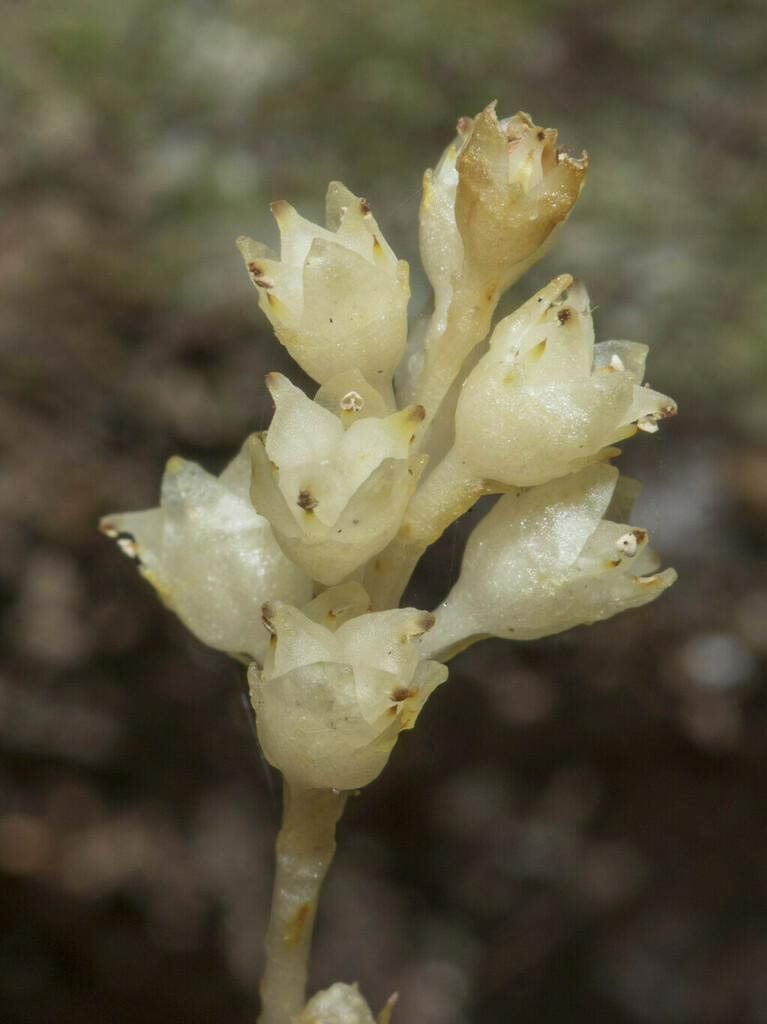
Petrosaviales
Petrosaviaceae is a family of flowering plants belonging to a monotypic order, Petrosaviales. Petrosaviales are monocots, and are grouped within the lilioid monocots. Petrosaviales is a very small order composed of one family, two genera and four species accepted in 2016. Some species are photosynthetic (Japonolirion) and others are rare, leafless, chlorophyllous, mycoheterotrophic plants (Petrosavia). The family is found in low-light montane rainforests in Japan, China, Southeast Asia and Borneo. They are characterised by having bracteate racemes, pedicellate flowers, six persistent tepals, septal nectaries, three almost-distinct carpels, simultaneous microsporogenesis, monosulcate pollen, and follicular fruit.
1 branches of this order, most-observed first
See this branch on the Wheel of Life →
Where it lives
Recorded sightings
—
geo-referenced records in GBIF, from museums, herbaria and field observers.
Drag the globe to turn it. Dots are where records exist, not a range map; darker means more records.
In the stacks
Searching the stacks…
Every page naming Petrosaviales in the Biodiversity Heritage Library →
This page is assembled live from iNaturalist, GBIF, Wikipedia, the Source Library and the Internet Archive. It is not yet part of the hand-edited codex. iNaturalist taxon 62490.