- Plants
- ›Vascular Plants
- ›flowering plants
- ›Dicots
- ›Mints, Plantains, Olives, and Allies
- ›broomrape family
- ›Pedicularideae
- ›Aureolaria
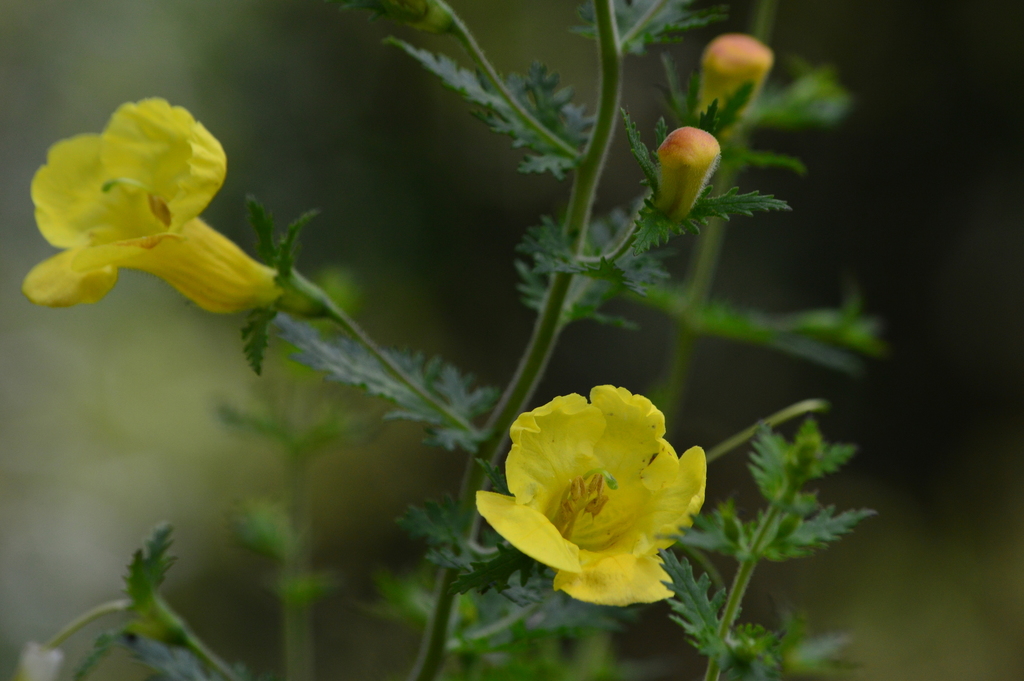
fern-leaved false foxglove
Aureolaria pedicularia
Aureolaria pedicularia, the fernleaf yellow false foxglove, fern-leaved false foxglove, or fernleaf false foxglove, is a parasitic plant and part of the Orobanchaceae family. Aureolaria pedicularia is native to parts of the eastern US, the Midwest, and adjacent Canada. This plant is known for its distinct leaf shape and overall plant size. The common names for Aureolaria pedicularia come from its fern-like leaves.
From the article Aureolaria pedicularia on Wikipedia (CC BY-SA), quoted section by section
Description
Aureolaria pedicularia is a member of the genus Aureolaria. This plant has an average height of 1 foot to 4 feet, depending on the season. Aureolaria pedicularia is a root hemiparasite, meaning it attaches to the roots of its hosts. Aureolaria pedicularia selectively parasitizes oaks (Quercus). Aureolaria pedicularia gets its nutrients from oak (Fagaceae). The part of the roots from the parasite (Aureolaria pedicularia) that take the nutrients from the oak selectively parasitize the favored hosts (oak).
Morphology. Aureolaria pedicularia has flowers with yellow petals. The leaves are simple, meaning they do not separate into leaflets. The leaf arrangement is opposite. There are two leaves at each attachment of a leaf on the stem or branch of the flower. The edges of the leaf blades have lobes. The flowers of Aureolaria pedicularia are bilateral. Each flower has five fused petals that form a tube. Aureolaria pedicularia also has four stamens. The fruit type for this flower is dry and splits open when it is ripe. The fruit type is a capsule. The fruit size is about 10–13 mm in length.
Range & habitat
Habitats for Aureolaria pedicularia include terrestrial locations such as cliffs, balds, ledges, forests, grasslands, ridges, rocky slopes, and woodlands. This plant lives in partly shady areas to sunny areas. The typical soil for this plant is dry and sandy. Aureolaria pedicularia is most commonly found in open oak woods and savannas. The bloom season is from May to October. The overall US distribution for Aureolaria pedicularia is throughout most of eastern North America, the Great Lakes states and parts of the Midwest
Wikipedia: “Distribution and habitat”
At the table
Aureolaria pedicularia was used by the Cherokee as a drug for antidiarrheal purposes. Aureolaria pedicularia is also commonly used by deer as a food plant.
Wikipedia: “Uses”
In human culture
Rafinesque published Pantenis pedicularis (or Aureolaria) and based it on Gerardia pedicularia L. (1753). Rafinesque did not officially establish the binomial name Aureolaria pedicularia, but he did use it as an alternative for the taxon Pantenis pedicularis.
Wikipedia: “Taxonomic history”
Where it lives
Recorded sightings
—
geo-referenced records in GBIF, from museums, herbaria and field observers.
Drag the globe to turn it. Dots are where records exist, not a range map; darker means more records.
In the stacks
Searching the stacks…
Every page naming Aureolaria pedicularia in the Biodiversity Heritage Library →
This page is assembled live from iNaturalist, GBIF, Wikipedia, the Source Library and the Internet Archive. It is not yet part of the hand-edited codex. iNaturalist taxon 62394.