- Plants
- ›Vascular Plants
- ›flowering plants
- ›monocots
- ›Agaves, Orchids, Irises, and Allies
- ›agave and allies
- ›Century plant subfamily
- ›Camassia
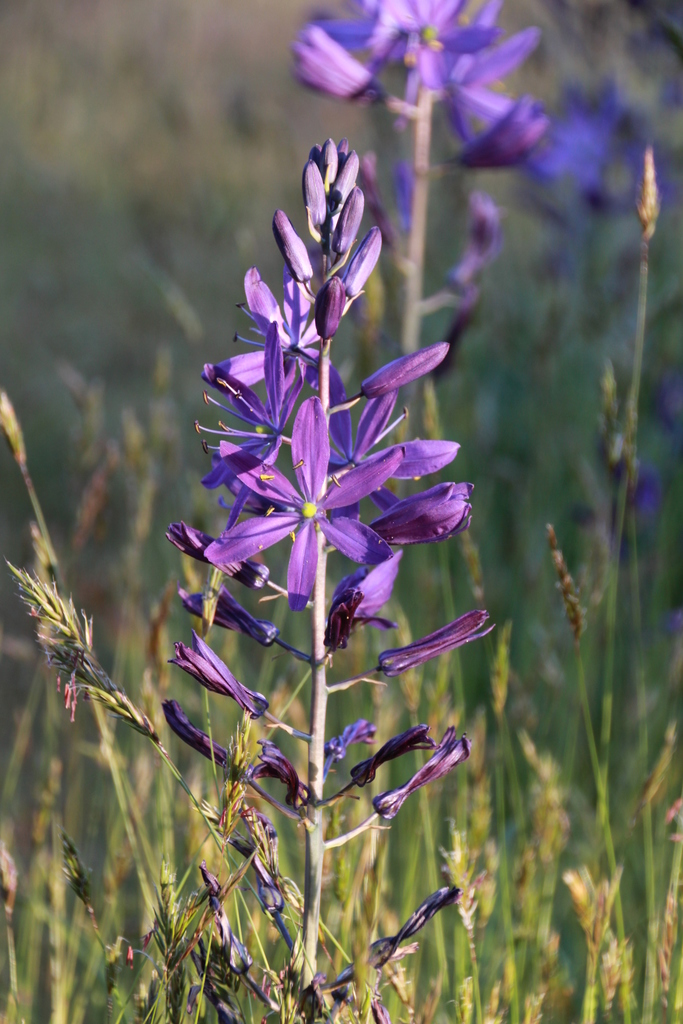
great camas
Camassia leichtlinii
Camassia leichtlinii, the great camas or large camas, is a species of flowering plant in the family Asparagaceae. This herbaceous perennial is native to western North America in British Columbia, Canada and California, Nevada, Oregon and Washington, in the United States.
From the article Camassia leichtlinii on Wikipedia (CC BY-SA), quoted section by section
Description
Great camas is a perennial herbaceous plant that grows from a bulb. It can grow 24–48 inches (61–122 cm) tall. Leaves are long and narrow, stemming from the basal rosette. The inflorescence is a spike-like cluster on a leafless stem that is held above the leaves. It can be mistaken for the more common Camassia quamash, which has an overlapping range.
What it does
It needs consistent moisture in the spring, but will not be harmed by seasonal drought once the seed capsules have matured and the leaves dried out. Camas stands can benefit from seasonal fires as well, as they aid in regeneration and reduce competition from brush and weeds.
Wikipedia: “Ecology”
At the table
The bulbs are edible, but must be baked at length. Traditionally, they were cooked in fire pits for at least three hours, and ideally for between one and three days. Caution should be taken not to confuse this species with the deadly meadow death-camas.
== References ==
Wikipedia: “Uses”
Where it lives
Recorded sightings
—
geo-referenced records in GBIF, from museums, herbaria and field observers.
Drag the globe to turn it. Dots are where records exist, not a range map; darker means more records.
In the stacks
Searching the stacks…
Every page naming Camassia leichtlinii in the Biodiversity Heritage Library →
This page is assembled live from iNaturalist, GBIF, Wikipedia, the Source Library and the Internet Archive. It is not yet part of the hand-edited codex. iNaturalist taxon 62218.