- Plants
- ›Vascular Plants
- ›flowering plants
- ›Dicots
- ›carrots, ivies, and allies
- ›ivy family
- ›Hydrocotyloideae
- ›Hydrocotyle
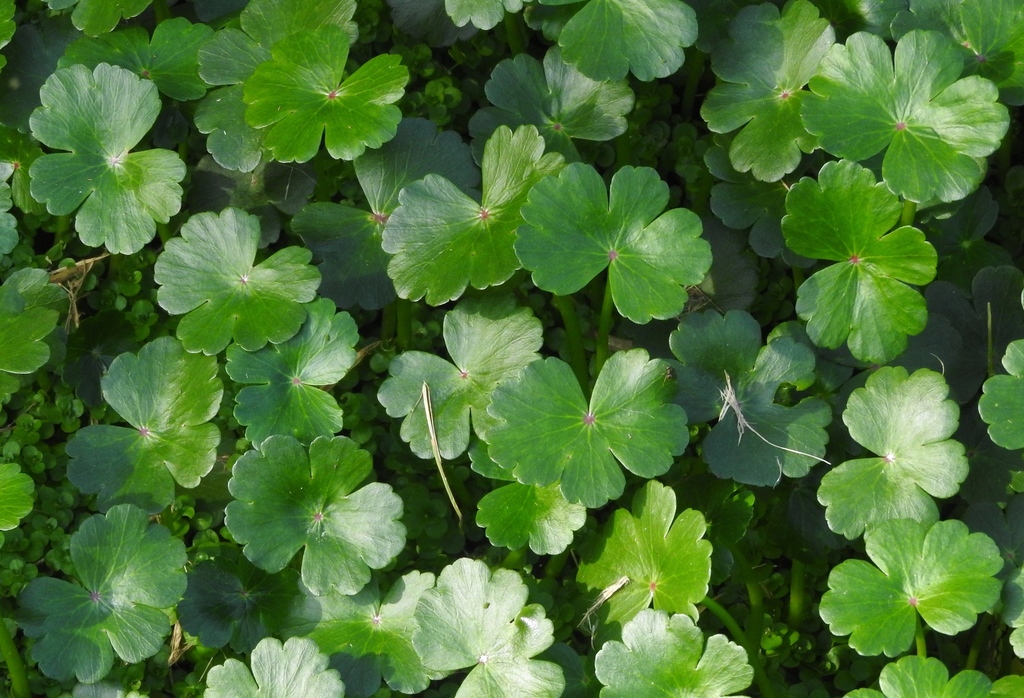
floating marsh pennywort
Hydrocotyle ranunculoides
Hydrocotyle ranunculoides, known commonly as floating pennywort, or floating marshpennywort, is an aquatic plant in the family Araliaceae. It is native to North and South America and parts of Africa.
From the article Hydrocotyle ranunculoides on Wikipedia (CC BY-SA), quoted section by section
Description
Water pennywort has stems that spread horizontally and can float on water. Leaves grow on petioles up to 35 cm long, and are round to kidney-shaped, with 3–7 lobes and crenate to entire margins. Flowers are small, pale greenish white to pale yellow, and come in umbels of 5–13. Fruits are small achenes that can float, helping the seeds to disperse. The South American weevil Listronotus elongatus lays eggs on and eats the floating pennywort, and larvae also eat into the stems, reducing the pennywort's ability to grow. The weevil has been introduced for biocontrol of the floating pennywort into waterways in Britain, following extensive research to establish that the weevil is not a threat in itself.
== References ==
Where it lives
Recorded sightings
—
geo-referenced records in GBIF, from museums, herbaria and field observers.
Drag the globe to turn it. Dots are where records exist, not a range map; darker means more records.
In the stacks
Searching the stacks…
Every page naming Hydrocotyle ranunculoides in the Biodiversity Heritage Library →
This page is assembled live from iNaturalist, GBIF, Wikipedia, the Source Library and the Internet Archive. It is not yet part of the hand-edited codex. iNaturalist taxon 60951.