- Plants
- ›Vascular Plants
- ›flowering plants
- ›Dicots
- ›pinks, cactuses, and allies
- ›plumbago family
- ›Limonieae
- ›Armeria
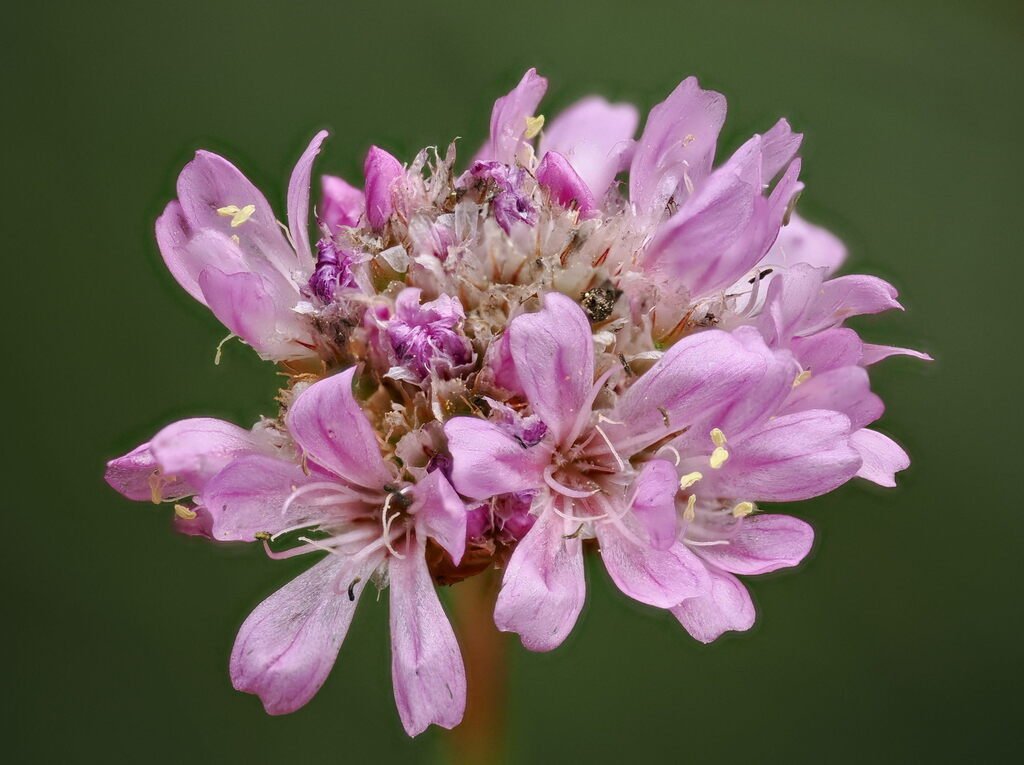
Sea Thrift
Armeria maritima
Armeria maritima, the thrift, sea thrift or sea pink, is a species of flowering plant in the family Plumbaginaceae. It is a compact evergreen perennial which grows in low clumps and sends up long stems that support globes of bright pink flowers. In some cases purple, white or red flowers also occur. It is a popular garden flower and has been distributed worldwide as a garden and cut flower. It does well in gardens designed as xeriscapes or rock gardens. The Latin specific epithet maritima means pertaining to the sea or coastal.
From the article Armeria maritima on Wikipedia (CC BY-SA), quoted section by section
Range & habitat
Armeria maritima sensu lato has a circumpolar distribution and can be found in the wild in coastal areas across the Northern Hemisphere. It can grow in dry, sandy, saline conditions such as coastal cliffs, grassland and salt marshes, salted roadsides and inland on mountain rocks. It is common in British salt marshes, where it flowers April to October. Armeria maritima has a great copper-tolerance, and is able to grow in soils with copper concentrations of up to 6400 mg/kg. One mechanism proposed is that not much copper is transported up the shoot of the plant, and is excreted from decaying leaves. Some of the physiology and metabolism of this species has been described, of particular note is how the metabolism of this species is altered with elevated atmospheric carbon dioxide concentrations.
Wikipedia: “Distribution and habitat”
What it does
Pollination is by various insects including bees and Lepidoptera. It is a known host species to the pathogenic fungus Phoma herbarum.
Wikipedia: “Ecology”
How it is grown
The cultivar 'Vindictive' has gained the Royal Horticultural Society's Award of Garden Merit.
Wikipedia: “Cultivation”
In human culture
The British threepence coin issued between 1937 and 1952 had a design of thrift on the reverse. The word thrift also means the practice of frugality, being careful with money and so avoiding waste. So, in light of the economic depression of the 1930s and the privations of the Second World War the choice of the thrift plant for the design of the new 12-sided nickel-brass threepenny bit (3d coin) which was replacing the silver three old pence coin (with origins going back to the mid-sixteenth century) was apt. With the accession of Queen Elizabeth II in 1952, the thrift plant with its three flower heads was replaced on threepenny bit with a crowned portcullis, recalling a royal badge used by Queen Elizabeth I and her predecessors from the House of Tudor. As part of a 2002 marketing campaign, the plant conservation charity Plantlife chose sea thrift as the county flower of the Isles of Scilly.
Wikipedia: “In popular culture”
Where it lives
Recorded sightings
—
geo-referenced records in GBIF, from museums, herbaria and field observers.
Drag the globe to turn it. Dots are where records exist, not a range map; darker means more records.
In the stacks
Searching the stacks…
Every page naming Armeria maritima in the Biodiversity Heritage Library →
This page is assembled live from iNaturalist, GBIF, Wikipedia, the Source Library and the Internet Archive. It is not yet part of the hand-edited codex. iNaturalist taxon 60476.