- Plants
- ›Vascular Plants
- ›flowering plants
- ›Dicots
- ›pinks, cactuses, and allies
- ›Amaranth family
- ›saltbush subfamily
- ›Atripliceae
- ›Atriplex
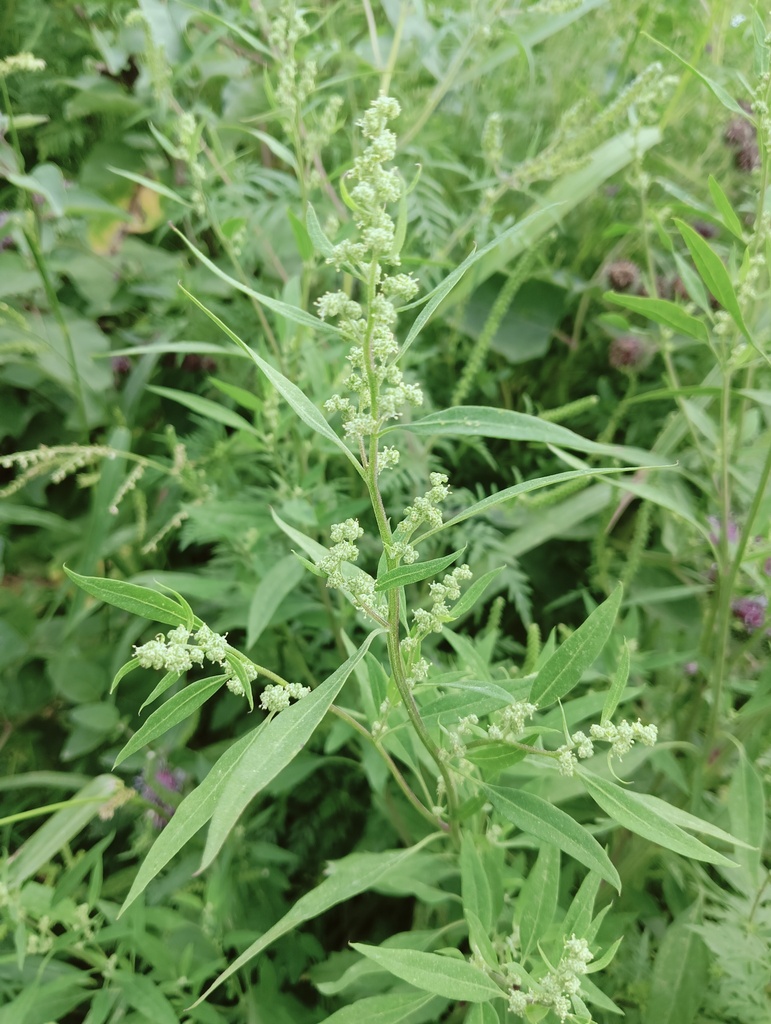
Common Orache
Atriplex patula
Atriplex patula L. (Spear Saltbush; Common Orache; Spear Orach; Spreading Orach) is a ruderal, circumboreal species of annual herbaceous plants in the genus Atriplex naturalized in many temperate regions.
From the article Atriplex patula on Wikipedia (CC BY-SA), quoted section by section
Description
Atriplex patula grows to be between 50 and 80 centimetres (20 and 31 inches) tall. The branches extend outwards from the stem with rhomboid leaves and separated clusters of flowers. The species accumulates salt from the environment in its tissues. Unlike other Atriplex species, it lacks notable salt bladders to excrete salt onto the leaves.
Range & habitat
The species has a wide range, including semi-arid deserts and coastal areas in Asia, North America, Europe, and Africa. It commonly grows along roads and waste sites. Although it is commonly asserted that the species has been naturalized in North America only since the 18th century, seeds ascribed to this species occur on the west coast of North America in buried marsh deposits that predate European contact.
Wikipedia: “Distribution and habitat”
At the table
The young leaves and shoots are edible raw or cooked and suffice as a spinach substitute, but are bland on their own. The species has been proven to be effective in lowering salt content in soils when planted in areas with high road salt contamination.
== References ==
Wikipedia: “Uses”
Where it lives
Recorded sightings
—
geo-referenced records in GBIF, from museums, herbaria and field observers.
Drag the globe to turn it. Dots are where records exist, not a range map; darker means more records.
In the stacks
Searching the stacks…
Every page naming Atriplex patula in the Biodiversity Heritage Library →
This page is assembled live from iNaturalist, GBIF, Wikipedia, the Source Library and the Internet Archive. It is not yet part of the hand-edited codex. iNaturalist taxon 60175.