- Plants
- ›Vascular Plants
- ›flowering plants
- ›Dicots
- ›Soapberries, Cashews, Mahoganies, and Allies
- ›Cashew Family
- ›cashews, sumacs, and allies
- ›Searsia
Nana Kunirhus
Searsia dentata
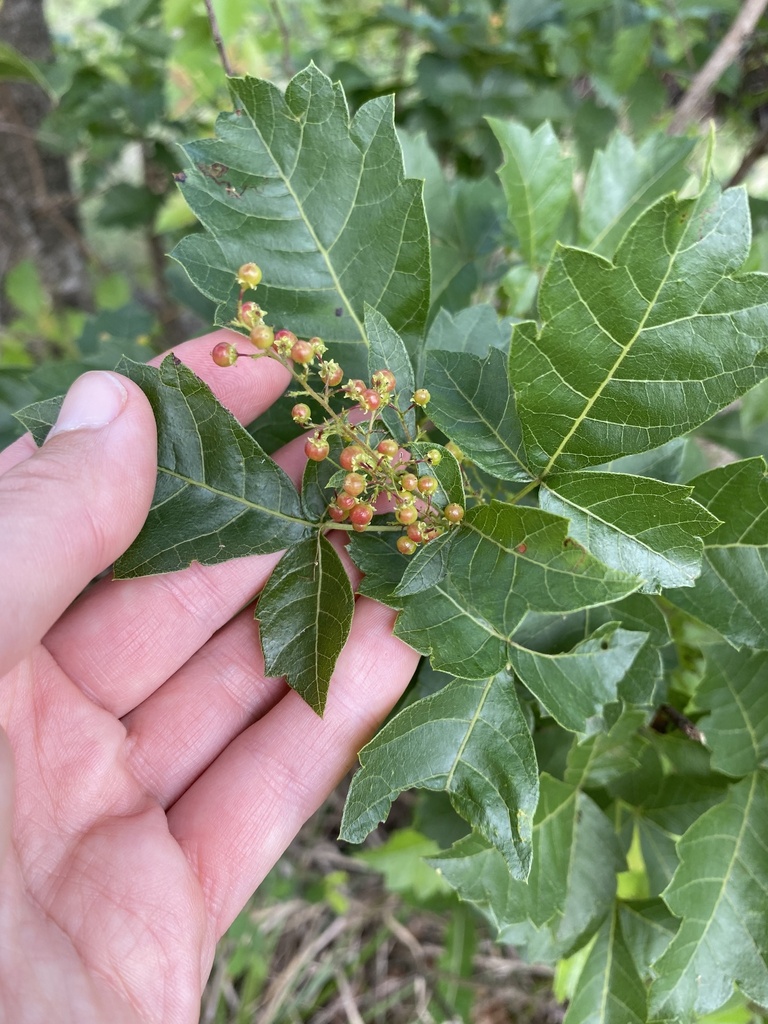
Searsia dentata, the nana-berry (English), or nanabessie (Afrikaans), is a medium-sized, deciduous tree, reaching a height of about 5 metres and a spread of 4 metres, and with a tendency to scramble through and over neighbouring trees. It occurs naturally in almost the whole of South Africa except the Western and Northern Cape Provinces. Its habitat varies from sea level to the highlands of the Drakensberg. It is frost-hardy and should be planted in full sun. The strongly aromatic leaves are usually conspicuously toothed (hence the name dentata), though sometimes they may be only slightly toothed. The tree produces small, creamy-white flowers in masses, developing into small, flattened drupes (5-6mm) which turn red or orange when ripe and brown when dry. The ripe fruits are eaten by birds, while the foliage is food for the larvae of the pepper tree moth Bombycomorpha bifascia.
Where it lives
Recorded sightings
—
geo-referenced records in GBIF, from museums, herbaria and field observers.
Drag the globe to turn it. Dots are where records exist, not a range map; darker means more records.
In the stacks
Searching the stacks…
Every page naming Searsia dentata in the Biodiversity Heritage Library →
This page is assembled live from iNaturalist, GBIF, Wikipedia, the Source Library and the Internet Archive. It is not yet part of the hand-edited codex. iNaturalist taxon 593873.