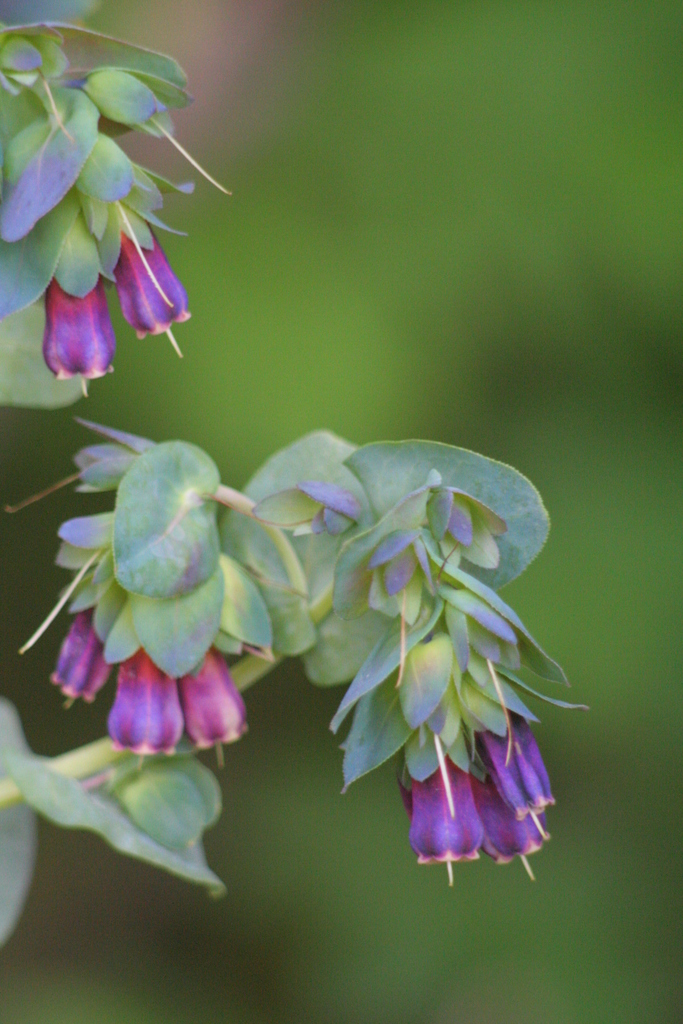
Honeyworts
Cerinthe
Cerinthe is a genus of flowering plants in the family Boraginaceae, known as honeyworts. The genus is characterised by a calyx made up of separate, rather than fused, sepals, a tubular corolla, and the schizocarpic fruit that divides into two parts at maturity, unlike most members of the family, where the fruit splits into four nutlets. The genus has a circum-Mediterranean distribution, ranging from the Irano-Turanian Region in the east to Morocco in the west.
Cerinthe has been known since ancient times. An early reference to it is in John Gerard's The Herbal, published in 1597, describing its appearance, growth habits, time of blooming and mentions that "there is a taste as if it were of new wax in the floures [sic] or leaves chewed, as the name doth seeme [sic] to import." Gerard gives a list of other names for Cerinthe applied by prior writers, including Avicenna "Auicen", Pliny the Elder, Conrad Gessner, Rembert Dodoens, Carolus Clusius, and Matthias de l'Obel.
6 branches of this genus, most-observed first
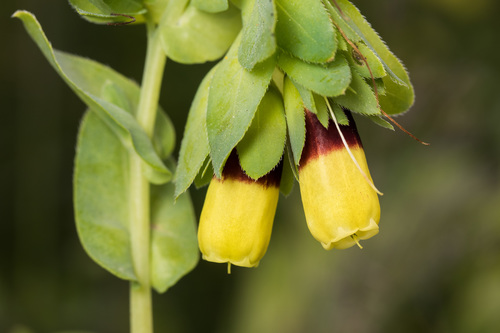
Greater honeywort
speciesCerinthe major
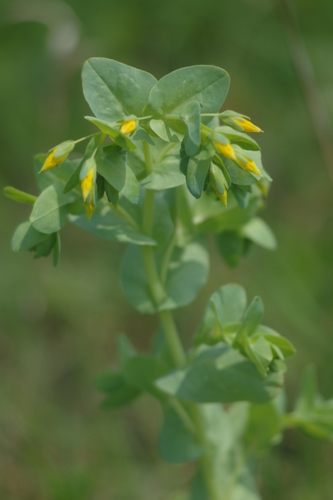
Lesser Honeywort
speciesCerinthe minor
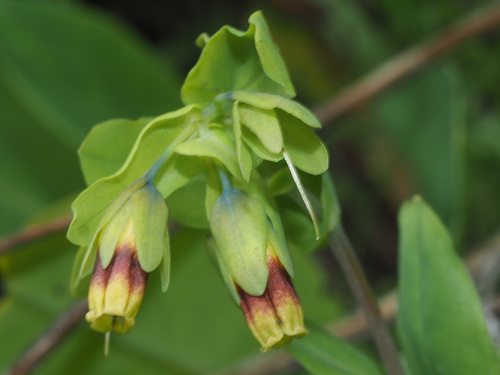
Smooth Honeywort
speciesCerinthe glabra

Violet Honeywort
speciesCerinthe retorta

Cerinthe palaestina
speciesCerinthe palaestina
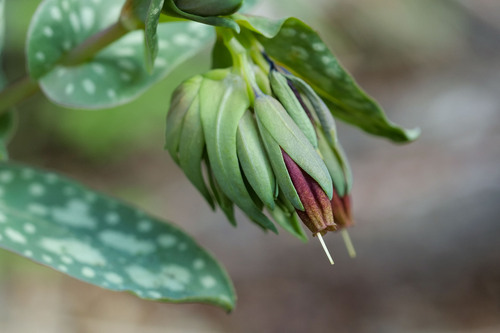
Cerinthe tenuiflora
speciesCerinthe tenuiflora
Where it lives
Recorded sightings
—
geo-referenced records in GBIF, from museums, herbaria and field observers.
Drag the globe to turn it. Dots are where records exist, not a range map; darker means more records.
In the old herbals & bestiaries

Rariorum Plantarum Historia (with Fungorum Historia)
Carolus Clusius · 1601 · p.549

Rariorum Plantarum Historia (with Fungorum Historia)
Carolus Clusius · 1601 · p.550

History of Rare Plants
Carolus Clusius · 1601 · p.543

History of Rare Plants
Carolus Clusius · 1601 · p.543

History of Rare Plants
Carolus Clusius · 1601 · p.544

The Dutch Herbarium or Herbal
Petrus Nylandt · 1670 · p.218

Herbarium Portatile, Oder Behendes Kräuter- und Gewächs-Buch: Darinn nicht allein 1363. so wol Einheimische als Außländndische Kräuter mit Lateinisch und Deutscher Benennung abgebildet, sondern auch die meisten, so in der Medicin gebräuchlich, kürtzlich erkläret werden
Panckow, Thomas · 1656 · p.315
In the stacks
Searching the stacks…
Every page naming Cerinthe in the Biodiversity Heritage Library →
This page is assembled live from iNaturalist, GBIF, Wikipedia, the Source Library and the Internet Archive. It is not yet part of the hand-edited codex. iNaturalist taxon 59266.