- Plants
- ›Vascular Plants
- ›flowering plants
- ›Dicots
- ›saxifrages, stonecrops, and allies
- ›stonecrop family
- ›Sempervivoideae
- ›Sedeae
- ›Sedum
- ›Gormania
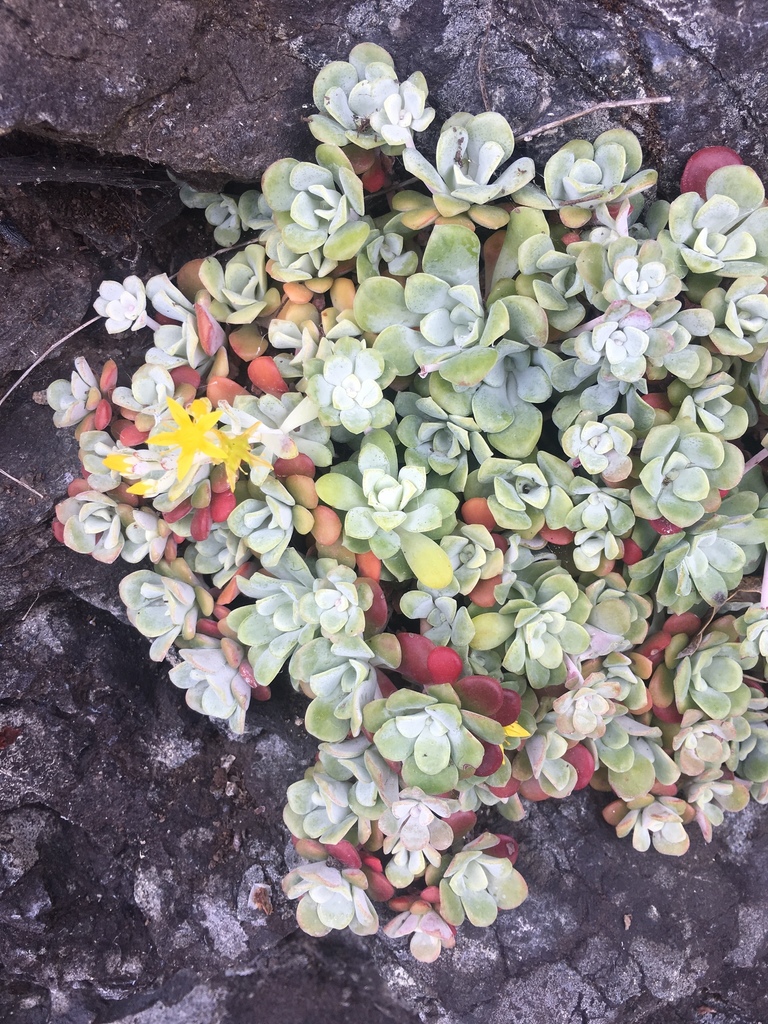
Broad-leaved Stonecrop
Sedum spathulifolium
Sedum spathulifolium is a species of flowering plant in the family Crassulaceae known by the common names broadleaf stonecrop, yellow stonecrop, and spoon-leaved stonecrop. An evergreen perennial, it is native to western North America from British Columbia to southern California, where it can be found often in shade in many types of rocky habitat in coastal and inland hills and mountains.
From the article Sedum spathulifolium on Wikipedia (CC BY-SA), quoted section by section
Description
In general, Sedum spathulifolium is a succulent plant producing mats of basal rosettes from a system of rhizomes. The basal leaves are 1 or 2 centimeters long. They are sometimes coated in a waxy, powdery looking exudate. The inflorescence is a short, erect array of many small flowers with five yellow petals. When in fruit, the five carpels are separate at the apex and connected at base.
How it is grown
This plant is useful as ornamental groundcover in well-drained soil in full sun or partial shade. It dislikes winter wet. Numerous cultivars have been selected for garden use, of which 'Cape Blanco' and 'Purpureum' have received the Royal Horticultural Society's Award of Garden Merit.
Wikipedia: “Cultivation”
Where it lives
Recorded sightings
—
geo-referenced records in GBIF, from museums, herbaria and field observers.
Drag the globe to turn it. Dots are where records exist, not a range map; darker means more records.
In the stacks
Searching the stacks…
Every page naming Sedum spathulifolium in the Biodiversity Heritage Library →
This page is assembled live from iNaturalist, GBIF, Wikipedia, the Source Library and the Internet Archive. It is not yet part of the hand-edited codex. iNaturalist taxon 58886.