- Plants
- ›Vascular Plants
- ›flowering plants
- ›monocots
- ›lilies, supplejacks, and allies
- ›lily family
- ›true lily subfamily
- ›true lilies and allies
- ›Lilium
- ›Pseudolirium
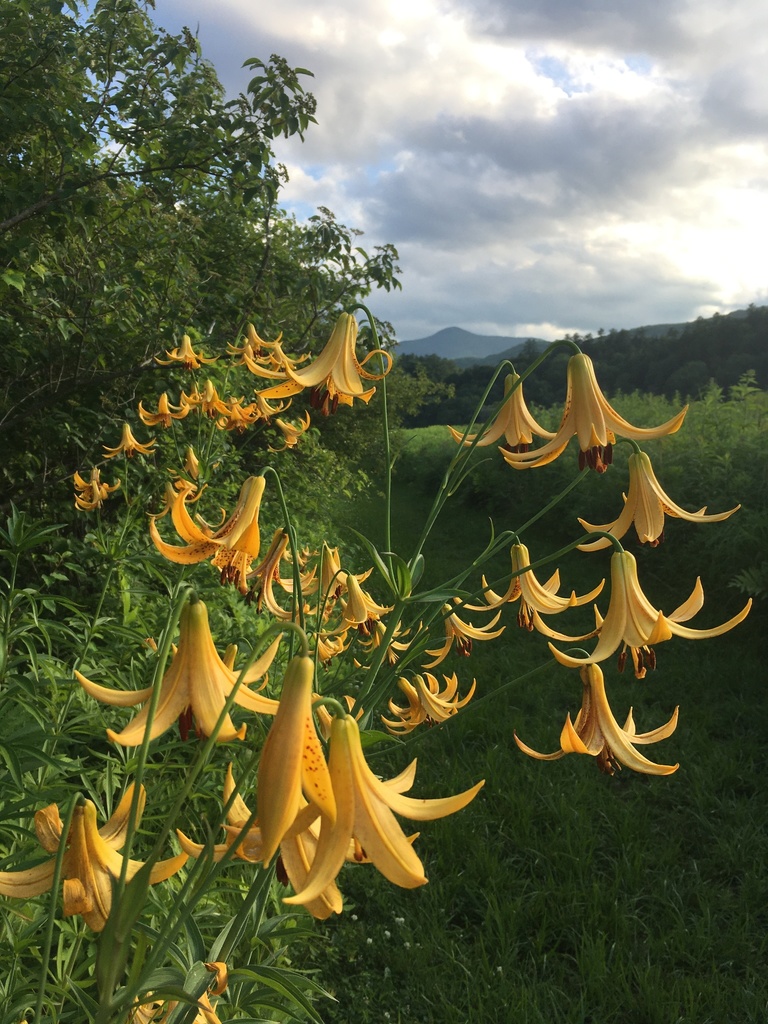
Canada lily
Lilium canadense
Lilium canadense, commonly called the Canada lily, wild yellow-lily, or meadow lily, is a native of eastern North America. Its native range extends from Ontario to Nova Scotia south to Georgia and Alabama. It is most common in New England, the Appalachian Mountains, and the Canadian Maritimes. It is also cultivated as an ornamental in Europe and other places.
Flowers emerge in June. They are nodding (hanging downward), yellow, orange or red, often with darker spots. The plant has become less common in urban and suburban areas due to heavy browsing by the white-tailed deer.
From the article Lilium canadense on Wikipedia (CC BY-SA), quoted section by section
Description
These plants usually live in moist meadows and wood margins. They can grow up to 0.5–1.5 m (1.6–4.9 ft) with yellow, orange or red flowers 50–75 mm 50–75 mm (2.0–3.0 in) wide which emerge between June and July.
At the table
The flower buds and roots were traditionally gathered and eaten by North American indigenous peoples.
Wikipedia: “Culinary uses”
Where it lives
Recorded sightings
—
geo-referenced records in GBIF, from museums, herbaria and field observers.
Drag the globe to turn it. Dots are where records exist, not a range map; darker means more records.
In the old herbals & bestiaries

In the stacks
Searching the stacks…
Every page naming Lilium canadense in the Biodiversity Heritage Library →
This page is assembled live from iNaturalist, GBIF, Wikipedia, the Source Library and the Internet Archive. It is not yet part of the hand-edited codex. iNaturalist taxon 57131.