 NL·0105
Herbarium of the Nature Library
- Name
- Morus alba
- Family
- Moraceae
- Native to
- Northern and central China; cultivated and naturalised across Asia, Europe and the Americas
- Habitat
- Temperate woodland, Riverbanks, Disturbed ground, Plantations
White mulberry
Morus alba
Also calledShahtoot / Toot (Hindi/Urdu/Persian) · Sāng (Chinese) · Kuwa (Japanese) · Tūt (Arabic) · Dut (Turkish) · Morera (Spanish) · Tuta (Sanskrit)
The tree that built the Silk Road: its leaves are the only food of the domestic silkworm, and China guarded sericulture as a state secret for millennia. Its catkins also fling pollen at over half the speed of sound, one of the fastest movements in the plant kingdom.
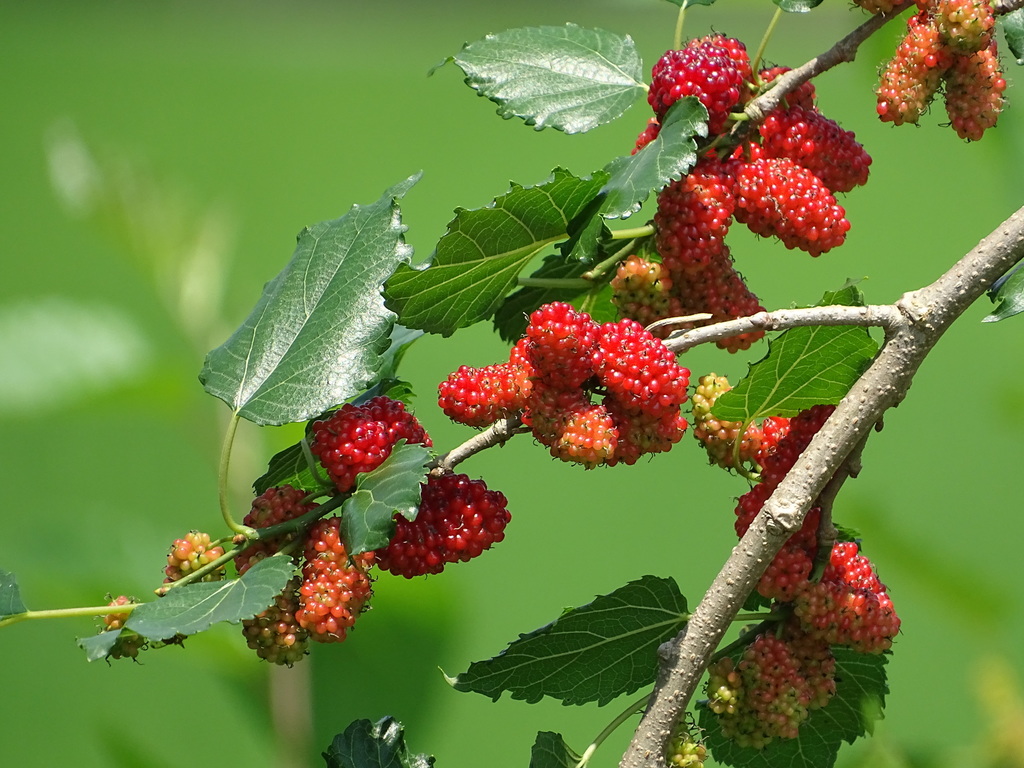
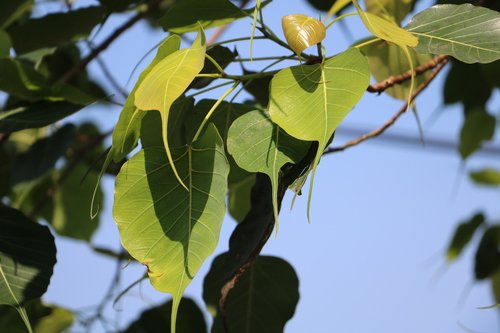
Morus alba, known as white mulberry, common mulberry and silkworm mulberry, is a fast-growing, small to medium-sized mulberry tree which grows to 10–20 m (33–66 ft) tall. It is native to China and is widely cultivated and naturalized elsewhere. The species is widely cultivated to feed the silkworms employed in the commercial production of silk. It is also notable for the rapid release of its pollen, which is launched at greater than half the speed of sound. Wikipedia
What it can do
- iStamens spring open like catapults in under 25 microseconds, flinging pollen at more than half the speed of sound
- iiLeaves are the sole natural food of the silkworm Bombyx mori
- iiiFruit colour varies from white to pink to near-black despite the name 'white'
- ivTolerates drought, pollution and poor soil; often invasive
At the table
Eatenripe fruit · young leaves (cooked, tea)
Ripe fruit is safe; unripe fruit and the milky sap can cause stomach upset and mild hallucinogenic effects have been claimed for unripe fruit.
In the medicine cabinet
| Tradition | Use |
|---|---|
| Traditional Chinese Medicine | Leaf (sāng yè) for colds and sore eyes, root bark (sāng bái pí) for cough, fruit (sāng shèn) as a blood tonic |
| Modern research | Leaf extract containing 1-deoxynojirimycin studied for lowering post-meal blood sugar |
Weight of evidence
Moderate. Some clinical trials with promising but limited or mixed results.
Active compounds
1-deoxynojirimycin (DNJ), anthocyanins, resveratrol, rutin
Fruit & seed


Fruit
Multiple fruit (sorosis)
Ripens: Late spring to early summer
Blackberry-like cluster 1–2.5 cm long, white, pink, purple or black; very sweet and mild, staining if dark.
Seed
~2 mm
Minute, pale-brown, lens-shaped seeds about 2 mm, one inside each tiny drupelet
- Dispersal
- Birds and mammals
- Germination
- Cold-stratify 4–8 weeks, then surface-sow lightly covered at 20–25 °C; 1–3 weeks
Photographs from Wikimedia Commons under open licences; hover for the photographer, click for the file.
How to grow it
Hardiness (USDA zones)
USDA 4–9. Survives winters down to about -34 °C.
- Light
- Full sun
- Water
- Low–moderate
- Soil
- Any well-drained soil, pH 5.5–7.5
- Propagation
- Hardwood cuttings in winter, softwood cuttings in summer, grafting; seed
- To harvest
- 2–3 years from cuttings
- Climates
- Temperate, Continental, Mediterranean, Subtropical
- 1Take 20–30 cm hardwood cuttings from a good fruiting tree in winter and root them in moist soil, or buy a named variety (fruitless male clones are sold for shade — avoid those if you want fruit).
- 2Plant away from paths and parking, as dark fruit stains everything.
- 3Water young trees in dry spells; established trees need little care.
- 4Prune in winter to shape; for silkworm leaf production, pollard annually.
- 5Shake ripe fruit onto a sheet spread beneath the tree; eat or freeze promptly.
Can it grow where you are?
Where it lives
Recorded sightings
—
geo-referenced records in GBIF, from museums, herbaria and field observers.
Native range
Northern and central China; cultivated and naturalised across Asia, Europe and the Americas
Drag the globe to turn it. Dots are where records exist, not a range map; darker means more records.
In the old herbals & bestiaries
Woodcuts and engravings matched from the Source Library’s scanned books by name. Plates marked “relative” show a close kin rather than this exact species. Click a plate to read the page it came from, with translation.

Latin Herbal with German Synonyms
1486 · p.196

Garden of Health
Jacob Meydenbach · 1491 · p.274

Complete Treatise on Agricultural Administration
Xu Guangqi · 1909 · p.803

Ortus sanitatis
1491 · p.274

Garden of Health (Hortus Sanitatis)
Jacob Meydenbach · 1491 · p.223

Garden of Health
1507 · p.221

Notable Commentaries on the History of Plants
Leonhart Fuchs · 1549 · p.554

On Medical Materials in Six Books
Dioscorides · 1550 · p.171

De medicinali materia libri sex
Dioscorides · 1552 · p.177

Commentaries on the Six Books of Dioscorides on Medical Matter
Pietro Andrea Mattioli · 1563 · p.271
In the stacks
Searching the stacks…
Every page naming Morus alba in the Biodiversity Heritage Library →
Marginalia
Chinese legend credits Empress Leizu with discovering silk around 2700 BCE when a cocoon fell into her tea beneath a mulberry tree. In 552 CE two monks smuggled silkworm eggs to Constantinople in hollow canes, breaking China's monopoly.
Curiosity
The white mulberry's pollen-launching stamens move at roughly half the speed of sound — among the fastest motions known in plants.
Kinship


Fact-checked: 1 correction made to this sheet. Photographs: iNaturalist contributors under the licences shown. Records: GBIF.org. Historical plates: Source Library (CC BY-SA 4.0; originals public domain). Summary text: Nature Library editors and Wikipedia (CC BY-SA). Medicinal and edibility notes are historical and educational, not advice. iNaturalist taxon 56090.