- Plants
- ›Vascular Plants
- ›flowering plants
- ›Dicots
- ›honeysuckles, moschatels, and allies
- ›honeysuckle family
- ›honeysuckle subfamily
- ›Lonicera
- ›Lonicera
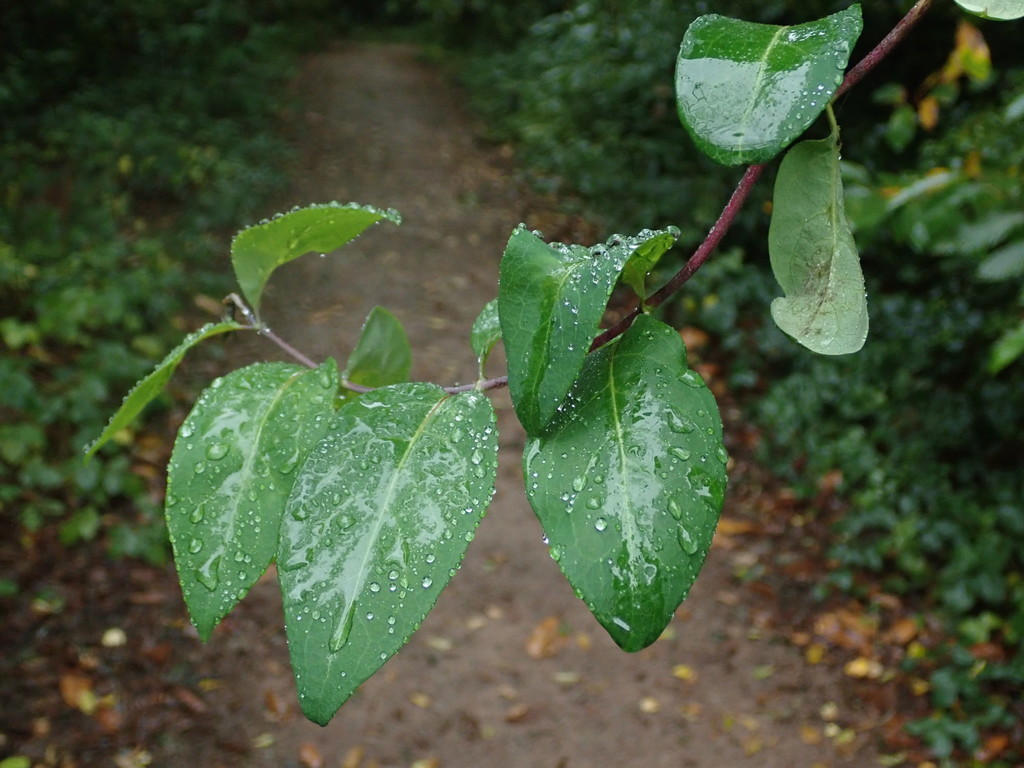
Common Honeysuckle
Lonicera periclymenum
Lonicera periclymenum, common names honeysuckle, common honeysuckle, European honeysuckle, or woodbine, is a species of flowering plant in the family Caprifoliaceae native to much of Europe, North Africa, Turkey and the Caucasus. It is found as far north as southern Norway and Sweden. Growing to 7 m (23 ft) or more in height, it is a vigorous deciduous twining climber, occasionally keeping its old leaves over winter. In the UK it is one of two native honeysuckles, the...
From the article Lonicera periclymenum on Wikipedia (CC BY-SA), quoted section by section
Description
Growing to 7 m (23 ft) or more in height, it is a vigorous deciduous twining climber, occasionally keeping its old leaves over winter. In the UK it is the only native honeysuckle. It is often found in woodland, scrubland, and in hedgerows. The tubular, two-lipped flowers, creamy white or yellowish in colour, may be flushed with pink or red on the outside and in bud, and are carried in showy clusters at the ends of the shoots. The flowers are highly scented by night, much less so by day.
What it does
The plant is usually pollinated by moths or long-tongued bees and develops bright red berries. Dormice make summer nests for their young from honeysuckle bark; they also eat the flowers, which are a good source of energy-rich nectar. Night-flying moths such as the hummingbird hawk-moth can detect the scent of honeysuckle flowers up to a quarter of a mile away. The clusters of red berries are eaten in the autumn by birds such as thrushes, bullfinches and warblers.
Wikipedia: “Ecology”
How it is grown
Lonicera periclymenum is one of several honeysuckle species valued in the garden, for its ability to twine around other plants, or to cover unsightly walls or outbuildings; and for the intense fragrance of its profuse flowers in summer. It needs to be planted with its roots in the shade, and its flowering top in sun or light shade. Plants need to be chosen with care as they can grow to a substantial size. The cultivars 'Graham Thomas' and 'Serotina' have gained the Royal Horticultural Society's Award of Garden Merit.
Wikipedia: “Cultivation”
Where it lives
Recorded sightings
—
geo-referenced records in GBIF, from museums, herbaria and field observers.
Drag the globe to turn it. Dots are where records exist, not a range map; darker means more records.
In the old herbals & bestiaries

In the stacks
Searching the stacks…
Every page naming Lonicera periclymenum in the Biodiversity Heritage Library →
This page is assembled live from iNaturalist, GBIF, Wikipedia, the Source Library and the Internet Archive. It is not yet part of the hand-edited codex. iNaturalist taxon 55885.