- Plants
- ›Vascular Plants
- ›flowering plants
- ›Dicots
- ›Gentians, Dogbanes, Madders, and Allies
- ›Dogbane Family
- ›milkweeds
- ›Ceropegieae
- ›Ceropegia
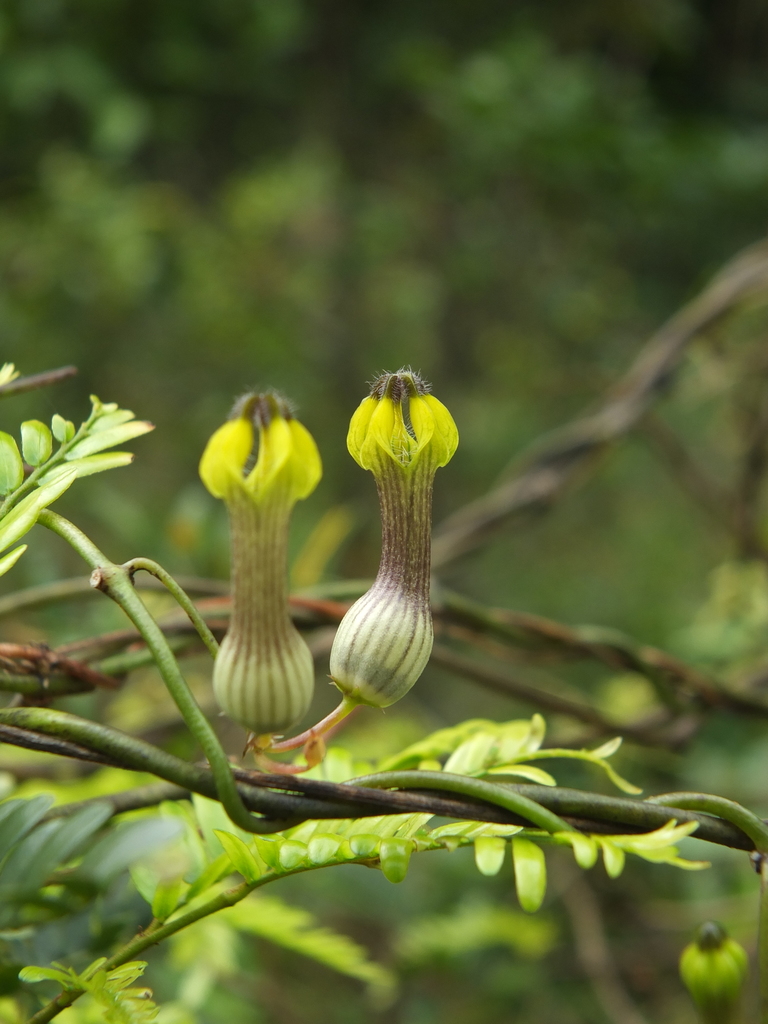
Ceropegia candelabrum
Ceropegia candelabrum is the type species in its genus of plants, belonging the subfamily Asclepiadoideae. The Latin specific epithet candelabrum is derived from the candelabra-like appearance of the inflorescences.
From the article Ceropegia candelabrum on Wikipedia (CC BY-SA), quoted section by section
Range & habitat
The species is found in India and Sri Lanka as well as in Vietnam before. In India, it blooms from August to January. Fruits are formed from September to January.
Wikipedia: “Distribution and ecology”
In medicine
The tuberous roots are edible and are eaten especially by the poorest, raw or cooked. The plant is also used for various medicinal purposes, so for hemorrhoids, indigestion, headaches and against bites of poisonous animals. Ceropegia candelabrum is now in the original area has become quite rare. There are already projects for artificial propagation.
Wikipedia: “Human use and medical importance”
Where it lives
Recorded sightings
—
geo-referenced records in GBIF, from museums, herbaria and field observers.
Drag the globe to turn it. Dots are where records exist, not a range map; darker means more records.
In the stacks
Searching the stacks…
Every page naming Ceropegia candelabrum in the Biodiversity Heritage Library →
This page is assembled live from iNaturalist, GBIF, Wikipedia, the Source Library and the Internet Archive. It is not yet part of the hand-edited codex. iNaturalist taxon 557494.