- Plants
- ›Vascular Plants
- ›flowering plants
- ›monocots
- ›lilies, supplejacks, and allies
- ›Bellworts and allies
- ›Sandersonia
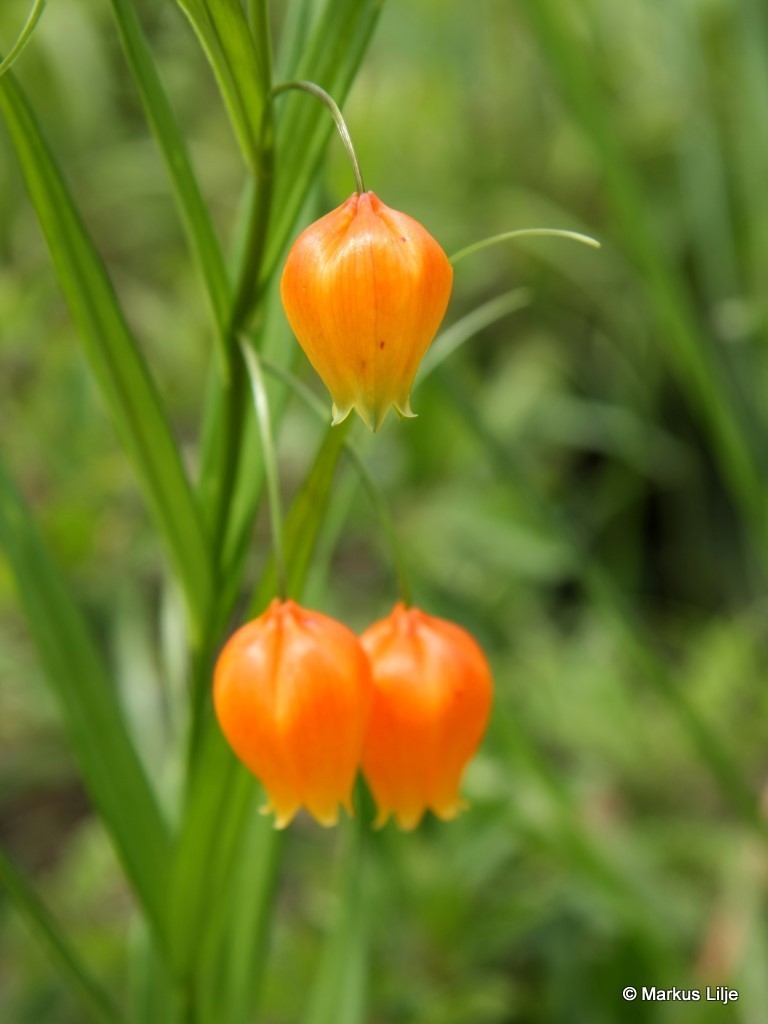
Chinese-Lantern Lily
Sandersonia aurantiaca
Sandersonia is a monotypic genus of rhizomatous plant, belonging to the family Colchicaceae, the single species Sandersonia aurantiaca being native to South Africa (the Cape Provinces, KwaZulu-Natal and the Northern Provinces) and Eswatini (Swaziland). Common names for S. aurantiaca include Christmas bells, golden lily of the valley, Chinese lantern lily and Chinese lantern bulb. S. aurantiaca is a perennial plant of trailing growth that can reach 30 inches in height. The flowers are yellow or orange.
From the article Sandersonia on Wikipedia (CC BY-SA), quoted section by section
Toxicity
The corms of Sandersonia aurantiaca contain levels of the toxic alkaloid colchicine comparable to those in Gloriosa superba, another very poisonous plant belonging to the family Colchicaceae (named for the equally toxic Colchicum autumnale). The plant has been held responsible for at least one case of fatal poisoning, the victim being an 80-year-old Japanese woman who died nine days after eating the corms, after doctors failed in their attempts to reverse the decline in her white blood cell count. The toxic principle was determined to be colchicine, and this was the first occasion upon which the alkaloid was found to be present in Sandersonia aurantiaca.
Wikipedia: “Toxicity, due to colchicine content”
Where it lives
Recorded sightings
—
geo-referenced records in GBIF, from museums, herbaria and field observers.
Drag the globe to turn it. Dots are where records exist, not a range map; darker means more records.
In the stacks
Searching the stacks…
Every page naming Sandersonia aurantiaca in the Biodiversity Heritage Library →
This page is assembled live from iNaturalist, GBIF, Wikipedia, the Source Library and the Internet Archive. It is not yet part of the hand-edited codex. iNaturalist taxon 553435.