- Plants
- ›Vascular Plants
- ›flowering plants
- ›Dicots
- ›honeysuckles, moschatels, and allies
- ›elder family
- ›Viburnum
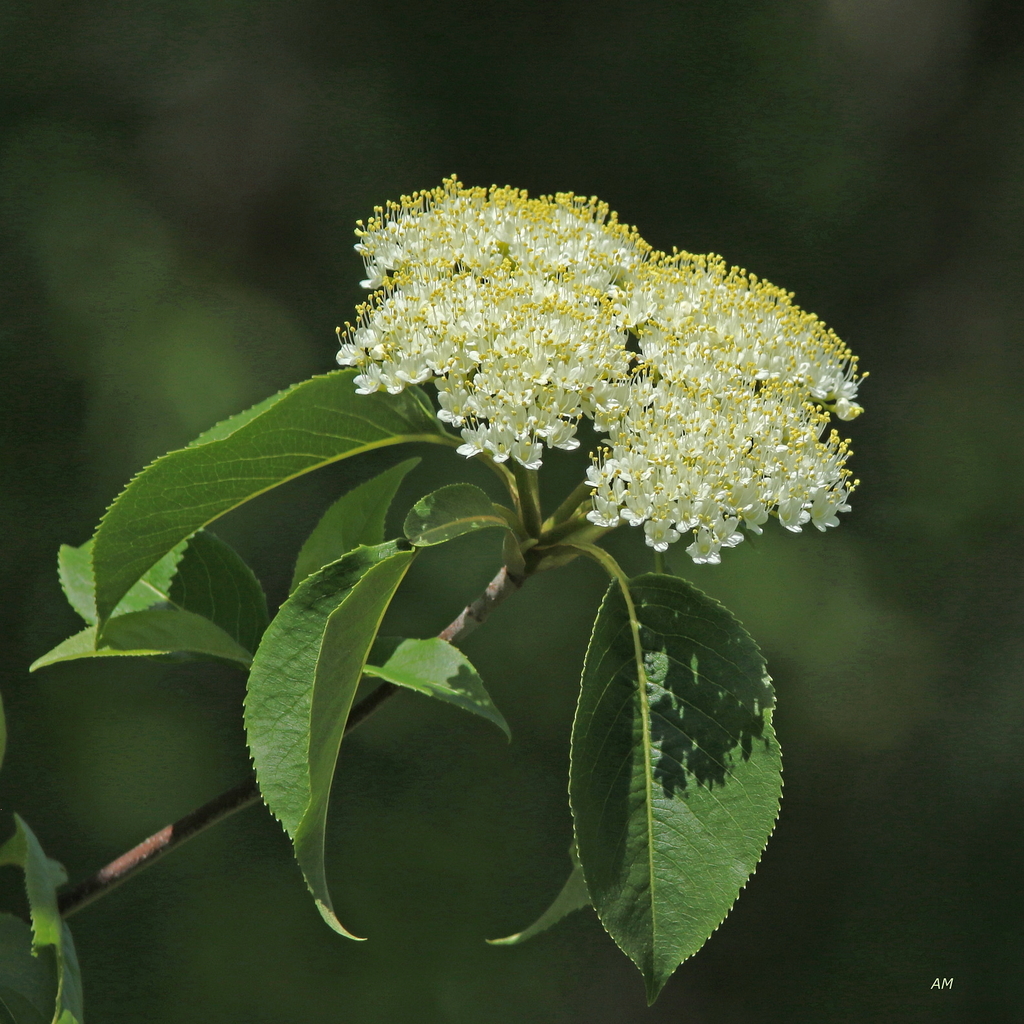
nannyberry
Viburnum lentago
Viburnum lentago, the nannyberry, sheepberry, or sweet viburnum, is a species of Viburnum native to North America.
From the article Viburnum lentago on Wikipedia (CC BY-SA), quoted section by section
Description
It is a large shrub or small tree growing upwards to 9 m (30 ft) tall with a trunk up to 25 cm (10 in) in diameter and a short trunk, round-topped head, pendulous, flexible branches. The bark is reddish- to grayish-brown, and broken into small scales. The twigs are pale green and covered with rusty down at first, later becoming dark reddish brown, sometimes glaucous, smooth, tough, flexible, and produce an offensive odor when crushed or bruised. The winter buds are light red, covered with pale scurfy down, protected by a pair of opposing scales. Flower-bearing buds are 2 cm (3⁄4 in) long, obovate, long pointed; other terminal buds are acute, 8.5 to 12.7 mm (1⁄3 to 1⁄2 in) long, while lateral buds are much smaller. The bud scales enlarge with the growing shoot and often become leaf-like. Like all viburnums, the leaves are arranged in opposite pairs on the twigs; they are oval, 5–10 cm (2–4 in) long and 2–5 cm (3⁄4–2 in) broad, wedge-shaped, rounded or subcordate at base, with an acuminate apex and a finely serrated margin, and a winged petiole. They open from the bud involute, bronze green and shining, hairy and downy; when full grown are bright green and shining above, pale green and marked with tiny black dots beneath. …
Range & habitat
Nannyberry is native to the northeastern and midwestern United States, and to southern Canada from New Brunswick west to southeastern Saskatchewan. Isolated populations are found in the Dakotas, Wyoming, Colorado, and the Appalachian Mountains as far south as Kentucky and Virginia. It grows in wet soil along the borders of the forest, often found in fence corners and along roadsides.
Wikipedia: “Distribution and habitat”
At the table
As suggested by the alternative name sweet viburnum, the fruit is (unlike that of many viburnums) widely palatable. The bark and leaves were also used by Native Americans in the preparation of herbal medicines. It is admired for its compact habit, its lustrous foliage which insects rarely disfigure, its beautiful and abundant flowers, its handsome edible fruit and its brilliant autumnal color. It readily adapts itself to cultivation, and is one of the best of the small trees of eastern America for the decoration of parks and gardens in all regions of extreme winter cold. It is easily raised from seeds which, like those of the other American species, do not germinate until the second year after they are planted. It has been hybridized with Viburnum prunifolium in gardens to give the hybrid Viburnum × jackii.
Wikipedia: “Uses”
Where it lives
Recorded sightings
—
geo-referenced records in GBIF, from museums, herbaria and field observers.
Drag the globe to turn it. Dots are where records exist, not a range map; darker means more records.
In the stacks
Searching the stacks…
Every page naming Viburnum lentago in the Biodiversity Heritage Library →
This page is assembled live from iNaturalist, GBIF, Wikipedia, the Source Library and the Internet Archive. It is not yet part of the hand-edited codex. iNaturalist taxon 54773.