- Plants
- ›Vascular Plants
- ›flowering plants
- ›Dicots
- ›Buttercups, Poppies, and Allies
- ›Poppy Family
- ›Poppy Subfamily
- ›Papavereae
- ›Papaver
- ›Rhoeadium
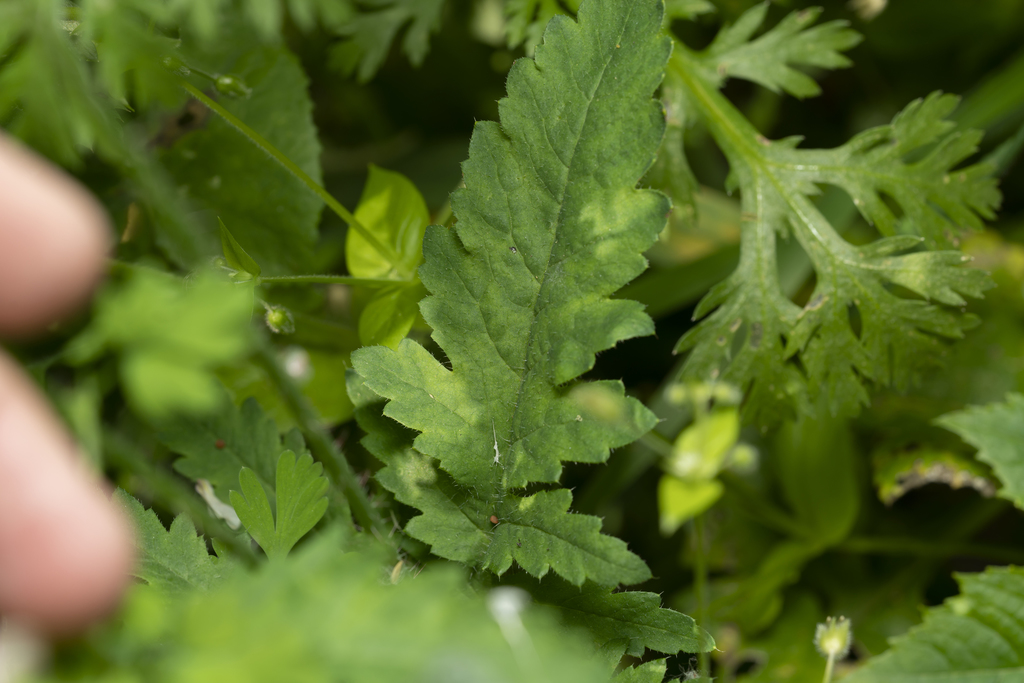
common poppy
Papaver rhoeas
Papaver rhoeas, with common names including common poppy, corn poppy, corn rose, field poppy, Flanders poppy, red poppy, and Odai, is an annual herbaceous species of flowering plant in the poppy family Papaveraceae. It is native to north Africa and temperate Eurasia and is introduced into temperate areas on all other continents except Antarctica.
It is regarded as an agricultural weed (hence the common names including "corn" and "field"). As the plant thrives in areas of disturbed soil, it was often abundant in agricultural fields before the advent of herbicides. Flushes of poppies may still appear in fields where herbicides are not used, as well as those in fallow. The corn poppy and its cultivars such as the Shirley poppy are widely grown in gardens, and are frequently found in packets of seed labelled "wildflower mixes". Since World War I, it has been used in the Commonwealth as a symbol of remembrance for fallen soldiers because it commonly grew in fields disturbed by war.
From the article Papaver rhoeas on Wikipedia (CC BY-SA), quoted section by section
Description
Papaver rhoeas is a variable, erect annual, forming a long-lived soil seed bank that can germinate when the soil is disturbed. In the Northern Hemisphere it generally flowers in late spring (between May and October in the UK) but if the weather is warm enough other flowers frequently appear at the beginning of autumn. It grows up to about 70 centimetres (28 inches) in height. The stems hold single flowers, which are large and showy, 5–10 cm (2–4 in) across, with four petals that are vivid red, most commonly with a black spot at their base. The petals slightly overlap each other. The plant can produce up to 400 flowers in a warm season, that last only one day. The flower stem is usually covered with coarse hairs that are held at right angles to the surface, helping to distinguish it from P. dubium in which the hairs are more usually appressed (i.e. held close to the stem). The capsules are hairless, obovoid (egg-shaped), less than twice as tall as they are wide, with a stigma at least as wide as the capsule. Like many other species of Papaver, the plant exudes white to yellowish latex when the tissues are broken.
Not all corn poppies that are available commercially have red flowers. Selective breeding has resulted in cultivars in yellow, orange, pink, and white. The Shirley poppy is a well-known cultivar. …
Range & habitat
The species is found within Africa, in Algeria, Egypt, Libya, Morocco, Tunisia, Madeira Islands, and the Canary Islands. Within temperate Asia, it is found in the Caucasus regions of Armenia, Azerbaijan, Georgia, and Ciscaucasia. In Western Asia, it is found in Afghanistan, Cyprus, Egypt, Iran, Iraq, Palestine, Israel, Jordan, Lebanon, Syria and Turkey. Within tropical Asia, it is found in Pakistan and India. Within Europe, it is found in Belarus, Latvia, Lithuania, Moldova, Ukraine, Austria, Belgium, Czech Republic, Germany, Hungary, Netherlands, Poland, Slovakia, Switzerland, Denmark, Ireland, Norway, Sweden, the United Kingdom, Albania, Bosnia and Herzegovina, Bulgaria, Croatia, Greece, Italy, Kosovo, North Macedonia, Montenegro, Romania, Serbia, Slovenia, France, Portugal, and Spain. It grows in fields, beside roads, and on grasslands. It is hardy to between USDA Zone 8 and Zone 10, or down to 10 °F (−12 °C).
Wikipedia: “Distribution and habitat”
At the table
The commonly grown garden decorative Shirley poppy is a cultivar of this plant. The black seeds are edible and can be eaten either on their own or as an ingredient in bread, though the majority of poppy seeds harvested for culinary use are from the related species Papaver somniferum. In many Eastern European countries, poppy seeds are boiled in water or milk, and then ground together with honey or sugar to achieve a sweet, soft paste, often used generously in pastries. The petals contain a red dye which is used in some medicines and wines; also the dried petals are occasionally used to give colour to potpourris. In traditional folk medicine, it was used for gout, aches, and pains. The petals were used to create a syrup that was fed to children to help them sleep.
Wikipedia: “Uses”
In human culture
Its origin is not known for certain. As with many such plants, the area of origin is often ascribed by Americans to Europe, and by northern Europeans to southern Europe. It is known to have been associated with agriculture in the Old World since early times and has had an old symbolism and association with agricultural fertility. It has most of the characteristics of a successful weed of agriculture. These include an annual lifecycle that fits into that of most cereals, a tolerance of simple weed control methods, the ability to flower and seed itself before the crop is harvested, and the ability to form a long-lived seed bank. The leaves and latex have an acrid taste and are mildly poisonous to grazing animals. A sterile hybrid with P. dubium is known, P. × hungaricum, that is intermediate in all characteristics with P. rhoeas. P. rhoeas topped the list in a UK study of meadow pollen production, on a per flower basis, with its rate of 13.3 ± 2.8 μl. The California poppy placed second with a rate of 8.3 ± 1.1 μl. The pollen production of P.rhoeas, on a per flower basis, was very high in comparison with the other plants tested, at almost triple the amount of the top-ranked perennial (a mallow). When sampled at the level of the entire capitulum, however, it was outranked by the ox-eye daisy, Leucanthemum vulgare, with its 15.9 ± 2 μl measurement. It tied with Cosmos bipinnatus. …
Wikipedia: “Natural history”
Where it lives
Recorded sightings
—
geo-referenced records in GBIF, from museums, herbaria and field observers.
Drag the globe to turn it. Dots are where records exist, not a range map; darker means more records.
In the old herbals & bestiaries

Book of Herbs
Hieronymus Bock (Tragus) · 1546 · p.126

Herbarium Portatile, Oder Behendes Kräuter- und Gewächs-Buch: Darinn nicht allein 1363. so wol Einheimische als Außländndische Kräuter mit Lateinisch und Deutscher Benennung abgebildet, sondern auch die meisten, so in der Medicin gebräuchlich, kürtzlich erkläret werden
Panckow, Thomas · 1656 · p.159
In the stacks
Searching the stacks…
Every page naming Papaver rhoeas in the Biodiversity Heritage Library →
This page is assembled live from iNaturalist, GBIF, Wikipedia, the Source Library and the Internet Archive. It is not yet part of the hand-edited codex. iNaturalist taxon 54404.