- Plants
- ›Vascular Plants
- ›flowering plants
- ›Dicots
- ›Roses, Elms, Figs, and Allies
- ›rose family
- ›brambles, roses, strawberries, and allies
- ›Brambles
- ›Rubus
- ›Rubus
- ›Ursini
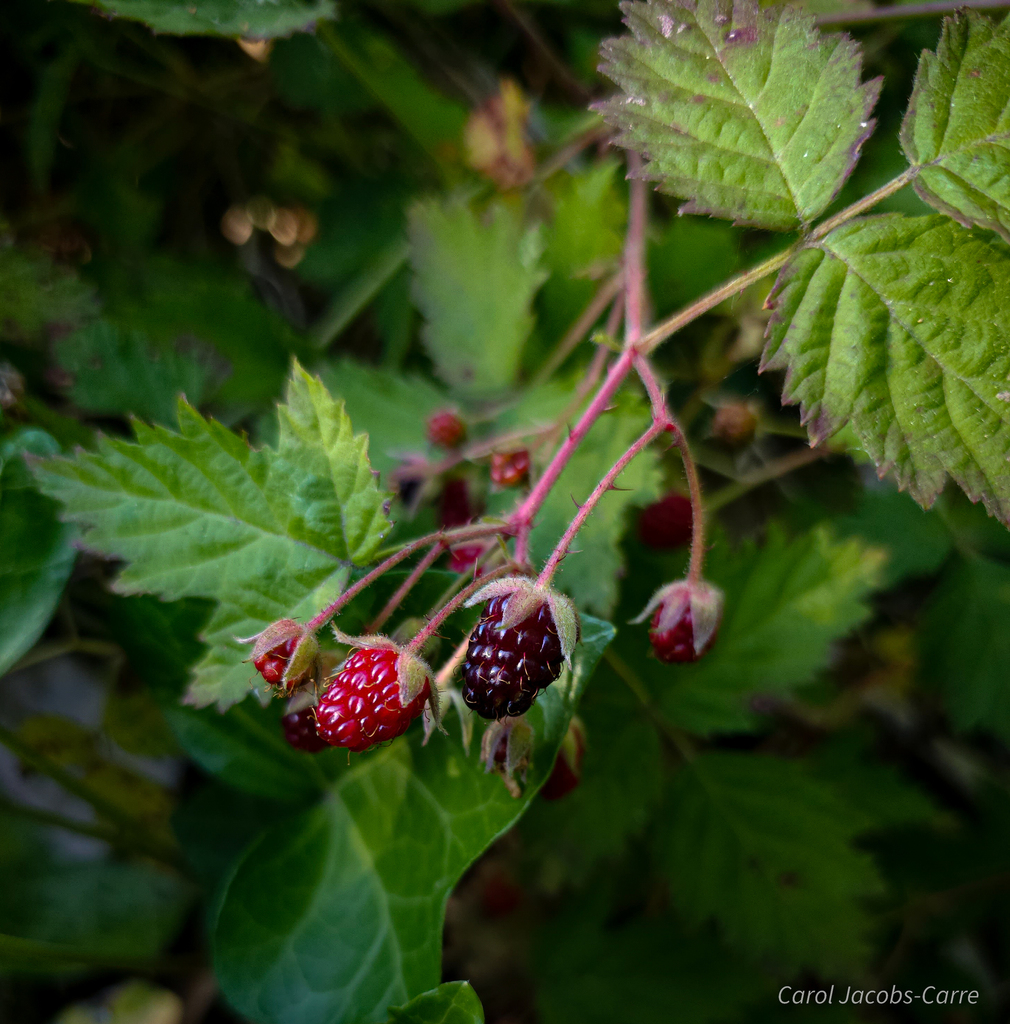
trailing blackberry
Rubus ursinus
Rubus ursinus is a North American species of blackberry or dewberry, known by the common names California blackberry, California dewberry, Douglas berry, Pacific blackberry, Pacific dewberry and trailing blackberry.
From the article Rubus ursinus on Wikipedia (CC BY-SA), quoted section by section
Description
Rubus ursinus is a wide, mounding shrub or vine, growing to 0.6–1.5 metres (2–5 feet) tall and more than 1.8 m (6 ft) wide. The prickly branches can take root if they touch soil, thus enabling the plant to spread vegetatively and form larger clonal colonies. The deciduous leaves usually have 3 leaflets but sometimes 5 or only 1. The plant is dioecious, with male and female being separate plants, also unusual for the genus. As with other Rubus species, the canes are typically vegetative the first year and reproductive in the second. The fragrant flowers are white, with narrower petals than most related species. The sweet, very aromatic fruits are dark purple, dark red, or black and up to 2 centimetres (3⁄4 inch) long.
Range & habitat
The plant is native to western North America, found mainly in British Columbia (Canada); California, Idaho, Montana, Oregon, and Washington (Western U.S.); and Baja California state (Mexico).
Wikipedia: “Distribution”
What it does
Diverse wildlife eat the berries, including songbirds, deer, bear, and other large and small mammals. It is of notable pollinator and nesting material value for native bee and bumblebee species. This blackberry species is a larval food source for Papilio rutulus (the western tiger swallowtail butterfly), Nymphalis antiopa (the mourning cloak butterfly), Strymon melinus (the gray hairstreak butterfly), and Celastrina ladon (the spring azure butterfly).
Wikipedia: “Ecology”
At the table
Native Americans such as the Kumeyaay, Maidu, Pomo, Interior Salish, and Coast Salish peoples used R. ursinus as a fresh and dried fruit source and as a traditional medicinal plant. The Concow tribe calls this plant Gol-lē' in the Konkow language. The plant is cultivated for its edible fruit and also ornamental plant qualities. It is planted in home, native plant, and wildlife gardens, and in natural landscaping projects. It can be espaliered or trained on fences and trellising. When mature/established, the plant is effective in stabilizing creek banks and edges of bioswales. To set large fruit, the plant needs consistent amounts of moisture. Otherwise it is moderately drought tolerant when established. Seed size seems to be related to fruit "cell" size, and the smallest fully formed berries (about 1 cm or 3⁄8 in), sometimes called "little wild blackberries", are most highly prized.
Wikipedia: “Uses and cultivation”
Where it lives
Recorded sightings
—
geo-referenced records in GBIF, from museums, herbaria and field observers.
Drag the globe to turn it. Dots are where records exist, not a range map; darker means more records.
In the stacks
Searching the stacks…
Every page naming Rubus ursinus in the Biodiversity Heritage Library →
This page is assembled live from iNaturalist, GBIF, Wikipedia, the Source Library and the Internet Archive. It is not yet part of the hand-edited codex. iNaturalist taxon 53445.