- Plants
- ›Vascular Plants
- ›flowering plants
- ›monocots
- ›grasses, sedges, cattails, and allies
- ›grasses
- ›Pooideae
- ›Poeae
- ›oats, junegrasses, and relatives
- ›Avena
- ›Avena
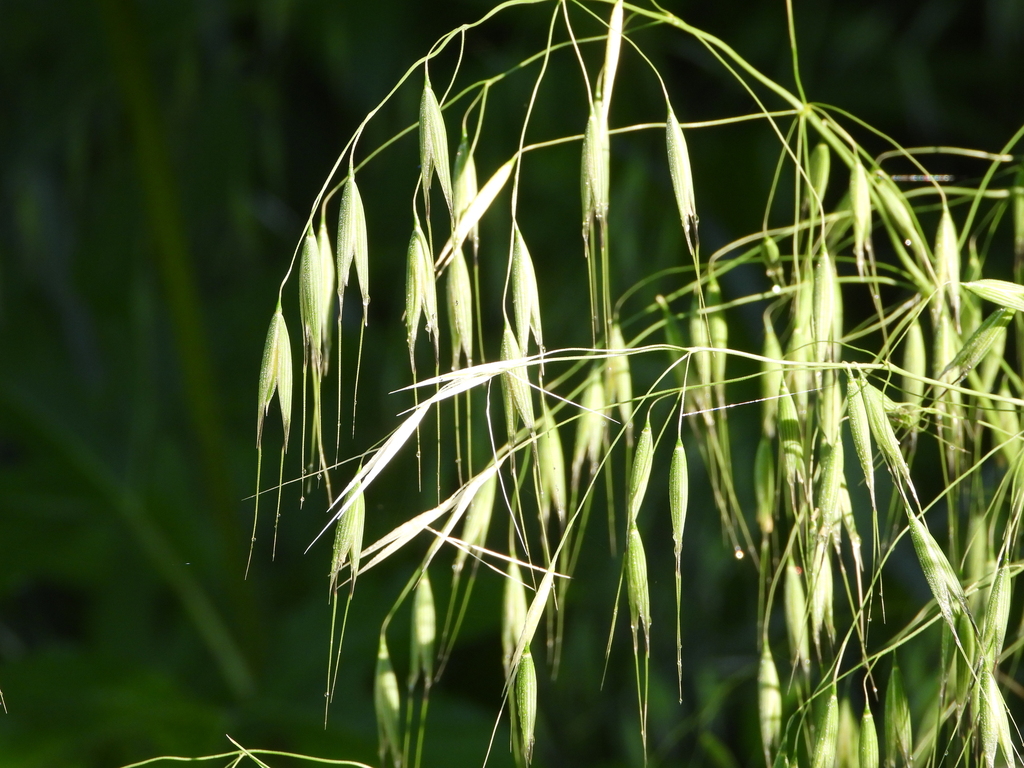
wild oat
Avena fatua
Avena fatua is a species of grass in the oat genus. It is known as the common wild oat. Like fellow wild oat species A. sterilis, it bears 42 chromosomes, and its seeds shatter at maturity for yearly seeding. This oat is native to Eurasia (particularly the eastern Mediterranean) but it has been introduced to most of the other temperate regions of the world. It is naturalized in some areas and considered a noxious weed in others.
A. fatua is a typical oat in appearance, a green grass with hollow, erect stems 1 to 4 feet (0.30 to 1.22 m) tall bearing nodding structures – panicles – of spikelets. The long dark green leaves are up to 1 centimetre (0.39 in) wide and rough due to small hairs. The seedlings are also hairy. The seed kernel is thinner, longer, darker and hairy when compared with the seed of the common cultivated oat (A. sativa). This species and other wild oats can become troublesome in prairie agriculture when it invades and lowers the quality of a field crop, or competes for resources with the crop plants. It takes very few wild oat plants to cause a significant reduction in the yield of a wheat or cultivated oat field.
Where it lives
Recorded sightings
—
geo-referenced records in GBIF, from museums, herbaria and field observers.
Drag the globe to turn it. Dots are where records exist, not a range map; darker means more records.
In the old herbals & bestiaries


In the stacks
Searching the stacks…
Every page naming Avena fatua in the Biodiversity Heritage Library →
This page is assembled live from iNaturalist, GBIF, Wikipedia, the Source Library and the Internet Archive. It is not yet part of the hand-edited codex. iNaturalist taxon 52698.