- Animals
- ›Chordates
- ›Vertebrates
- ›Cartilaginous Fishes
- ›Sharks and Rays
- ›Sharks
- ›Squalean Sharks
- ›Squaliform Sharks
- ›Dogfish Sharks
- ›Squalus
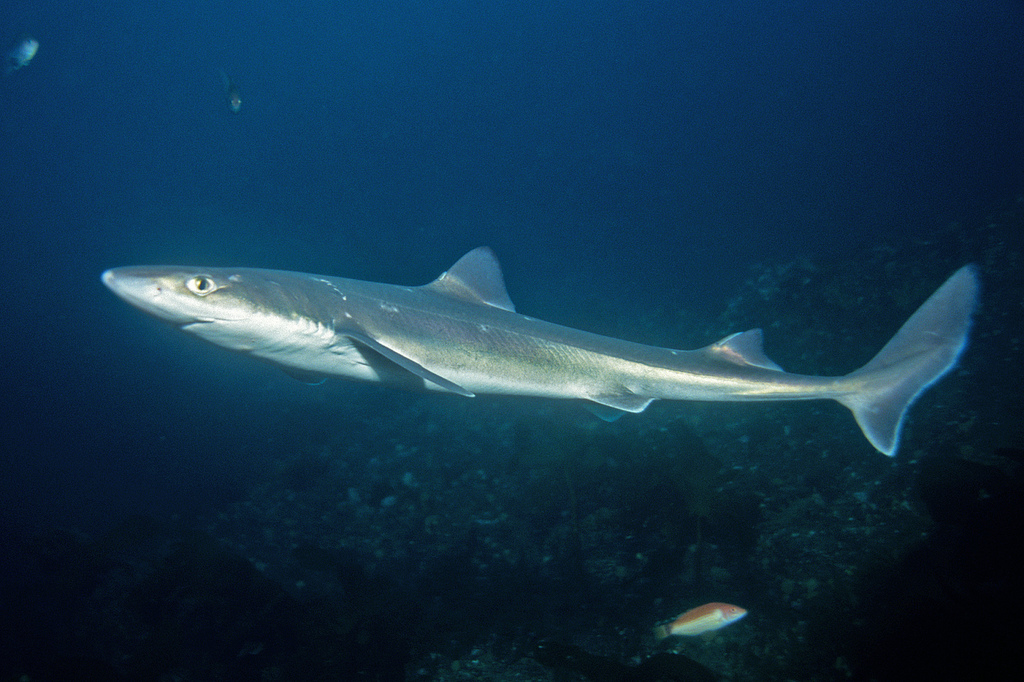
Spiny Dogfish
Squalus acanthias
The spiny dogfish (Squalus acanthias), spurdog, mud shark, or piked dogfish is one of the best known species of the Squalidae (dogfishes) family of sharks, which is part of the Squaliformes order.
While these common names may apply to several species, Squalus acanthias is distinguished by two spines (one anterior to each dorsal fin) and no anal fin. It lives in shallow waters and further offshore in most parts of the world, especially in temperate waters. Those in the northern Pacific Ocean were reevaluated in 2010 and found to constitute a separate species, now called the Pacific spiny dogfish (Squalus suckleyi).
From the article Spiny dogfish on Wikipedia (CC BY-SA), quoted section by section
Description
The spiny dogfish has dorsal fins, no anal fin, and white spots along its back. The caudal fin has asymmetrical lobes, forming a heterocercal tail. The species name acanthias refers to the shark's two spines. These are used defensively. If captured, the shark can arch its back to pierce its captor with spines near the dorsal fins that secrete a mild venom into its predator. This shark is known to hunt in packs that can range up into the thousands. They are aggressive hunters and have a sizable diet that can range from squid, fish, crab, jellyfish, sea cucumber, shrimp and other invertebrates. Dogfish sharks experience one of the longest gestation periods of any organism, which can last from around 18 to 24 months. During spawning season, which occurs during the colder months of winter, females can lay anywhere from 2 to 12 eggs, which develop ovoviviparously and the pups are birthed as live young, with about 5 to 6 in each litter of pups, mainly depending on the size of the female. Reproduction occurs in the winter in offshore waters, while pups are normally born in the warmer and deeper offshore waters where it is harder for humans and predators to reach them. …
Wikipedia: “Description and behaviour”
Range & habitat
Squalus acanthias fossils are known from the Miocene of Denmark and the Netherlands, dating from approximately 11 million years ago. As with other cartilaginous fish, the fossil record of Squalus acanthias consists predominantly of dental material, as cartilage does not fossilize well. The teeth of S. acanthias can be hard to differentiate from those of other squaliforme sharks, making identification difficult.
Wikipedia: “Fossil range”
Where it lives
Recorded sightings
—
geo-referenced records in GBIF, from museums, herbaria and field observers.
Drag the globe to turn it. Dots are where records exist, not a range map; darker means more records.
In the stacks
Searching the stacks…
Every page naming Squalus acanthias in the Biodiversity Heritage Library →
This page is assembled live from iNaturalist, GBIF, Wikipedia, the Source Library and the Internet Archive. It is not yet part of the hand-edited codex. iNaturalist taxon 52306.