- Plants
- ›Vascular Plants
- ›flowering plants
- ›Dicots
- ›Waterlilies, Fanworts, and Allies
- ›Waterlily Family
- ›Nymphaea
- ›Nymphaea
- ›Nymphaea
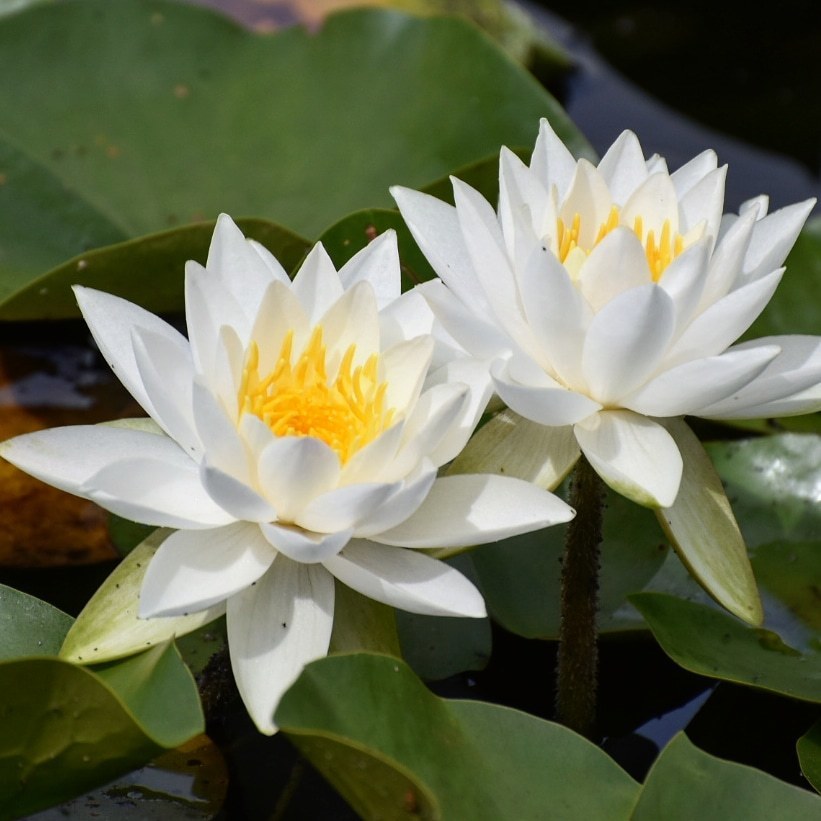
American white waterlily
Nymphaea odorata
Nymphaea odorata, also known as the American white waterlily, fragrant water-lily, beaver root, fragrant white water lily, white water lily, sweet-scented white water lily, and sweet-scented water lily, is an aquatic plant belonging to the genus Nymphaea. It can commonly be found in shallow lakes, ponds, and permanent slow moving waters throughout North America where it ranges from Central America to northern Canada. It is also reported from Brazil and Guyana.
From the article Nymphaea odorata on Wikipedia (CC BY-SA), quoted section by section
Description
This plant is rooted from branched rhizomes that gives rise to long petioles that terminate in smooth floating leaves. The flowers float as well. They are radially symmetric with prominent yellow stamens and many white petals. The flowers open each day and close again each night and are very fragrant. Once the flowers are pollinated, the developing fruit is pulled back under water for maturation.
At the table
The fragrant water-lily has both medical and edible parts. The seeds, flowers and rhizomes can all be eaten raw or cooked. The root can be boiled to produce a liquid which can be gargled to treat sore throats or drunk to treat diarrhea. The rhizomes were also used by Native Americans to treat coughs and colds. The stem can be placed directly on teeth to treat a toothache. The muck-submerged stems are eaten by muskrats.
Wikipedia: “Uses”
Where it lives
Recorded sightings
—
geo-referenced records in GBIF, from museums, herbaria and field observers.
Drag the globe to turn it. Dots are where records exist, not a range map; darker means more records.
In the stacks
Searching the stacks…
Every page naming Nymphaea odorata in the Biodiversity Heritage Library →
This page is assembled live from iNaturalist, GBIF, Wikipedia, the Source Library and the Internet Archive. It is not yet part of the hand-edited codex. iNaturalist taxon 51119.