- Plants
- ›Vascular Plants
- ›flowering plants
- ›Dicots
- ›Roses, Elms, Figs, and Allies
- ›mulberry and fig family
- ›Ficeae
- ›Ficus
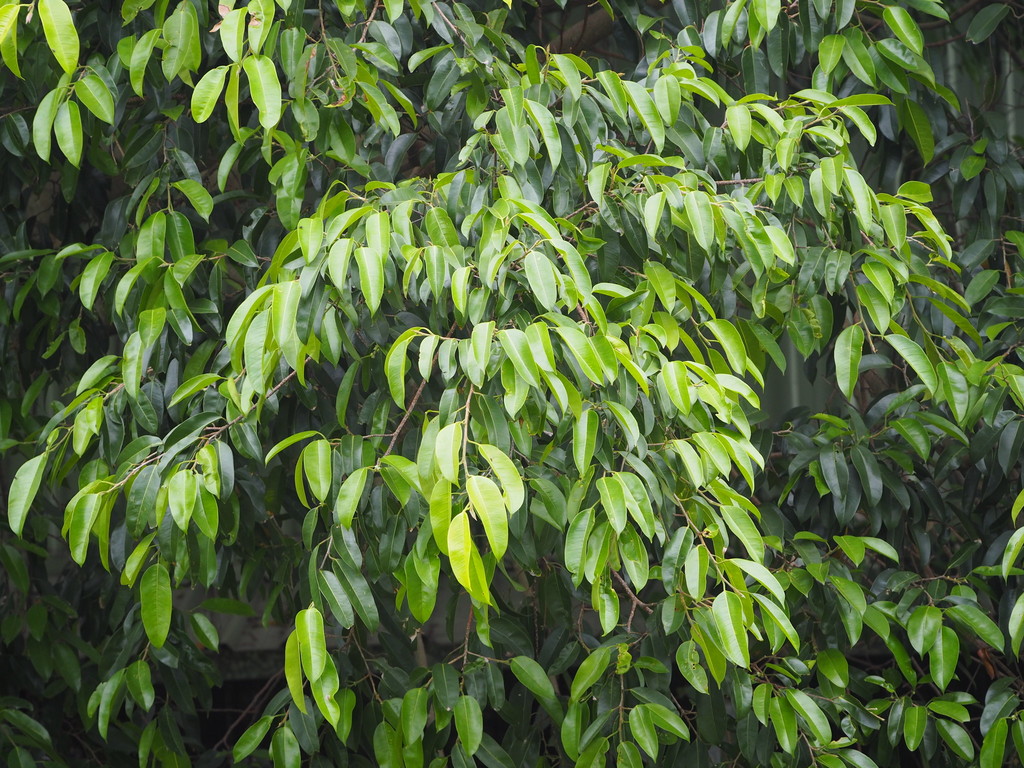
Weeping fig
Ficus benjamina
Ficus benjamina, commonly known as weeping fig, benjamin fig or ficus tree and often sold in stores as just ficus, is a species of flowering plant in the family Moraceae, native to Asia and Australia. It is the official tree of Bangkok. The species is also naturalized in the West Indies and in the states of Florida and Arizona in the United States. Its small fruit are favored by some birds. Ficus trees have proved to have environmental benefits in urban areas, such as acting as biomonitors. The species is also associated with some allergens.
From the article Ficus benjamina on Wikipedia (CC BY-SA), quoted section by section
Description
Ficus benjamina is a tree reaching 30 m (98 feet) tall in natural conditions, with gracefully drooping branchlets and glossy leaves 6–13 cm (2+3⁄8–5+1⁄8 inches), oval with an acuminate tip. The bark is light gray and smooth. The bark of young branches is brownish. The widely spread, highly branching tree top often covers a diameter of 10 metres (33 ft). It is a relatively small-leaved fig. The changeable leaves are simple, entire and stalked. The petiole is 1 to 2.5 cm (3⁄8 to 1 inch) long. The young foliage is light green and slightly wavy, the older leaves are green and smooth; the leaf blade is ovate to ovate-lanceolate with wedge-shaped to broadly rounded base and ends with a short dropper tip. The pale glossy to dull leaf blade is 5 to 12 cm (2 to 4+1⁄2 inches) cm long and 2 to 6 cm (1 to 2+1⁄2 inches) wide. Near the leaf margins are yellow crystal cells ("cystolites"). The two membranous, deciduous stipules are not fused, lanceolate and 6 to 12 mm (1⁄4 to 1⁄2 inch) (rarely to 15 mm or 9⁄16 inch) long. F. benjamina is monoecious. The inflorescences are spherical to egg-shaped, shiny green, and have a diameter of 1.5 cm (1⁄2 inch). In the inflorescences are three types of flowers: male and fertile and sterile female flowers. The scattered, inflorescences, stalked, male flowers have free sepals and a stamen. …
How it is grown
In tropical, subtropical and warm temperate latitudes, the weeping fig makes a very large and stately tree for parks and other urban situations, such as wide roads. It is often cultivated for this purpose, such as in Bourbong Street Weeping Figs in Bundaberg, where it is heritage listed. F. benjamina is a very popular houseplant in temperate areas because of its elegant growth and tolerance of poor growing conditions; it does best in bright, sunny conditions, but it also tolerates considerable shade. It requires a moderate amount of watering in summer and only enough to keep it from drying out in the winter. Longer days, rather high daytime and moderate night-time temperatures constitute favorable conditions for appreciable growth in a short time. It does not need to be misted. The plant is sensitive to cold and should be protected from strong drafts. When grown indoors, it can grow too large for its location and may need drastic pruning or replacement. F. benjamina has been shown effectively to remove gaseous formaldehyde from indoor air. F. benjamina also helps eliminate heavy metals, most commonly in urban areas. The plant has been used as a biomonitor in New Mexico. Figs tend to be consumed dried. The fruit is edible, but the species is not usually grown for its fruit. The leaves have been known to have pharmaceutical benefits such as anti-oxidant properties. …
Wikipedia: “Cultivation”
Where it lives
Recorded sightings
—
geo-referenced records in GBIF, from museums, herbaria and field observers.
Drag the globe to turn it. Dots are where records exist, not a range map; darker means more records.
In the stacks
Searching the stacks…
Every page naming Ficus benjamina in the Biodiversity Heritage Library →
This page is assembled live from iNaturalist, GBIF, Wikipedia, the Source Library and the Internet Archive. It is not yet part of the hand-edited codex. iNaturalist taxon 50996.