- Plants
- ›Vascular Plants
- ›flowering plants
- ›Dicots
- ›Heathers, Balsams, Primroses, and Allies
- ›heath family
- ›monotropes
Sarcodes
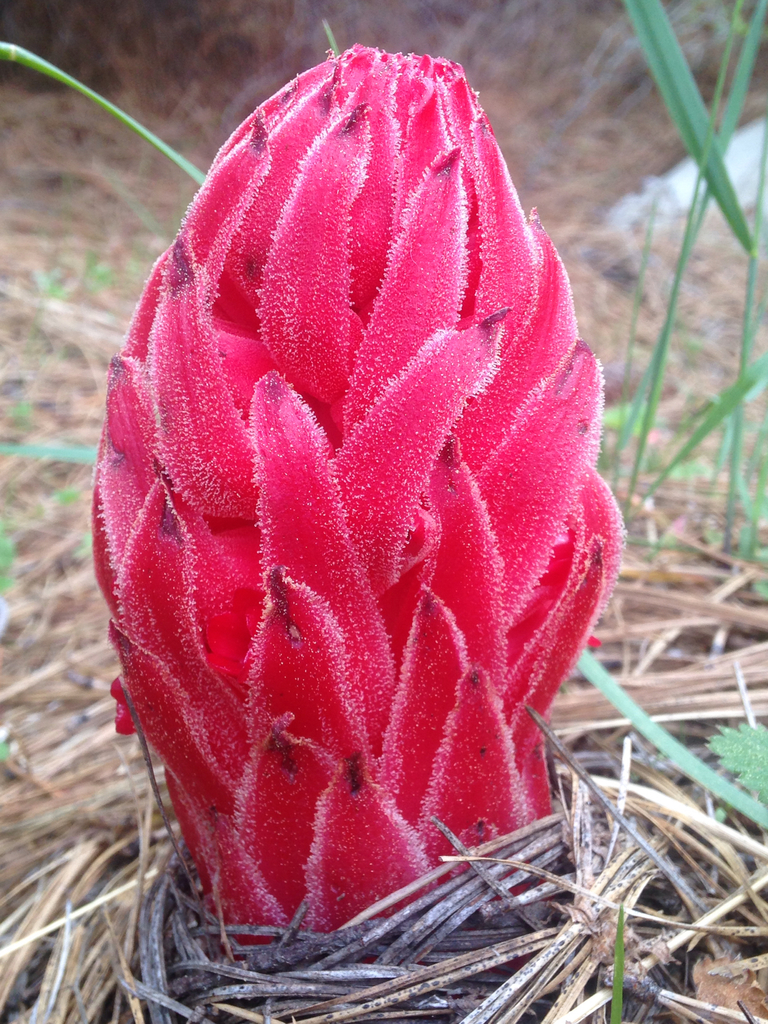
Sarcodes is a monotypic genus of flowering plants in the heath family (Ericaceae) native to northwest North America, containing the single species Sarcodes sanguinea, commonly called the snow plant or snow flower. It is a parasitic plant that derives sustenance and nutrients from mycorrhizal fungi that attach to tree roots. Lacking chlorophyll, it is unable to photosynthesize. Ectomycorrhizal (EM) symbioses involve a mutualism between a plant root and a fungus; the plant provides fixed carbon to the fungus and in return, the fungus provides mineral nutrients, water, and protection from pathogens to the plant. The snow plant takes advantage of this mutualism by tapping into the network and stealing sugars from the photosynthetic partner by way of the fungus. This is known as mycoheterotrophy. The snow plant is host-specific and can only form relationships with the ectomycorrhizal Basidiomycete Rhizopogon ellenae.
The plant's aboveground tissue is its inflorescence, a raceme of bright scarlet red flowers wrapped in many strap-like, pointed bracts with fringed edges, themselves bright red to orange in color.
1 branches of this genus, most-observed first
See this branch on the Wheel of Life →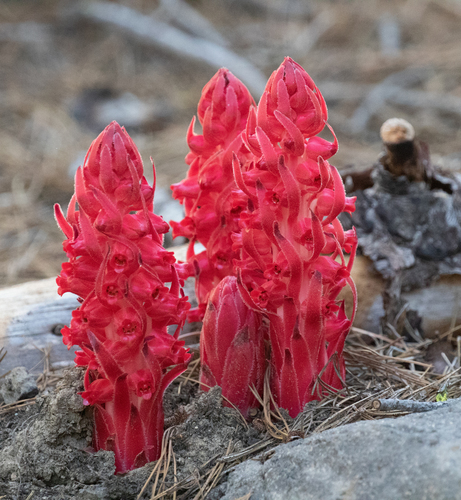
Where it lives
Recorded sightings
—
geo-referenced records in GBIF, from museums, herbaria and field observers.
Drag the globe to turn it. Dots are where records exist, not a range map; darker means more records.
In the stacks
Searching the stacks…
Every page naming Sarcodes in the Biodiversity Heritage Library →
This page is assembled live from iNaturalist, GBIF, Wikipedia, the Source Library and the Internet Archive. It is not yet part of the hand-edited codex. iNaturalist taxon 49474.