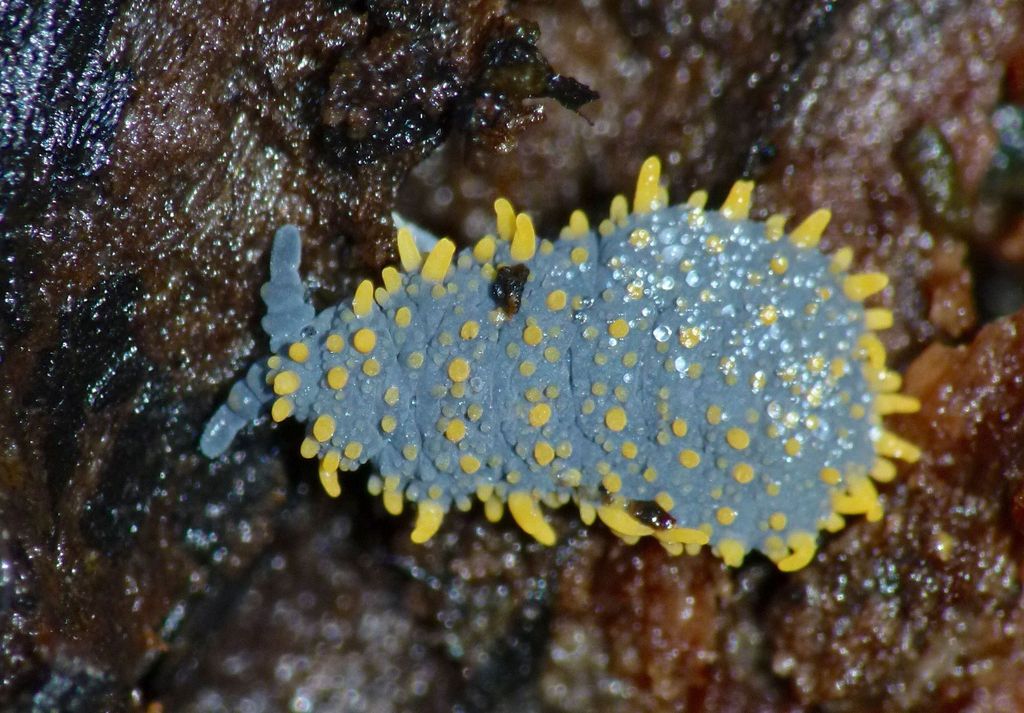
Springtails
Collembola
Springtails (class Collembola) form the largest of the three lineages of modern hexapods that are no longer considered insects, the others being Protura and Diplura. Although the three lineages are sometimes grouped together in a class called Entognatha because they have internal mouthparts, they do not appear to be any more closely related to one another than they are to insects, which have external mouthparts. There are more than 9,000 species worldwide.
Springtails are omnivorous, free-living organisms that prefer moist conditions. They do not directly engage in the decomposition of organic matter, but contribute to it indirectly through the fragmentation of organic matter and the control of soil microbial communities. The word Collembola is from the Ancient Greek κόλλα kólla meaning 'glue' and ἔμβολος émbolos meaning 'peg'; this name was given due to the existence of the collophore, which was previously thought to stick to surfaces to stabilize the creature.
4 branches of this subclass, most-observed first

Elongate Springtails
orderEntomobryomorpha

Globular Springtails
orderSymphypleona

Plump Springtails
orderPoduromorpha

Neelipleona
orderNeelipleona
Where it lives
Recorded sightings
—
geo-referenced records in GBIF, from museums, herbaria and field observers.
Drag the globe to turn it. Dots are where records exist, not a range map; darker means more records.
In the stacks
Searching the stacks…
Every page naming Collembola in the Biodiversity Heritage Library →
This page is assembled live from iNaturalist, GBIF, Wikipedia, the Source Library and the Internet Archive. It is not yet part of the hand-edited codex. iNaturalist taxon 49470.