- Plants
- ›Vascular Plants
- ›flowering plants
- ›monocots
- ›Agaves, Orchids, Irises, and Allies
- ›agave and allies
- ›Century plant subfamily
- ›Chlorophytum
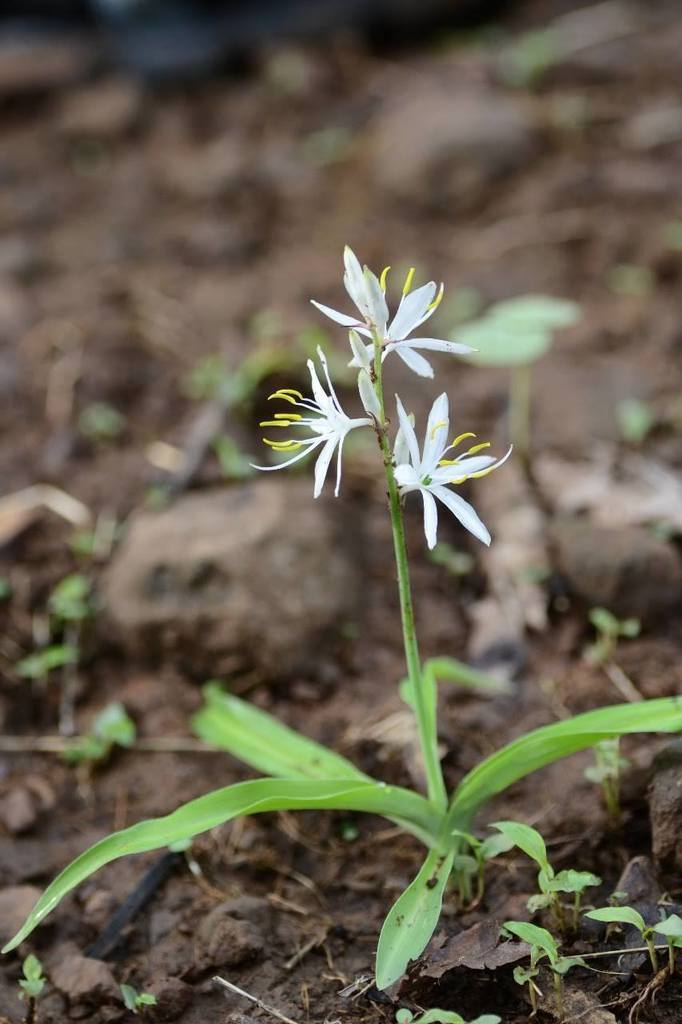
safed musli
Chlorophytum borivilianum
Chlorophytum borivilianum is a herb with lanceolate leaves, from tropical wet forests in the Peninsular Indian region.
It is cultivated and eaten as a leaf vegetable in some parts of India, and its roots are used as a health tonic under the name safed musli. In traditional Indian medicine, it is used as rasayan or adaptogen. It is considered a white gold in Indian systems of medicine. This herb belongs to the vajikaran rasayana group in Ayurveda.
From the article Chlorophytum borivilianum on Wikipedia (CC BY-SA), quoted section by section
At the table
Traditionally, safed musli is classified in Ayurveda as a rasayana and vajikaran herb. Modern studies have identified more than 25 phytochemicals with antioxidant and anti-inflammatory properties, and ongoing research explores its potential in treating arthritis, diabetes, and male fertility issues.
Wikipedia: “Medicinal uses and research”
How it is grown
Safed musli is cultivated in several Indian states including Madhya Pradesh, Rajasthan, Gujarat, and Chhattisgarh. It grows best in sandy loam soil with good drainage and requires tropical conditions. Farmers often face challenges such as low yield and adulteration of roots.
Wikipedia: “Cultivation”
Where it lives
Recorded sightings
—
geo-referenced records in GBIF, from museums, herbaria and field observers.
Drag the globe to turn it. Dots are where records exist, not a range map; darker means more records.
In the stacks
Searching the stacks…
Every page naming Chlorophytum borivilianum in the Biodiversity Heritage Library →
This page is assembled live from iNaturalist, GBIF, Wikipedia, the Source Library and the Internet Archive. It is not yet part of the hand-edited codex. iNaturalist taxon 494178.